
Dear readers, today we have a unique opportunity to delve into the world of creativity and sonic aesthetics of a new instrumental project under the enigmatic name Aptøsrs. Behind this project is Paul Terry, a composer, songwriter, and producer previously nominated for an Independent Music Award for his achievements in music.
Under the pseudonym Aptøsrs, Paul presents his debut album “Elders,” which promises to be a captivating musical discovery. We’ve invited Paul to share his thoughts and inspiration behind this project, as well as to talk about his experience in creating soundtracks and the role instrumental music plays in his creative life.
Get ready for an exciting immersion into the world of Aptøsrs, where each note is a snippet of a story, and each track is a musical encounter with oneself. Welcome to an engaging interview with Paul Terry, an artist crafting his own musical universe!
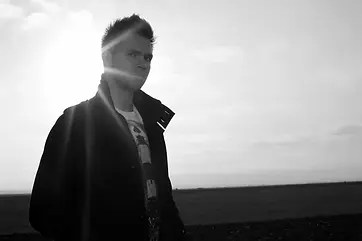
V. Hello Paul! I just listened to your album exclusively, and congratulations, it’s amazing work! What was it like for you to create the debut album “Elders” under the pseudonym Aptøsrs, and what ideas and inspiration formed the basis of this project?Thank you for your kind words! After composing and producing dozens of soundtracks over the years, along with a bunch of records under my singer-songwriter moniker of Cellarscape, I was hungry to embark on a completely different— and instrumental—musical adventure. So I needed a new project name. I came with “Aptøsrs” after staring at a small figurine I have of a baby apatosaurus. It’s my favorite dinosaur. And a riff on its name felt perfect for what this project is. My initials “PT” are also inside the word Aptøsrs too. I’m quietly waving to the outside world from under the cloak of the alias.
V. What themes and concepts are embedded in the album “Elders,” and how do they reflect your musical and creative philosophy?
I think the most magical things about music is that, once you’ve finished a record, and released it into the world, it’s no longer yours. As soon as those frequencies connect with someone’s ears, and mind, and emotions, they unwittingly have some kind of response to it. And it’s always a very personal thing. No two people have the same reaction to the same song. That’s exciting to me—that there are potentially all of these varied responses and interpretations to the music I make. What a song means to me is kind of irrelevant and way less important than what the song means to someone else. That goes for songs I’ve written with lyrics and vocals too, as Cellarscape. I feel that I’ll take something away from a song if I over-explain it. With Aptøsrs, which has voice-less songs and soundscapes, the emotionality I try to infuse in these instrumental song-stories is my focus.
I guess you could say that the creative philosophy of Aptøsrs is that there are no musical genres or rules to adhere to. I love that I can embrace whichever tones, vibes, and energies—from peaceful to cathartic—with this project. To pivot to a giant of the creative arts for a second: Jon Batiste, whose work I adore, has been very vocal about how pigeon-holing music into specific genres doesn’t really help anything, because, at the end of the day, it’s all just music. I massively agree with that. As a music artist, if you ignore any concern you might have about “but this genre is known for doing this… so why the hell am I thinking of doing that?” means you can keep the direction pretty simple: concentrate on crafting a piece of music that makes sense to you as the composer.
I definitely feel like Aptøsrs is arguably the most “me” record I’ve made to date, simply because of that freedom to explore vast musical soundscapes, from ambient, dreamlike tones to punishing metal-adjacent rhythm sections.
V. What aspects of your experience in composing soundtracks did you bring to the creation of the album “Elders,” and how does it influence the overall atmosphere of the project?
In a huge way. Film music is the epitome of being creatively unrestrained. Every single film, TV, theatre, podcast—whatever the project is that you’re scoring—is unique. Each has its own specific emotional and storytelling requirements. That means, as a composer, you have to be really open to embracing musical ideas you haven’t tried before. Which, in turn, means you end up blending genres and influences almost by accident, based on what you feel the scene needs. If you switch out the word “scene” for “images/stories in my head”, that’s pretty much how I approached writing the songs for this first Aptøsrs album.
V. Which artists or genres had the greatest influence on the creation of the album “Elders”?
Far too many to get through them all for this interview—we would be here for months, with me still not finished listing them all! But, I think in terms of conveying the breadth of different music artists that are an influence, that list includes: Devin Townsend, Lisa Hannigan, Godspeed You! Black Emperor, Fightstar, Norah Jones, Mike Shinoda, Angelo Badalamenti, Periphery, Robyn, Clint Mansell, and countless more.
V. What emotions or ideas do you want the listener to experience while listening to the debut song “Rust Mountain” from the album?
Hopefully it’s a surprising listen. The concept of starting a brand new music project is a little terrifying, but that’s a good thing. I don’t think being creatively comfortable gets the best ideas out of you.
As each section of “Rust Mountain” progresses, I liked this concept of the audience sitting a little bit further forward in their chair. I definitely wanted to come out of the gate with a debut song that provoked “active listening” rather than a passive state.
V. “Rust Mountain” has a distinctive sound landscape. How do you decide which sounds and instruments to use to create a unique sound?
I wanted “Rust Mountain” to be not only the overture of the album, but also be representative of what the Aptøsrs sound is. That’s why it intentionally goes to a lot of different places: chilled, high energy, pensive, and full of attack. It’s also an exercise in perceived musical contradictions. I wanted to show that I think complex drum arrangements—that are synonymous with progressive metal—are perfect scene partners with ethereal pianos and synths.
V. Why did you decide to make Aptøsrs an instrumental project, and how does it differ from your experience with vocal music?
For me, it’s actually a very similar songwriting process. I tend to vocalize, and sing out loud a particular melody that I’m working on before trying it out with an instrument. And I loved this concept of instruments—instead of the human voice—being “co-lead vocalists.” Piano, bass guitar, synth, and strings end up taking care of the melodic top-lines in Aptøsrs songs.
V. The album “Elders” consists of 8 tracks. Could you tell us about a specific track that was particularly important to you in the creation process?
I definitely wanted to stick the landing with the finale track, “Encore, Vredefort.” Because I really wanted it to be exactly that—a finale. Sometimes last tracks need to have more of a peaceful quality, like a graceful exist. But that is not “Encore, Vredefort” at all!
When it comes to writing a song like that, it’s kind of like writing a compressed mini-album inside the length of one song. I like to improvise a lot when recording, as you never know which idea you’re going to fall in love with. That happened a lot with that song. And Adam Noble, who did an astounding job of mixing the whole album, really brought the house down with his creativity and mixing choices for “Encore, Vredefort.” And here’s a kind of Easter Egg… if you have the album on repeat, you’ll notice that the soundscapes and chord that fades out at the end of the album rises back up out of silence as track 1, “Rust Mountain” begins again.
V. If your album “Elders” could be a drink, what would it be? A strong aged brandy, fine red wine, or a fruity juice?
Probably something more earthy. Like a strong, espresso-strength shot of matcha. And because matcha also has “slow release” caffeine, it will carry you through those long songs!
V. If you had the opportunity to perform in the most unusual place, where would you take your instruments?
There’s that otherworldly, magical, and prehistoric quality about Iceland. It would be incredible to do a live show there, out in the open. Maybe with all of the amps and gear powered by the natural energies beneath the earth? A live Aptøsrs show like that would feel appropriately “ancient” and also “future-leaning” —two concepts I think the Elders album, and Aptøsrs project overall, fully embraces.


 Voxwave Magazine: Music, Culture, Interview, Fashion