
Maaria Sayed, who has previously directed for networks like the Discovery Channel, Fox, and National Geographic, has now entered the literary world with her debut novel, ‘From Pashas to Pokemon’. Her book weaves together childhood memories, life experiences, and the considerable cultural shifts that have occurred in India over the last two decades.
The inspiration to write began during the pandemic, a time marred by personal tragedy that initially paused her literary efforts. Nevertheless, an inspiring meeting with the poet Gulzar reignited her determination to finish her manuscript. Now, after much dedication, her debut novel is ready to be shared with readers.
In our interview with Maaria, we explored her transition to literature, the aspects of her creative process, and how her experience as a director influenced her writing.
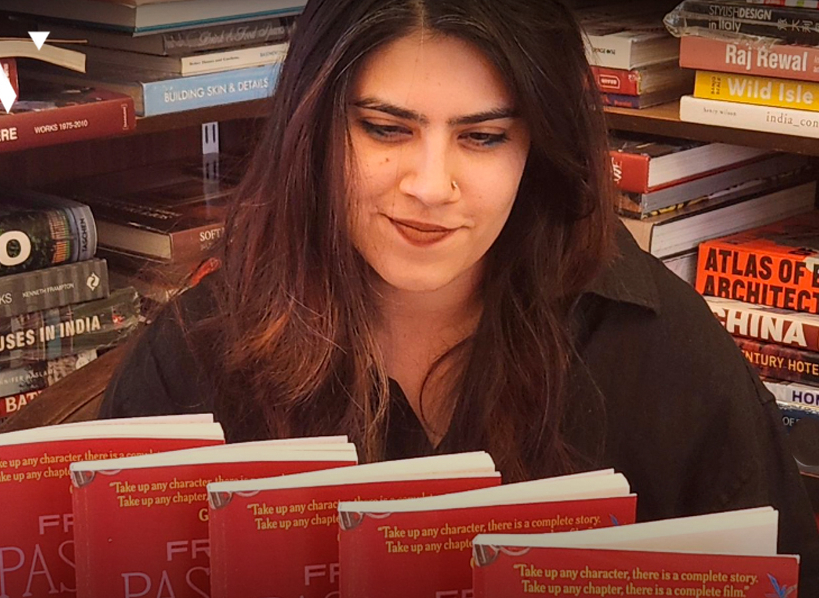
V. In “From Pashas to Pokemon,” you’ve woven a narrative that heavily reflects a multicultural influence through its use of language and cultural references. How challenging was it to balance these diverse elements without overshadowing the individuality of Aisha, your protagonist?
As a character, Aisha is constantly absorbing people, things, events and opinions around her. She is reacting to things- sometimes appropriately, sometimes inappropriately but most of this journey happens inside her. So, Aisha’s individuality does not really come into the picture until we reach the end of the story. It is the story of someone who is yet to form her personality as an adult. I never worried about Aisha being overshadowed because I accepted her character as a sponge with an innately reflective and human quality that eventually helps her decide who she wants to become. The multicultural aspect is quite literally influenced by the world I have grown up around. Every time I was writing about a character or a situation, I was literally playing it in my head so the multicultural aspect and in some cases the multilingual approach was just honest writing for me. I did not interfere with the natural flow.
V. You mentioned that the character Aisha experiences a profound journey of self-discovery and acceptance, especially from the perspective of growing up as a Muslim girl. To what extent do you believe your narrative might challenge or shift readers’ perceptions of Muslim women?
I wanted the readers to see this little girl’s journey as the journey of a soul, a being and in some senses ‘just another girl.’ All the other identities were a matter of history, politics, anthropological ideas, sociological perceptions, linguistic influences and family dynamics. The word ‘Muslim’ is today so deeply political because it can mean a hundred different things to both Muslims and non-Muslims. I wanted to showcase Aisha’s innately human journey through this prism of diverse views regarding religion too without ever trying to justify any view point. Like every person who thinks and feels different things while growing up, Aisha does too. If my narrative can simply humanize the perception of this political identity of ‘Muslim women,’ I am satisfied. This humanization is not just the responsibility of non-muslims but very much of Muslim men and women too and hence Aisha gradually takes responsibility and allows herself to discover herself. The one thing I did not want to do was to justify Aisha’s feelings and thoughts. If a reader can flow with them, I think this itself changes the perception of Muslim women as monolithic identities.
V. Having a background in filmmaking, how did you find the transition from screenwriting to novel writing? Were there particular storytelling tools or techniques from film that you found useful or, conversely, challenging to adapt to the literary form?
Naturally as person, I play everything in my mind – every scene, every setting, every pause, every dialogue and every internal feeling too and probably that is why I gravitated towards filmmaking. In some senses I am an overthinker and an ‘over feeler’ but finally when I write I just go with the flow. That is my approach to writing because for me it is a deeply sacred act. When working on films, I research a lot and believe in detailed, long treatments rather than scripts. Of course, I do write the script but the final shooting script I write only once the cast and locations have been finalized because I need to feel that it can come to life in a practical way. So, in a way, writing a novel is taking that leap of faith from treatments to the shooting script. Hence when I am writing a novel, I write about places I know and settings I have seen or researched very closely. For characters, especially when I write the dialogues, in the novel form too, I read out what each character says aloud so I instantly understand whether the expression is ‘in character’ or not.
V. You describe every character in the book as having a complete story. How did you approach the development of secondary characters without diverting focus from Aisha’s central storyline?
Maybe me being an over thinker and over feeler works well for this profession. In my opinion characters and settings are the story so the more I know and understand my characters, the more genuine my writing can be. I am one of those writers who knows the childhood, the likes and dislikes, the insecurities and vulnerabilities of each of my characters. That is the only way I understand how to build character. Similarly, the settings contribute to making the character so I need to really understand them. I do not distinguish between primary and secondary characters. I have realized that sometimes an odd meeting with a very random person changes your life so is it fair for me to ignore the journey of my secondary characters?
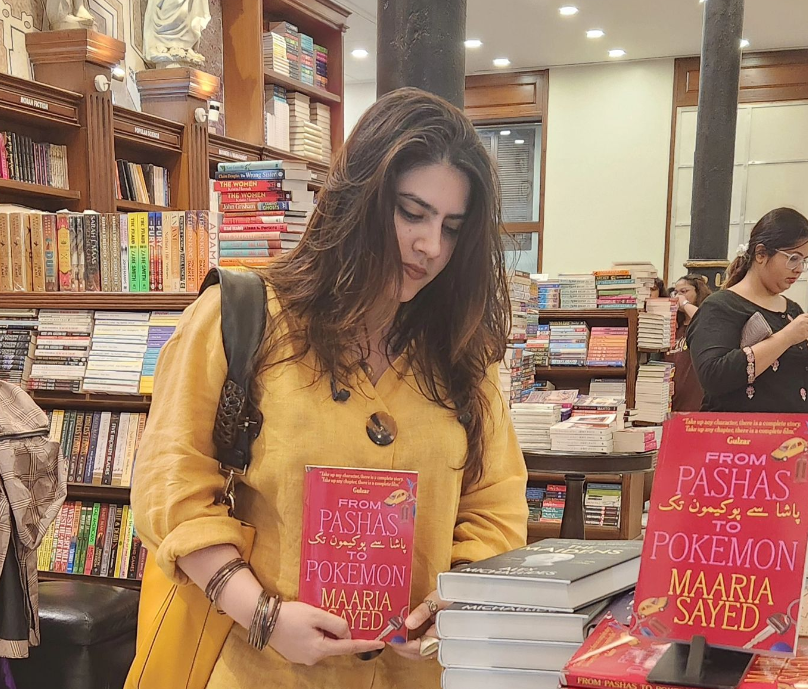
V. Considering your dual talents in film and writing, do you have plans or desires to adapt “From Pashas to Pokemon” into a film or television series? If so, what aspects of the book would you be most excited to bring to the screen?
If the book continues to be well received and I get the support to make it with the quality that I think it deserves, I would be very happy to see this as a series someday. I did think about it as a film too but given the layered journeys of so many characters, I think a limited series would be a good way to do justice to the narrative. To pick the aspects of the book that would work very well for screen and essentially to adapt it, I would love to work with another screenwriter who is experienced with the TV series format. I would also prefer that person to have had extensive experience in London because a sizeable segment of my book is based there. I want that balance between the Indian Muslim girl’s perspective and the non- Indian one too. Eventually, I want this story to reach as many people as possible without losing its flavour.
V. Can you discuss any writers or books that have significantly influenced your writing style in “From Pashas to Pokemon”?
I can tell you I love reading a lot of writers but I did not have any writer or book in mind specifically when I was writing the novel. It was the result of months of research I had done in particular areas of Mumbai when I was making my initial shorts, apart from places where I have actually lived and spent time. My writing is usually inspired by some of my own lived experiences rather than books or films. I will not say that I was influenced in any way but if I have to mention a few contemporaries works, I did enjoy reading Zadie Smith’s White Teeth, Mieko Kawakami’s Breasts and Eggs and Sally Rooney’s Conversations with Friends. I feel all three women write concisely and still manage to leave room for ambiguities.
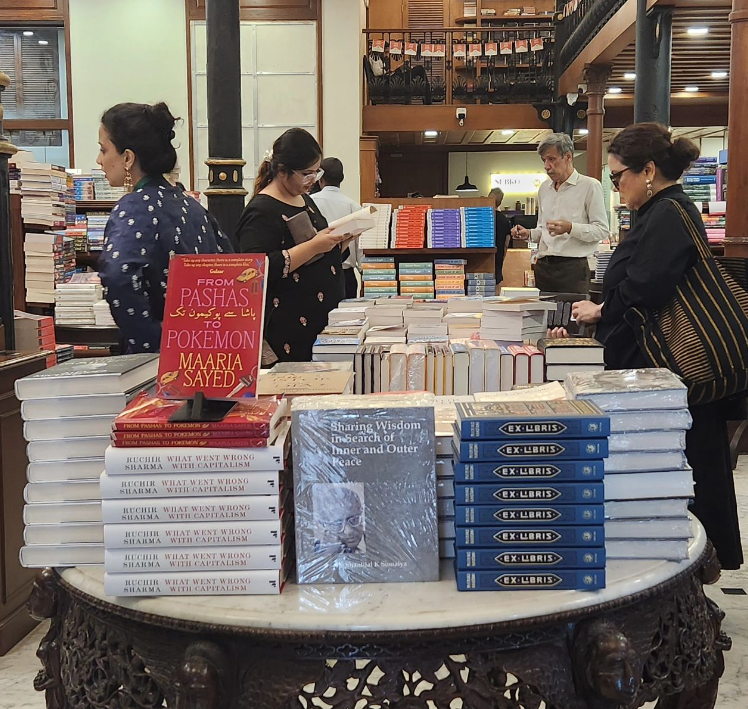
V. As readers often look for connections between an author’s life and their fiction, how do you navigate expectations that “From Pashas to Pokemon” might be autobiographical? How important is it for you that readers understand this distinction?
You know what, I do not care anymore. I obviously specify it is fiction but if it appeals to the readers, I am grateful. Eventually as a writer my goal is make people really feel and somehow if someone thinks it is ‘real,’ I take it as a compliment because for me the concept of reality itself is relative. Reality is felt and is subjective and sometimes we live in our memories, our incomplete dreams and our fabrications too. So, I am okay with everything.
V. After this successful crossover into literature, what are your future plans? Are there new themes or challenges you wish to explore in your upcoming works?
I am writing my second novel now. New emotions, new worlds and new characters but it is something I feel the need to explore. It is still very early so I am not in a position to talk about it. I am also working on the development of a feature film but again, it is an early stage. Until I really have things mapped out, I can’t say for sure. As a creative person, I have learned that things work out only when they are meant to. So, I hope these things I am working on currently do get concluded in the right way. Please do send me your positive and encouraging vibes!
V. What are you currently reading?
‘The Rebel’s Clinic: The revolutionary lives of Frantz Fanon by Adam Shatz.’ I have just started. I am also re reading ‘Love and Revolution by Faiz Ahmed Faiz’ and flipping through the graphic novel Alan Moore’s Batman- The Killing Joke. I have read this so many times but I still enjoy looking at the images. Somehow, I think reading these together is amazing.
V. Is there a particular place where you find inspiration to write, whether it’s a café, a park, or a cozy spot at home?
I love taking long walks in nature and going out from time to time but when I write I am usually in my home attire, in the comfort of my home. I am trying to sit on a table and chair more often because I have a bad habit of writing on the bed and sitting with a laptop for hours on end.


 Voxwave Magazine: Music, Culture, Interview, Fashion