
We have a special guest today: Sola Akingbola – an artist, percussionist, and composer. Many of you might know him as a long-time member of the Grammy-winning band Jamiroquai or as the creator of the popular CBS sitcom Bob Hearts Abishola. Sola’s music resonates all over the world, even if his name isn’t always in the spotlight.
Born in Yorubaland in southwestern Nigeria and having spent his life in London, Sola has absorbed the culture of his family and the funky eclectic influences of Britain. He brings this unique blend into his music, creating distinctive sonic compositions.
Today, Sola will share with us about his new album, “How Should I,” set to be released on September 4, 2024. This project, created in collaboration with The Eegun Rhapsodies, is a sonic interpretation of the interaction between cultures. It combines the sounds of ancient Greece and his native Nigeria. Sola will talk about his new album, which promises to be deeply personal.
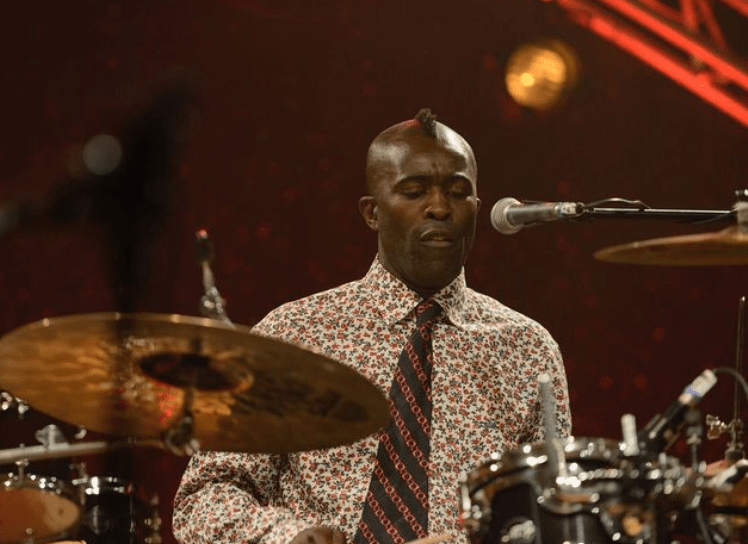
Photo by @instagram.com/solaakingbola
V. Sola, your latest drop, “How Should I,” mixes it all up—cultures, sounds, histories. What sparked this wild blend? How did rooting around in your own heritage shape what we’re hearing now?
I have always been interested in how we as humans construct our sense of
selves and how we receive this construction and experience it through cultural ideas. The Mother of my two daughters is a senior lecturer at Manchester University in Social Anthropology. She would come home and talk about her lectures to undergraduates and how excited the students were when they realised, how much the ideas they held about themselves, and their lives could be challenged and deconstructed. This perspective influenced the way I viewed my Yoruba culture, whilst growing up here in the UK. I tried to use music to express a similar idea. This is not a new idea. I think any creative process, requires this approach, if one maintains a critical perspective in all things.
V. Teaming up with Sheila Atim on the title track really gave it a unique vibe. How did you two get together for this track?
Sheila Atim was introduced to me by a member of the cast of Hamlet at the RSC in 2016. He was sure we would get on after listening to the music I was writing for the production. She attended a show, and we were introduced. We exchanged details and I listened to some of her solo performances online. I knew immediately that she was an artist of incredible depth, power and sophistication. I invited her to come and perform with the band at some festivals, where she sang two of the songs I had written for the play. The two songs were sung by the character Ophelia and Sheila’s interpretation was sublime. We recorded one of the tracks for the album – How Should I – the title track, just before she left to go and film Woman King with Viola Davis. As you say, her performance is beautiful and true. It was an honour to work with her.
V. Your music combines elements of funk, classical music, and traditional Yoruba music. How do you find a balance between these different styles and create such a unique sound?
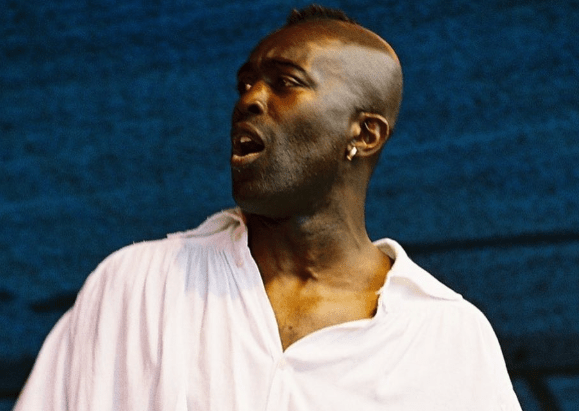
Photo by @instagram.com/solaakingbola
Through trial and error. It feels like cooking: You try different combinations until you feel you are starting to get somewhere. Of course, it’s subjective. The focus is always about the overall sound and how it evokes an emotional response. The different approaches have their cultural influences which can be combined in interesting ways, if we can identify the points where the ideas intersect and possibly move us into another space of understanding or questioning.
V. Out of all the gems on “How Should I,” which track hits closest to home for you and what’s the story behind it?
Difficult one. Ni Bo Ni Babee is a very strong. This piece speaks of my time in Calais in the so-called Jungle in 2015, with a group of creatives led by the irrepressible Vanessa Lucas – Smith (Cellist). We spent 3 days bringing music and emotional support I guess to many refugees from various parts of Africa, the Middle East and Asia. I was reluctant to get involved with the project, when Vanessa first approached me, because I just couldn’t see the benefits of what we were doing for, people whose problem was political. I was performing as a percussionist in a show at the National Theatre at the time, the show was called Everyman featuring Chiwetel Ejiofor – a brilliant actor. We had a few days off from the production, which I spent in my workshop at the back of garden practicing my parts and writing ideas for my own future works. I was struck by the thought, that I was able to fulfil my potential and meander around my creative impulses, uninterrupted, why? This was my moment of Saul if you like. I called Vanessa back and told I had changed my mind and would accompany her and her band of creatives into the jungle of Calais and see what we could do. When we arrived, I was of coursed stunned by the condition that the people were living in and how young some of the children were. On the second day, that we were there, they had a march in and around the camp. We were setting ourselves up to play music in an area near where the refugees had to queue to process their applications to be allowed to stay in France, the march was in full flow coming towards where we were setting up to play. As the march surged past us, two young men from Mauritania, teenagers, grabbed me by my arms, pulling me into the middle of their group, they gave me two rather thick sticks and placed me in front a huge plastic barrel and urged me to play on the barrel, whilst they began to sing in full voices. I was in that moment swept away by the needs of many. I played for two hours non-stop, until the march reached its destination, where the politicians spoke about how they were trying to help the refugees. I was of course moved by the stories the young men told me about what challenges they faced in trying to improve their lives, by leaving their homes that were war torn for some. My perspective has never been the same since.
V. Can you talk about your experience working with Greek classical music on this project?
The Greek Classics was my favourite subject at school. It is through Greek Mythology that I found my way to the Yoruba cosmology, which inspired my journey into Yorubaland and the wonderful stories, poems, songs and rhythms that are the essence of the Yoruba language and culture. It was a powerful sound that I could hear within the Greek musical modes, which reminded me of a sound I would hear in the traditional music my parents played at home.
V. As one of the key questions about your album, how did you select the artists and collaborators for “How Should I”? What made you choose these specific talents to work with?
Most of the musicians performing with me on this album, I have known for a long time. They are an incredibly talented group of artists who are all writers and performers. I am always looking for artists with personality and vision in what they do. When you hear them play, they have a clear and recognisable sound and are always searching and enquiring through their creative medium.
V. What do you see as the main difference between your new album and your previous projects?
My experience and knowledge have hopefully helped broaden my musical perspective, which I think can be heard on this new album. This album presents a different perspective in the sense that I am singing and writing predominantly in English throughout the album and in most places, combining the two languages, Yoruba and English. It feels like a bridge musically and instrumentally.
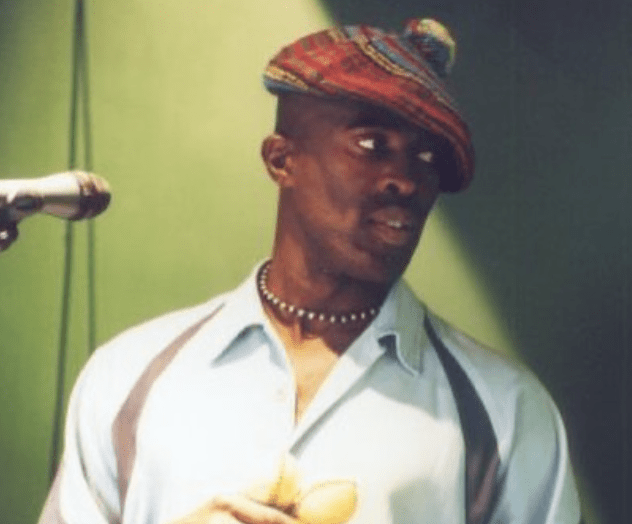
Photo by @instagram.com/solaakingbola
V. Looking forward, how do you see this album influencing your future projects?
I think this album has opened the possibility of moving backwards and forwards between worlds, exploring and discovering new possibilities, creating opportunities to collaborate, educate and research.
V. What do you hope to achieve with your new album in terms of cultural exchange and understanding?
I would be happy to maintain consistent dynamic of enquiry and research. I like to think of the idea of exploring the fluidity of being through sound or any other creative medium one feels inspired by.
V. What do you do when you experience a creative block? Do you have any rituals or places that make it easier for you to compose music?
I try to get away as much as possible and be in green spaces and near to the sea. I am a keen walker; I live in the countryside where I can walk for long periods of time without seeing a single person. The wide-open spaces in the UK are breathtakingly beautiful and meditative. Sometimes taking my mind away from music, interacting with people in a different way, helps with creative blocks.




 Voxwave Magazine: Music, Culture, Interview, Fashion