
Meet Morten Vamplew, or as he’s known on stage, Mortenissimo—a virtuoso pianist ready to dazzle with his latest musical project. His new single, “Clair de Lune [Extended],” reimagines Debussy’s iconic third movement from Suite Bergamasque, giving it a fresh, daring twist. He’s doubled its length, injected it with passion, and brought a renewed energy, all while staying true to the original spirit. Mortenissimo breathes new life into the piece, making it appealing both to longtime Debussy fans and those just starting their journey into classical music. In this interview, he reveals how he managed to capture Debussy’s genius so subtly and what drove him to take on such a bold experiment. And there’s more to come—his album Debussy [Extended], featuring “Clair de Lune [Extended]” and other exciting reinterpretations, promises to be just as captivating.

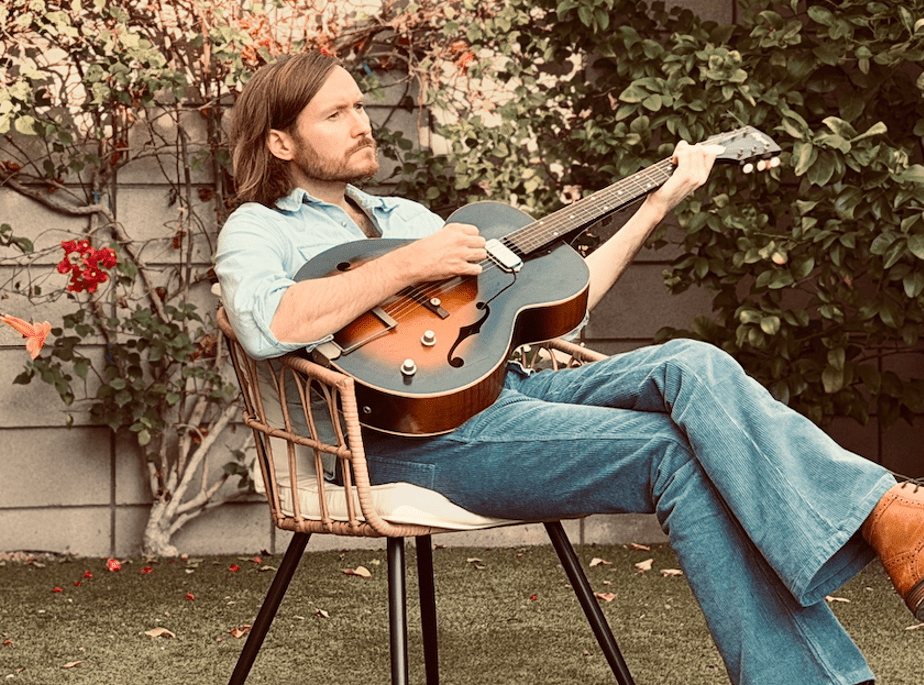
Photo by @facebook.com/mortenissimo/
V. As a classical pianist and composer, you have probably performed works by many great composers. However, Claude Debussy seems particularly significant to you. What is it about his work that stands out for you?
What stands out to me about Debussy’s music is its impressionistic and dreamlike qualities. I’m always drawn to the way the composer’s melodies and chords interact, as well as the intricacies of the harmonic layers throughout. The way Debussy constructs his harmonies often allows secondary melodies to emerge beneath the primary one, which adds a further level of depth to the piece that I can truly respect.
The feelings evoked by Debussy’s melodies and progressions are difficult to put into words. As a spiritual person, I love music that has the unique ability to transport me to another realm, where I can create my own imagery surrounding the music, and reflect on how it impacts my inner thoughts and emotions in that moment.
V. You once said that “Clair de Lune” holds a special place in your heart. Why is it so important to you?
“Clair de Lune” is the piece that allowed me to recognise and appreciate what makes Debussy such a unique composer. The dreamlike and ethereal qualities of his music captivated me, and after learning Clair de Lune, I was inspired to start checking out more of his works. Debussy [Extended] would likely not have started without this pivotal moment. These days, my appreciation for the French composer’s style has grown, thanks to a further analytical understanding of his harmonies, melodies and techniques. I regularly improvise in the dreamlike and impressionist style that Debussy’s music is known for.
V. What was your goal in creating this album?
The idea for Debussy [Extended] came about when I was in New York last year. I was in the Steinway piano shop, where I sat down and played Prelude from Debussy’s Suite Bergamasque, with an extended and improvised intro, which was spontaneous. The ideas just continued from there. I went on to look at more of my favourite solo piano pieces by the French composer, with the intention of extending them via new sections. During the composition process, my ongoing goal was to further explore the elements that I love so much about Debussy’s pieces, including certain melodies or chord arrangements that I feel had real potential to be expanded on. I did not set out to improve Debussy’s music. The intention was to respect and honour his legacy and vision, and show my love for the original works by adding to these wonderful elements and sections in ways that I believe Debussy may have done so himself if he were to extend his own pieces.
V. In preparing for this interview, I listened with interest to your piece and genuinely appreciated your innovative reimagining of this work. Was it difficult to find a balance between respecting the original and adding your own vision?
Finding the right balance between respecting Debussy’s original work and adding my own vision was a challenge at times. There were moments when it was notably harder to write a section that seamlessly extended the original material without straying too far from Debussy’s style. I wanted to ensure that the transitions between my extensions and Debussy’s original passages were smooth and cohesive. It was also crucial for me that the soul of the music stayed true to Debussy’s vision throughout the entire piece, and that my contributions felt like a continuation rather than a departure from the respective piece.
V. Suppose listeners who usually show no interest in classical music develop a desire to listen to your piece. What aspects or details of your work would you recommend they focus on to better appreciate its beauty and complexity?
I would recommend listeners, especially those new to classical music, to focus on the relaxing and calming nature of the piece. This soothing quality is a key feature of “Clair de Lune”, and will be an ongoing theme and style found throughout the entire Debussy [Extended] album. I hope listeners can enjoy the dreamlike and imaginative elements of the music, allowing it to transport them to a peaceful state of mind. The piece is intended to be easy to listen to, making it suitable for meditation or relaxation purposes. When I compose, I continually hope that the final product will deeply resonate with my listeners, captivate their ears, and touch their hearts and minds.
V. Do you think listeners’ perception of Debussy’s music will change when they hear your single “Clair de Lune [Extended]”?
Since my intention with “Clair de Lune [Extended]” wasn’t to change the essence of the original, but rather to create additional material that complements Debussy’s style, I hope listeners will perceive this piece as an expansion on what makes “Clair de Lune” a wonderful piece. My goal is for the extended sections to highlight the excellent musical features and qualities that make Debussy such a remarkable composer, allowing listeners to appreciate those aspects of the piece more deeply. I hope that my extensions serve as a reflection of Debussy’s character and vision, enhancing what I believe is beautiful about the original work rather than introducing a new style.
V. Everything in life is discovered for the first time. Sometimes these moments stay with us for a lifetime. What was your first encounter with Debussy’s music?
When I was studying Grade 8 piano 10 years ago, “Prelude” from Suite Bergamasque was in the syllabus. This was my first encounter with Debussy’s music, but it wasn’t until 1 year later, when I heard “Clair de Lune” for the first time, that my love for the French composer’s music began. I learnt “Clair de Lune” specifically for a wedding ceremony. After this, I went on to research and learn more of Debussy’s pieces from the same era, with a growing appreciation for his techniques and characteristics as a composer.
Debussy’s work is incredibly diverse and includes many pieces. Are there other Debussy works you would like to rework in the future?
“Lent” from Images and “Pagodes” from Estampes are both pieces that I’m considering extending in the near future. “Pagodes”, in particular, stands out to me due to its harmonic inspiration from Javanese Gamelan, a traditional music style from Indonesia with a percussion orchestra arrangement. I first discovered this genre as part of my university studies, and explored its notable musical influence on Debussy.
Today, in an era of rapid changes and constant innovations, the future of classical music becomes a particularly relevant topic for reflection. How do you envision the development of classical music in the context of modern trends?
I believe that, in the modern world, it is important to respect the style and characteristics of classical music pieces and their composers. A combination of this aspect and musical innovation is a great way to keep classical music alive and relevant. By exploring new interpretations or even reimagining existing works, musicians can introduce classical music to a wider audience and help to ensure its continued growth. Innovation is great for building on the tradition of the music and finding new ways to connect with listeners.
Debussy’s work undoubtedly inspires you, and I assume his personality and musical ideas are close to you. In this regard, what do you think Debussy would say about your project if he had the chance to hear it?
If Debussy were to hear my project today, I would hope that he’d recognise my deep respect for his style as a composer. I would also want Debussy to know that my goal was never to make improvements to his works, but rather to expand on and further explore the elements and ideas that I find so beautiful in his original works. I would also love it if Debussy, while listening to my extensions, were to recognise what specific elements I set out to expand on. If my musical intentions were to come across well to Debussy in a positive way, that would be a very rewarding outcome.







 Voxwave Magazine: Music, Culture, Interview, Fashion