
In London, December frost hangs in the air as the city glows under a canopy of lights, every corner alive with the hum of the holidays. Somewhere in the midst of this seasonal spectacle, Thomas Hewitt Jones sits in a cozy café—a crackling fireplace at his side, a cup of hot chocolate in hand, and a knowing smile that suggests he’s fully in tune with the spirit of Christmas. If you’ve ever caught a melody on the radio during the festive season that felt like it came wrapped in nostalgia yet shimmered with something new, chances are you’ve heard his work. From choral hymns reverberating through centuries-old cathedrals to the playful songs that light up school concerts, Hewitt Jones has quietly become a cornerstone of the Christmas soundscape. But what goes into creating music that seems to bottle the joy, warmth, and wonder of the holidays? That’s what we’re here to uncover.
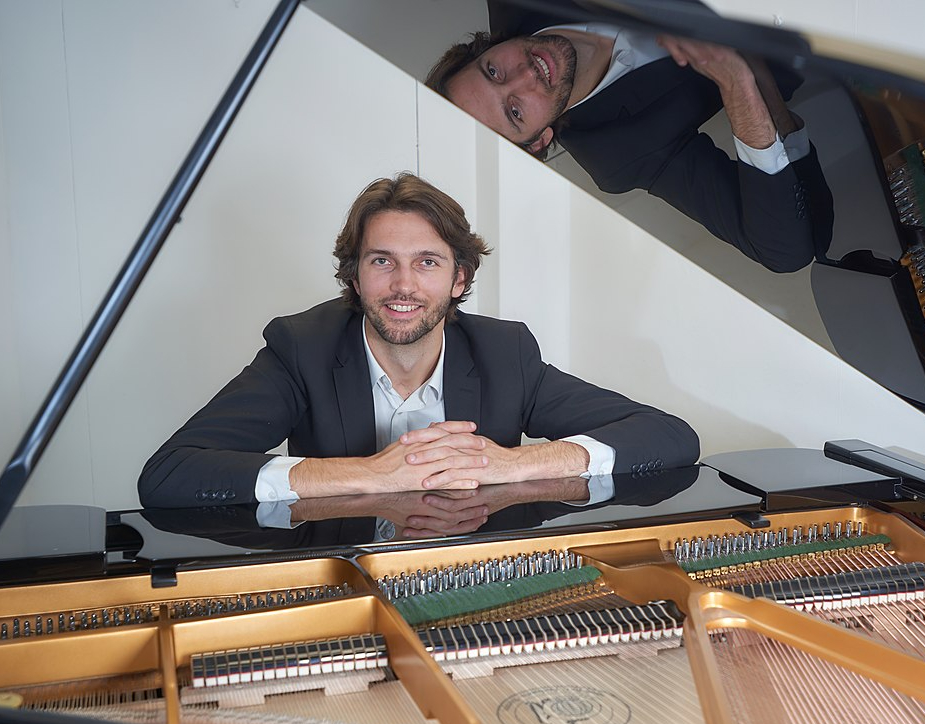
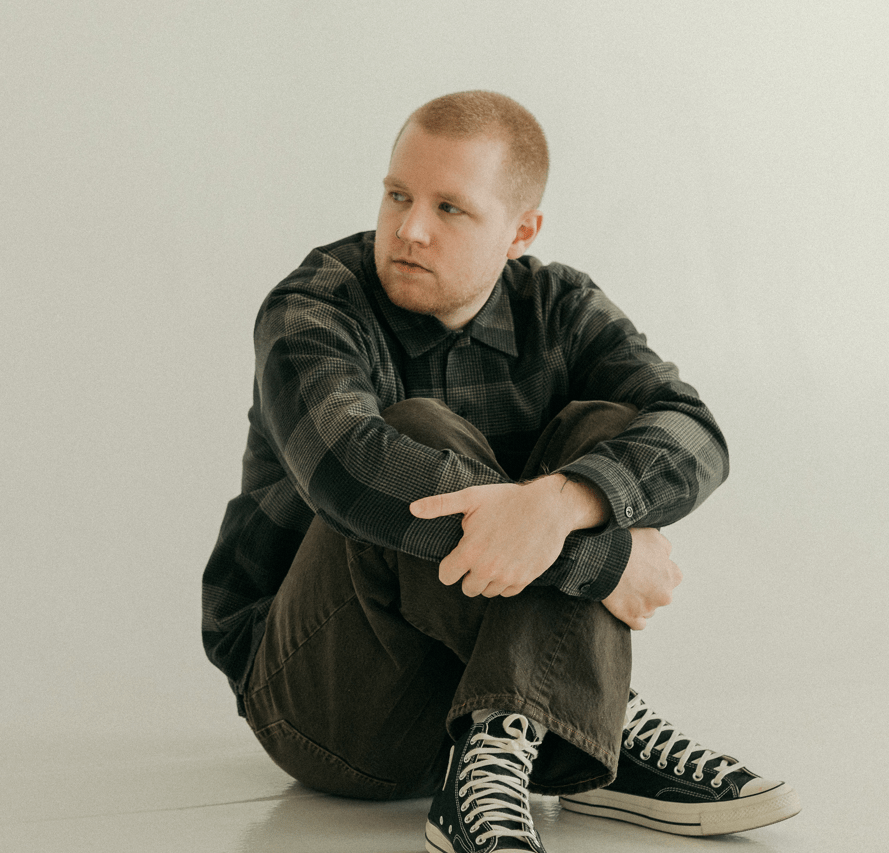
Photo be @thomashewittjones
We are glad to meet you, Thomas, and it’s doubly pleasant before the family holidays. Christmas is a time when music becomes the heart of the holiday. Your hymns are filled with warmth, and amusing compositions like “The Funny Snowman” bring lightness. What draws you to creating Christmas music, and what does it mean to you personally?
It’s a pleasure to meet you too. Thanks for such a kind reception to my music. What I’ve always tried to do is compose music that I would personally enjoy listening to: music which might speak directly to a large number of people, and yet display meaningful human emotion of some kind. The antidote to AI music, if you will! My own favourite composers are those who craft an emotional trajectory that has sincerity and integrity, irrespective of the genre, situation or intended audience. All that said, I also enjoy good humour – and music reflects our life experience in all its shades and imperfections – so I guess that’s where “Funny Song” fits in!
Your carols, Thomas, sound so refined and perfect that it seems they require angelic performance. Tell me, when you create them, do you ever fear that they might be too difficult for ordinary choirs to perform?
I can’t claim to have worked with angels but I’ve been extremely lucky to work with really fantastic singers in recent years. The BBC Singers, The Choir of Royal Holloway and Rupert Gough, and The Vivum Singers (my own ensemble) are three wonderful groups with whom I’ve had the pleasure of recording lots of music in 2024. There is also my 15-minute Nativity piece “The Christmas Story” with British actor Stephen Fry narrating, which is returning to Classic FM this December, the closing section of which includes a rendition of ‘Silent Night’ by the St Martin’s Voices and Andrew Earis, another super group.
I try hard to write choral parts which sound rich, and yet aren’t too difficult to perform. Carols especially are sung mostly by non-professional and church (or community) choirs, and so in order to have a life they must have long lines which flow naturally, rather than jumping around too much which makes them harder for amateur singers. I guess having some element of familiarity for the singers (such as new music to an old or well-known text) can help draw less proficient singers in. My own feeling is that music written for amateur singers has to be engaging, and draw them in. Otherwise, they’ll stop coming to choir rehearsals and join a book group instead!
Recently, I listened to the recording “Carols of the Harp” — your joint project with harpist Cecily Beer and the London Chamber Orchestra. I thought about how important it is to choose the right instruments to create the necessary mood. What inspired the collaboration with Cecily Beer and the London Chamber Orchestra?
Cecily is a lovely harpist and it has been a great privilege to arrange and produce her Christmas EP. She plays beautifully, and as an ambassador for the harp, Cecily isn’t afraid to engage with the TikTok generation – which is a huge portal to the younger generation of musicians and music-lovers, as we all know. Cecily had the initial idea for a Christmas project and we are so delighted by the reception to these first three tracks. I’m a great believer in singles and EPs in 2024, possibly over full-length albums, but we are hoping to expand on the short EP and hopefully work together on a full length album. The 3 carol arrangements are hopefully engaging yet fresh, with a clearly soloistic showcase for Cecily’s harp playing. We recorded with the Chamber Orchestra of London last July (Christmas music all year round for us composers.) It is very pleasing that Cecily’s EP is being featured on Classic FM this season.
Working with such outstanding ensembles as the London Chamber Orchestra always causes admiration. Their mastery and ability to interpret music at the highest level is, without a doubt, a great privilege for a composer. Thomas, is the London Chamber Orchestra more of a “gift” for you or still a challenge?
Top level musicians are always an absolute thrill – they make even the most complex writing sound effortless. It is always very important as a composer to write sensitively for each instrument, and to win the professional players over by ensuring that the parts are comfortable to play. We’ve all made mistakes early in our careers where we over-wrote parts or wrote that one bassoon trill that is basically unplayable. Top professional players and singers will normally be kind to composers starting out. By this point in my composing career (I turned 40 this year!) I try to get parts right first time – and often use a copyist or proof-reader on more complex or demanding sessions – just to ensure that that compositional splurge onto the paper didn’t incur any misprints.
Your music for children is bright and accessible, but of course, not all pieces are equally easy for young performers. Thomas, which Christmas carols for children do you find easy to perform, and which, on the other hand, pose a real challenge?
I think that many of the famous traditional Children’s carols have stood the test of time for a reason – that they are beautiful to sing. Often, music that feels ‘timeless’ is music that has been handed down through the generations, and (to put it bluntly) if it wasn’t very singable, it wouldn’t get passed down! Often some of the most well-known melodies are diatonic, and sit within one octave.
When “Funny Song” went viral, it caused a real sensation online. I am personally thrilled by it. It’s not so often that a composition by a mainly classical composer gains such popularity. Thomas, did you expect such success?
You’re so kind! I never expected such success, and not least from a track that took about 10 minutes to write and was extremely zany. It was actually a natural progression from some silly, left-field musical experiments I wrote at university (called ‘Cambridge Madness’) which invariably included voices sped up and slowed down, with silly genres of music intertwined. Funny Song happened because I was literally powering down my studio at the end of a long day’s composing back in 2017, and sat at my then clapped-out (now iconic!) upright piano in my old flat on Croxted Road in Dulwich, and sang and played it in one take (straight to stereo). When one of the production music libraries I write for, Cavendish Music, was asking for ‘vintage quirky’ tracks for a forthcoming album, I offered them ‘Funny Song’ as an add-on. It got released, and sat online for a couple of years doing not very much. Then, a French influencer called ‘Squeezie’ found it and posted it to his then million or so followers. It absolutely exploded over the next few years, and the rest is history. The day I knew it had become one of the most-listened-to tracks in the world was when I walked down the road one day and heard a construction worker digging up the road, singing it! Incidentally, I donated the Funny Song upright piano to a nursery in Kent for children to bash on. They will never know it was the Funny Song piano, but if one of those kids discovers music and starts piano lessons, I’ll be happy.
Musicians often choose between deep, thoughtful music and light, cheerful compositions. Do you have an inner “compass” that tells you when to be serious and when to give way to humor?
I’m actually a very serious person, and my grandmother (also a composer) used to say to me “Take your work seriously, but you don’t have to take yourself seriously.” This is a sort of mantra for me. I guess humour lightens lives, but ultimately our lives are finite, and so our quest for meaning wins in the end. The fulfilment for us composers comes when we finish a piece of music and it gets sent out into the world, often by a publisher who has a financial interest in it being a success on some level, and yet ultimately its success (or its demise) lies in the quality of the notes on the page, or more precisely in the quality of the emotional experience evoked by the notes on the page. And in order to create that, artistic creatives must always be on a quest for integrity, a quest for truth. Otherwise it’s all just fluff. Funny Song is funny, and yet it definitely (in my mind anyway) has an ounce of melancholy about it. It’s got a tinge of French parlour music, and perhaps a little animal proudly singing away, not realising that they are the butt of the joke and stuck in their own world, trying to get out….
Many imagine a composer as a person who “comes up with music” without thinking about the subtleties and details of the creative process. How often do you have to explain that there is something more behind it?
Of course the creative process is highly inspirational, but there is also technique and hard graft in any art form. In particular in music, there are practicalities to do with writing for each of the instruments involved. One of the greatest (in my opinion) orchestration tomes is by the amazing popular composer Hank Mancini, and Ligeti (avant-garde composer) famously used it. The best artists in whatever genre know their craft, and the journey of learning the craft is part of the fun, and shapes the humanity of our work. This is why, to me, AI art is dead art. But I won’t go on about that here. Of course, marrying music and lyrics is an art in itself. I do write my own lyrics (e.g. ‘Regards from Rochester’). This year I’ve written several carols with my friend and colleague Gordon Giles, who is Canon Chancellor of Rochester Cathedral (in Kent, UK) and also a lyricist in his own right. We’ve worked on several new pieces including The Funny Snowman and Camel Carol. Gordon has a music degree and understands musical punctuation and phrase, which is essential as a lyricist.
Inspiration can come from the most unexpected sources — whether it’s winter snowflakes, the smell of mulled wine, or the tension before deadlines. Where do you most often find inspiration for your melodies?
You are so right! It literally comes from anywhere. One of my most popular carols (I’m not saying which one) was written in an internet cafe near Waterloo Station in London. And it’s quite true that ideas often come in the shower. But there’s something distinct about beauty – beautiful landscapes, beautiful places, whatever – as human beings, we are inherently drawn to beauty, aren’t we?
Christmas carols have become part of your creative signature, and it’s hard to imagine you outside this theme. However, as a composer, you probably don’t limit yourself to just one season. Have you ever wanted to write something completely different from Christmas, like a hymn for Halloween or something just as unexpected? And speaking of the future, what are your creative plans for 2025?
Definitely. A former manager once described both Christmas Carols and Library (Production) music as one in the same – “they’re calling cards”. The truth is though, we live now in a world of singles and EPs, and really any single track could be a calling card. The joy for me is in the art and craft of writing music – the process of sweating it out, the pursuit of that perfect soaring melody, or that great form and structure. In 2025, I have scheduled two choral commissions, two new albums, which should take me to about August – and then it’ll be time for a quick trip to Italy to see the in-laws before Christmas 2025.





 Voxwave Magazine: Music, Culture, Interview, Fashion