
Meet Artikko, a young and talented independent musician from Venezuela. At just 22 years old, he has already built an impressive portfolio of sonic experiments. artikko presents his first full-length album, “Epistolario“, which has become an emotional diary revealing the inner world of the artist. Released on November 29, 2024, the album guides listeners through a realm where sound and emotion converge, blending ambient textures with glitch elements and turning experimental ideas into deeply personal revelations.
The album was inspired by letters that artikko wrote throughout the year. Some of them remained unsent, while others acquired new meanings, but all of them are reflections of moments of self-analysis, searching, and overcoming. The song titles are carefully chosen to uncover the contexts in which these sonic stories were born.
We will talk with artikko about his debut album, the sources of his inspiration, his journey of self-discovery, and how music serves as a medium for processing personal experiences.

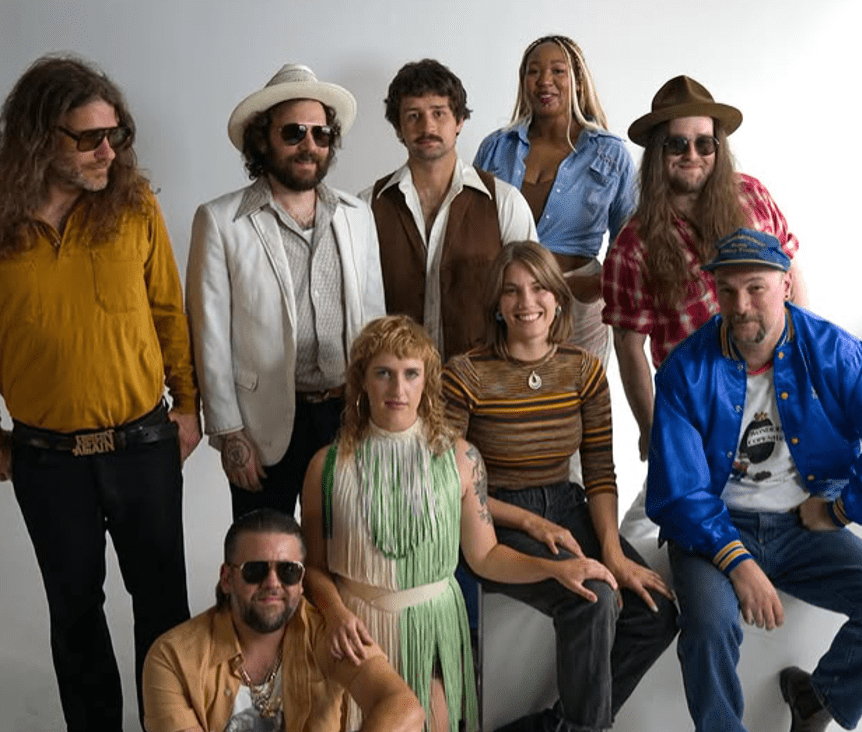
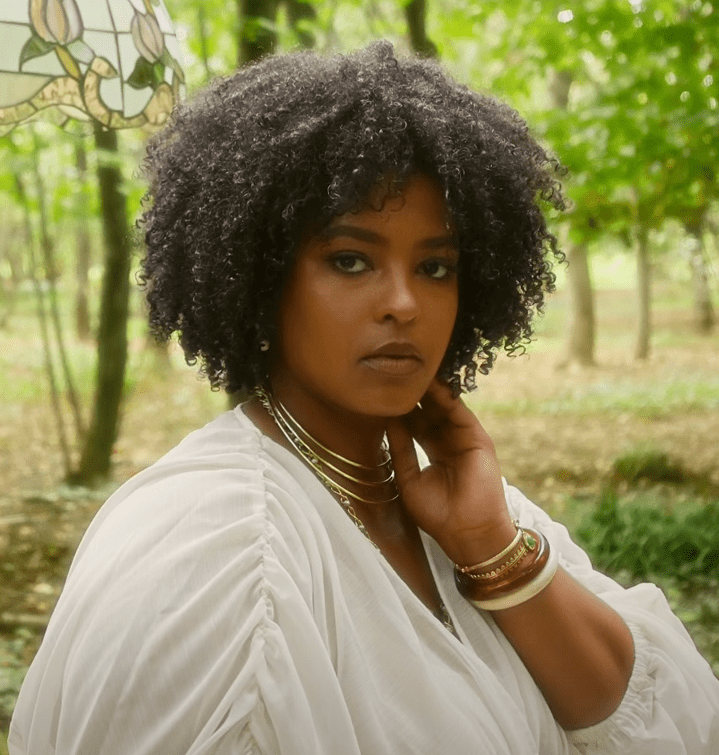
Photo by @torrespixeladas_ and @nicole.air_
artikko, it’s a pleasure to meet you! Your name has such a cool, almost icy edge—quite the contrast to sunny Venezuela. How did you come up with it?
The pleasure is mine, thank you for having me. It’s funny you should mention that, I hadn’t thought about that story in a while. I was just starting my high school years and someone close to me at the time really liked the British band Arctic Monkeys; I was making music quite different from what I wanted to achieve and I wanted to start from zero. I listened to them and they immediately became one of my favorite bands, to this day. I crossed some letters in the band’s name and came up with “artikko”, stylized in lowercase in honor of underscores, another artist I discovered at that time and admire a lot. I think both were my first push to redefine everything I do and I appreciate it, they are wonderful artists. Thinking about it, despite the contrast, I really find the warmth of my country present in many things I do. I think it will never be something I would like to detach from me.
In November 2024, you released your debut album “epistolario”. The title feels deeply personal and introspective. What inspired you to create an album in the form of a “collection of letters”?
“epistolario” was born out of my need to express my purest, most overwhelming and sometimes contradictory feelings and thoughts that otherwise would have remained voiceless, as I found no other ways to really express them. I am someone quite emotional, romantic, but shy, who finds quite a lot of peace in letters. I’ve been writing them since I was a child in all possible forms and contexts, and I always found them a fascinating and intimate way to communicate and connect with our thoughts, and our human connections. An epistolary is, in essence, an ordered compilation of letters, so the album is about that, it could be seen as an epistolary novel as well, letters for a connection that was quite strong for me, and how I was able to explore life through it.
“epistolario” is built around letters you never sent. Do you ever worry that by remaining unsent, these letters might stay locked away, never quite reaching the world the way they could have?
At the beginning, yes. I wanted to try to respect my version of what I was living without feeling guilty about what I was writing and feeling, to accept reality without struggling with the facts, it is complicated when you don’t know how the receiver might perceive it. I struggled a lot with the idea of sending or not sending something because of that, and then I questioned myself to realize or discard the project. But, the very act of writing the letters allowed me to open up to the feeling, it was a very cathartic way of understanding and respecting myself through it all. Sometimes you are presenting a project and it is not the same as when you were creating it, but I think with “epistolario” and those letters it was a different process, and maybe they got out into the world as they should have.
We know that working on the album was a process of self-analysis and self-discovery for you. In that case, do you ever feel anxious that such personal experiences might become accessible to a wide audience?
I think, when you are an artist, it is inevitable that a very sensitive part of you is open to an audience that doesn’t know everything about you except what you allow them to perceive through your art, it makes you vulnerable, but quite strong at the same time. The first step is to accept that you are, can, and sometimes need to be vulnerable when you share your experiences through your art. I think the real concern should come about how you do justice to the things you experienced, when only you know how you experienced them. Sharing allows you to resonate with more people, seeing that people saw their own experiences reflected in the songs I composed allowed me to understand it all from another angle as well. I think that was the most beautiful thing of all, exposing myself, accepting the risks that come with that, and creating as a result of all that.
Your experiences and emotions are reflected in electronic music, which is known to often be associated with abstraction and coldness. Why did this genre become such a powerful tool for conveying such intimate and personal feelings for you?
Electronic music allowed me a space in which I can accept myself as I am, and in which I can accept life as it is, precisely through abstraction but much more through modulation. We are changing beings, all the time we stop being who we were, I stopped being the person I was four questions ago, I also stop being the person I was every time I synthesize a sound and create another one, electronic music allowed me to understand that, and every day I learn something new thanks to it. I feel it is a very powerful way to communicate through vibrations, it allows you to reinterpret them, and reshape them; for me designing electronic sounds and writing a letter are very intimate and expansive processes.
The album contains many unusual sound elements that can both captivate and cause discomfort in the listener. What led you to use such sounds that could be perceived as strange or even annoying?
Something that always captivated me about unconventional sounds in music was the way they manage to challenge and break people’s expectations about what they hear and how they feel about what they hear, sounds like that open a door to a very reflective process and it was SOPHIE who first made me understand that. The way she always found a way to catch people who truly understood her proposal is something I will always admire her for, she was one of the few people who manage to make such unusual sounds pleasant, but above all memorable when you give them the right context, it takes a lot of courage to do that. The identity of those sound elements depends a lot on the context you give them, especially when you work with textures. Artists like KAVARI and Blood of Aza develop proposals with ambient, noise and industrial music that made me find meaning through that, witnessing discordant noises in strongly emotional environments, the expression of experiences through noise in ways that I had never understood before until I experienced it and I am grateful for it, both are fundamental in my references.
I really liked the tracks “a veces, solo a veces” and “tu luz (en el parque del este)”—there’s something special in them that caught my attention. Which track do you personally find the closest, the most vulnerable to you?
I’m glad both tracks resonated with you, especially since they are two of the most vulnerable points within the album, so you make it kind of hard for me. “a veces, solo a veces” was the first letter I wrote from “epistolario”, really without knowing it, it was a pretty soft and innocent moment, like when you meet someone new in your life and try to adapt and get to know each other. But “tu luz (en el parque del este)” is the most vulnerable as it was the only letter I did send, it was a gift. “El Parque del Este” is a National Park located in Caracas, the capital of Venezuela, a space that always had an important meaning for me since I was a child and that over time added many beautiful experiences. The song is a way I found, quite limited honestly, to express the light that radiated from a person as we spent time inside that park, and how those moments became very special every time I went there. Hearing that song when it came out while walking through the park was a full-circle moment for me because of that, it’s a love letter.
When you’re working on a new track, what is more important to you —following an intuitive feeling and immersing yourself in emotions, or do you try to structure the process, relying on rational perception and technical details?
It’s a combination of both. The vast majority of my compositions start from intuition that is born, for example, from some accidental loop that is generated from a sudden bad timing that caught my attention, or from experimenting with parameters on the synthesizers, which gradually lead me towards stronger emotions that sometimes arise from specific memories while all that is going on. But on the other side I always try to be objective with the ideas I have in mind. I’m about to graduate as a sound engineer, so during my career technical details have never gone unnoticed. I can fall in love with a specific sound, but if it doesn’t contribute spectrally or rhythmically to the composition I tend to discard it for other future ideas that I can connect with, and that’s where the emotional comes in again, I try to give space to the sounds (and silences) that really should be there, it’s a philosophy of life for me.
There are moments when a song or melody seems to articulate what words never could, almost as if it understands you better than you understand yourself. Have you ever experienced something like that?
I experienced it when I heard Arca for the first time. Her art has a unique ability to express quite deep thoughts and emotions that were always in me, but that I could never articulate well enough, out of fear. That she is also from my homeland makes those moments more beautiful, because they only remind me that I have walked streets in the capital where she surely did too, while listening to her music, and we see where she is now, she is one of our greatest prides. Her music and figure is a very important pillar in my life, her homonymous album, her mixtape “Entrañas” but especially the first concert she had here in Venezuela last year helped me to understand myself within the development and context of “epistolario”. I always find a lot of strength in Arca when I am lost, she changed my life.
Music often takes on a life of its own, with listeners interpreting it in ways the creator never intended. Have you ever received feedback about your music that completely surprised you, or perhaps even felt a little strange?
Yes, and there is something very beautiful in that for me. Each mind is a world, with different contexts, tastes and realities that converge in the music and nurture the listening experiences, which are as unique as each person. The first comments I had about “epistolario” were from close friends, who agreed that it was something that showed me overcoming, some were surprised by how I reinterpreted my ambient proposal with new and more rhythmic elements, and others already preconceived that it was an emotionally strong project when they saw that there were thirteen songs. I think what I never imagined was that so many people would see themselves reflected with the titles of the compositions, and that they would give them their own meanings which allowed me to find much more light within the project, helped me to accept everything that happened, and has allowed me to find peace.




 Voxwave Magazine: Music, Culture, Interview, Fashion