
Fiora Anicca: “I died once — and came back with a song,” says the singer behind the new single “I Died Once.” Having walked through addiction and PTSD, Fiora transformed personal pain into art, blending alternative pop with the sounds of healing. Today, she speaks openly — about inner transformation, spiritual work, and why sometimes you have to die inside to truly come alive. In this interview, Fiora shares her journey through trauma, searching, and deep healing, offering insight into the philosophy of Mystic Pop and her belief that even the darkest trials can mark the beginning of a new life.
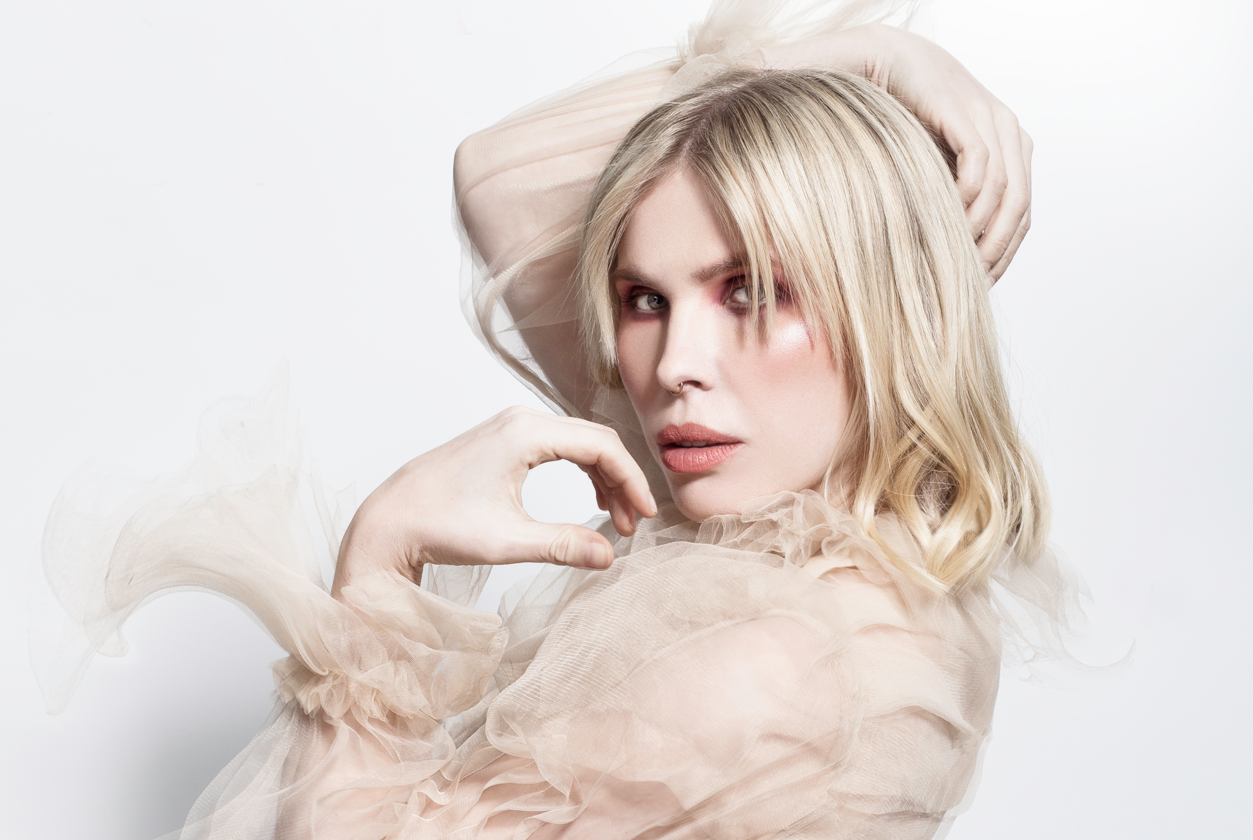
Nice to meet you, Fiora! Your name sounds very beautiful and mystical – just like your songs. Tell us a little about yourself, is there a special story behind this name?
Thank you so much! Yes, the name Fiora Anicca carries a lot of personal and spiritual meaning for me. It’s more than just an artist name — it’s a reflection of who I’ve become through my healing journey. The name Fiora came to me during a deep meditation, at a time when I felt called to rebrand and align more closely with my authentic self — both as a person and an artist. After years of trauma, addiction, PTSD, and a long path of self-doubt and pain, I went through a spiritual awakening. I began healing inner wounds through meditation and inner work, and during that process, Fiora appeared in my awareness. To me, Fiora symbolizes a flower — something pure, delicate, and beautiful, yet also deeply rooted and resilient. It represents the part of us that is connected to light, purpose, and truth — our inner essence. I believe everyone carries their own “Fiora” within — that pure part that’s meant to blossom and guide them toward their soul’s calling. But as I continued evolving, I realized something else — that life is not static. Everything is constantly moving, shifting, and transforming. Nothing stays the same, and we’re always growing through the chaos and changes. That’s when I was drawn to the word Anicca, a Pali term from Buddhist philosophy that means impermanence. So Fiora Anicca is a name with two energies — Fiora, the pure light and purpose we all carry, and Anicca, the truth that everything in life is impermanent. Together, the name is a reminder and encouragement: stay true to your inner light, your “Fiora”, even while navigating the ever-changing, unpredictable waves of life.
Fiora, you started your creative path in Poland, and now you live in Leeds — that’s quite a contrast! Tell us, how did the move and change of environment affect your inspiration and music?
Yes, it’s definitely been a big journey — geographically, creatively, and personally. I started my music path in Poland, but my time there was filled with a lot of challenges, especially in terms of vocal training. I studied at Music Academy where, unfortunately, I received the wrong kind of vocal coaching. I was being told constantly by my teacher that I “just didn’t get it” or that “singing wasn’t for me.” Despite putting in hours of practice — sometimes over-practicing because I was so determined to learn — I ended up developing vocal nodules from being taught to push my voice in ways that weren’t healthy or natural. At one point, I genuinely considered quitting singing altogether. I thought maybe they were right — maybe I just wasn’t meant to sing. But deep down, there was a voice in me that refused to be silenced. It kept calling, pushing me to try one more time. I knew that if I didn’t give it another chance, I’d regret it for the rest of my life. So I made a bold decision: I’d either move to the UK or the US — places where many of the artists who inspired me came from, like The Beatles, Spice Girls, and Whitney Houston. I didn’t have a clear plan, but I had a very clear intention — to find my real voice and give myself a fresh start. I came to the UK and initially settled in London, then eventually found a vocal course at Leeds Conservatoire that felt like the right fit. That’s where everything changed. I met my mentor, Julie Thompson, who introduced me to Complete Vocal Technique (CVT) — a method based on vocal science, vocal health, and understanding the anatomy of the voice. It was like a revelation. For the first time, I felt empowered instead of confused. I began rebuilding my voice from scratch, step by step, and over time I not only healed my voice but learned how to control it with confidence. Today, I’m proud to say I’m a certified CVT vocal coach myself — helping others who may have struggled just like I did. Moving to the UK was one of the hardest but most rewarding decisions of my life. I didn’t speak English at all when I arrived, and the first 2–3 years were especially tough. But it forced me to grow — not just as a singer, but as a human being. I learned the language, immersed myself in different cultures, and met incredible people who opened my mind to new ways of thinking and living. The UK gave me space to find myself — not only as a musician but as a person. It helped me step out of survival mode and into creativity, and that’s when the real transformation began.
You call your style Mystic Pop — it’s something between music and meditation. Honestly, that’s exactly the impression one gets when listening. But how do you personally feel: what exactly makes music healing?
Thank you — that really means a lot, because that’s exactly what I intend with Mystic Pop. For me, healing music is about moving something deep within a person — not just emotionally, but energetically. Music becomes healing when it goes beyond entertainment and creates a space for reflection, insight, and transformation. I want my songs to make people stop for a moment… to pause, breathe, and reflect on their own life journey. Sometimes, all it takes is a single lyric or melody to awaken something inside — a forgotten dream, an emotion that needs to be felt, or the courage to make a change. What makes music so powerful is that it can bypass the logical mind and speak directly to the subconscious — the part of us that holds so many beliefs, wounds, and truths we often don’t even realize are there. Unlike words alone, music can reach those hidden places and unlock something without needing explanation. It moves you before you even understand why. Mystic Pop was born from that intention. It’s a blend of emotional pop with deeper spiritual layers — sound healing frequencies, mantras, meditative atmospheres — all woven into melodies that are accessible and relatable. It’s music for the heart, but also for the soul. I’ve personally experienced how powerful music can be. In my darkest moments, when nothing else helped — not therapy, not words — it was music that held me. Singing was my survival and my soul’s way of staying connected to something greater. Through creating music, I healed so many parts of myself, and I realized I could also hold space for others to do the same. So to me, music is healing when it inspires us to feel, to reflect, and ultimately — to shift. Whether that’s a small emotional release or a big life decision, it’s all part of returning to our true selves. If my music can be a catalyst for even a moment of clarity, connection, or courage in someone’s life, then I know I’ve done my job.
Your single “I Died Once” received a lot of positive feedback. It’s very honest — no sugarcoating. In it, you bravely reveal your vulnerability to the listener. Why do you think such deeply personal tracks, like yours, resonate with people?
I think it’s because deep down, we’re all longing for truth — not perfection. When people hear something raw and honest, they can feel it. Vulnerability is magnetic because it gives others permission to feel their own emotions, to be human, and to be seen. There’s so much pressure in the world to wear masks and pretend everything is fine. But songs like I Died Once cut through that noise — they speak to the part of us that’s been silent, ignored, or afraid. For me, writing that song was a form of emotional release. It came from a place of real pain, but also transformation. I had to die to who I thought I was — all the stories I carried about not being good enough, about being broken — in order to be reborn into something truer. I think a lot of people are walking around with those same silent stories… and when they hear someone express what they haven’t been able to put into words, it creates connection and healing. There’s beauty in the cracks. In fact, I believe that’s where the light enters. And if my music can help someone feel less alone, or open up their own process of healing, then that vulnerability was worth it. The feedback I’ve received for I Died Once reminded me that pain becomes power when it’s shared with love and intention.
In one interview, you shared that “you once emotionally and spiritually died, but came back, and ‘I Died Once’ is the sound of that return.” That really struck a chord. What was the journey back to yourself like — and how did the feeling of rebirth manifest in your music?
Thank you, that means so much to me. The journey back to myself was one of the most challenging and profound experiences of my life. When I say I “died once,” I’m talking about the moment when the version of me shaped by trauma, pain, and limiting beliefs had to fall away completely. It was like losing a part of myself — a painful but necessary breakdown to allow real healing and transformation. This rebirth was much more than just emotional — it was a deep dive into understanding how trauma works inside us, how the subconscious mind holds programmed responses, and why I reacted to life the way I did. One of the biggest breakthroughs for me was realizing that the inner chatter — that constant self-doubt and fear — wasn’t the absolute truth. It was conditioned programming, based on what I was told was true. But if it’s programming, then it can be changed. We just have to be willing to do the work to change it. I began to observe my thoughts without judgment, questioning old beliefs and learning from mentors, meditating, and gently reconnecting with myself on a deeper level — with compassion and openness. I learned to pause before reacting, especially in moments of anger or addictive impulses, and started rewiring my brain to create healthier emotional responses. It wasn’t just about healing surface wounds, but rebuilding my entire inner architecture — my personality, my beliefs, and ultimately, my reality. And as I changed my inner world, my outer world began to shift in beautiful, unexpected ways. Now, looking back, I’m deeply grateful for my past — even the trauma and pain — because it led me here, to freedom and true happiness. That gratitude wasn’t possible before; it’s part of the rebirth itself. I’m just no longer a victim of my circumstances- I feel like the circumstances were given to me on purpose to learn, grow, heal and become who I am today. I Died Once is the sound of this whole process — the death of old limitations and the rise of a new, authentic self. It’s a message of hope that no matter how dark the journey, light is possible on the other side.
The music video for your single is a story of its own — it feels like a short film that lives its own life, yet uniquely complements the music. Was there a moment during the idea development or filming when it suddenly clicked — and you realized exactly what the visual image of the song should be?
Yes — there actually was a moment where everything clicked. The idea for the video had been forming gradually, but during the creative process, I realized this song wasn’t just about music — it was about emotional rebirth, and the visuals had to reflect that inner transformation. I wanted to show two contrasting realms: one grounded in nature — raw, emotional, and deeply human — and the other, a minimal white space that symbolized something beyond this world. That white background represented a voice or presence from another dimension — a place of stillness, clarity, and higher truth. Almost like the soul stepping outside the chaos to observe, reflect, and receive messages from something greater. There’s also a scene by the edge of a bridge — and for me, that symbolized a threshold. Not in a literal sense, but emotionally. It captured the silent battle many of us go through — the moment between staying in what’s known and safe, or choosing to leap into the unknown to become who we truly are. That internal tension is something I believe a lot of people carry. Once we started filming and these contrasts came to life visually, I felt it — this was exactly what the song needed. The video didn’t just accompany the music — it deepened its meaning, giving space for the unspoken emotions to come through in symbols and energy. That’s when I knew we’d created something truly aligned.
When I listened to “I Died Once” for the first time, I don’t know why, but I had a feeling there are special symbols or messages hidden in it. Is that just my guess, or are there really hidden details in the song that only reveal themselves upon closer, repeated listening?
You’re absolutely right — and I’m so glad you picked up on that. Yes, there are symbolic layers and hidden emotional cues throughout “I Died Once.” Some are embedded in the lyrics, others in the sound textures, harmonies, or visuals in the music video. I wanted the song to feel like an inner conversation — the kind you don’t always fully understand the first time, but that speaks directly to your subconscious. The symbols and shifts in energy mirror the emotional journey I went through: death of an old self, surrender, rebirth, and alignment. It’s about transformation, and I intentionally left space for the listener to feel their own story reflected back to them. So yes — the more you listen, the more you might notice things that weren’t obvious at first. It’s like healing: every layer reveals something new when you’re ready to see it.
You speak so bravely and honestly about difficult things — that truly commands respect. But not all artists have the inner or external freedom to be that open. In your opinion, what needs to change in the music industry so that vulnerability stops being “off-format” and becomes a strength rather than a risk?
Thank you — that means a lot. I believe we’re at a point where authenticity is deeply needed, not just in the music industry but in the world as a whole. For too long, the industry has prioritized perfection, image, and performance over truth and emotional depth. Vulnerability was often seen as weakness or “too heavy” for mainstream spaces — but the truth is, it’s the most human thing we have. For this to shift, I think two things need to happen: First, the industry — labels, media, curators — needs to be more open to real stories, not just polished narratives. Honest music has incredible healing power, and we need to stop labeling it as “niche” or “alternative.” Raw emotion can be just as, if not more, impactful than commercial polish. We need to normalize conversations about trauma, mental health, identity, and transformation, because these are universal experiences. Second, artists must support each other in being brave. Not every story is pretty, but every story has power. When we create space for diverse truths, vulnerability becomes a creative strength, not a liability. People are tired of surface-level — they want music that moves them, that reflects their inner world. Vulnerability is the gateway to that connection. It’s not off-format. It’s the future. Vulnerability and authenticity are worth everything. Living your true self is the most satisfying thing. It might not be easy, but it’s liberating. Authenticity connects us and makes music truly healing. When we stop hiding, pretending someone else, real magic happens. The more artists choose this path, the more the industry will follow — toward honesty, inclusivity, and transformation.
Coming back to the topic of style. You’ve created and developed your Mystic Pop style so well — it really hooks people. Have you thought about continuing further in this direction, or maybe, on the contrary, trying yourself in some completely new genre?
Thank you! Mystic Pop is really close to my heart because it blends music with meditation and emotional healing — it’s a style that allows me to connect deeply with listeners on many levels. For now, I feel aligned with continuing to explore and evolve within this space, as there’s so much room for growth and experimentation. That said, I’m open to whatever feels right and authentic at the time. Creativity is about freedom and curiosity, so I don’t want to limit myself. Whether that means deepening Mystic Pop or trying something completely different, I’ll follow what feels true to me in the moment.
I know that you not only write music but also work as a MAP method coach. In what way do these two roles intersect in your life?
Absolutely, my work as a MAP (Make Anything Possible) Method coach, founded by Colette Streicher, and my music are deeply connected. Both come from a place of healing, transformation, and unlocking potential. I personally healed through MAP as one of the key tools in my own journey, and it made such a profound impact that I chose to become certified as a MAP coach. Through coaching, I help people become aware of their subconscious blocks, limiting beliefs, and emotional patterns, guiding them to clear these and create new empowering realities. My music, especially my Mystic Pop style, works on a similar level — it speaks to the subconscious mind and creates space for emotional release and insight. When I write and perform, I’m channeling that same energy of transformation and growth that I support in my coaching sessions. In essence, both roles are different expressions of one mission: helping people break free from old limitations, reconnect with their authentic selves, and step into their fullest potential. They complement and inspire each other in beautiful ways.

 Voxwave Magazine: Music, Culture, Interview, Fashion