
British artist James and his collective JD Days created a short film for every song on their new album. The result lands somewhere between Pixar and your childhood memories of Christmas—back when it wasn’t just another obligation.
Come late November, musicians typically fall into two camps. The first churn out Christmas albums—quickly, cynically, for streaming services. The second ostentatiously ignore the holidays because they’re “not serious enough.” JD Days chose a third path: they made Christmas Anthology—ten tracks, ten 3D animations, all without a trace of irony. Six original songs plus four reimagined classics. From snowy New York to Santa on a rock-and-roll sleigh.
“Music and love can still light the dark,” says James. From most artists, this would sound like copy for a corporate greeting card. But when someone actually spent a year producing Pixar-style animation for each song, you start to believe.
We spoke with James about why adults need Christmas magic, why Santa should listen to rock and roll, and what holiday songs have to do with forgiveness.
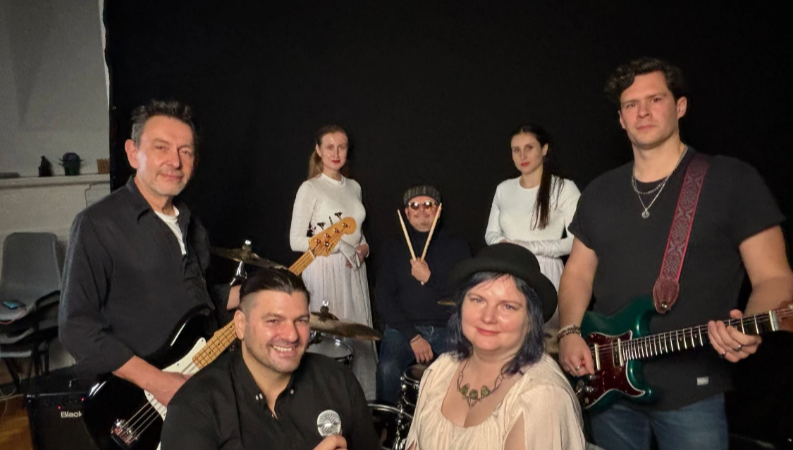
Christmas music exists in a strange temporal zone—it returns each year like a ritual, yet always sounds in the concrete present moment. Bing Crosby recorded “White Christmas” in 1942, but every December this song seems to be born anew. You’re creating a Christmas Anthology in 2025, with all its visual and narrative complexity. Have you thought about how your work will exist in time? Is it a snapshot of this particular December, or are you trying to create something that can cyclically return, changing meaning with each new December?
I’ve thought about that a lot, actually. I see the anthology as rooted in this December—the world as it feels now, with all its fragility and longing—but designed to return each year with new meaning. Christmas works because it’s cyclical, but we are never the same people when it comes back around.
So the stories aren’t locked to 2025 in a literal way. They’re about moments—waiting, forgiving, reconnecting—that people revisit at different points in their lives. One year it might feel joyful, another year it might feel bittersweet. That’s where the longevity lives: not in dates or trends, but in emotional states that recur.
Miyazaki said that animation allows showing the “truth of feelings” through impossible images. You chose 3D animation for stories about love and forgiveness. What does this medium give you that, say, live action couldn’t?
Animation lets you externalise inner states without explanation. You don’t have to justify why snow falls more slowly at a certain moment, or why light behaves differently when two characters finally understand each other. You can simply let it happen.
With 3D animation especially, I could shape the emotional physics of the world—how spaces open up, how colours soften, how movement slows or accelerates with feeling. Love and forgiveness are often quiet, internal experiences. Animation gives them a visible language without making them literal or sentimental.
Walter Benjamin wrote about the “aura” of a work of art—a unique presence here and now that is lost in mass reproduction. But holiday music works the opposite way—it becomes meaningful precisely through repetition, through the fact that millions of people listen to it simultaneously in different places. When you created your original compositions, did you think about this paradox? About the fact that a song must be personal enough to move people, but universal enough to become part of a collective experience?
Yes, and I think Christmas music is a fascinating exception to Benjamin’s idea. The “aura” isn’t lost through repetition—it’s multiplied. When writing these songs, I didn’t try to write for “everyone.” I wrote from very specific emotional places—private moments, conversations, regrets, hopes. Paradoxically, that specificity is what allows people to recognise themselves in the music. If a song becomes collective, it’s not because it’s generic—it’s because many people discover that the private feeling inside it was already theirs.
Holiday tradition is often built on nostalgia—we return to childhood memories, to a past that seems simpler and warmer. But you’re creating new songs, new stories. It’s an interesting position—creating future nostalgia. Did you think about this as a responsibility? That your music could become someone’s first Christmas memory, part of their personal mythology of the holiday?
I did think about that, and it’s both humbling and slightly terrifying. I didn’t want to compete with nostalgia or overwrite it. Instead, I wanted to offer additional rooms in the house of Christmas—new spaces people could enter if they wanted. If someone hears one of these songs during a difficult Christmas, or a joyful one, and it becomes stitched into their memory of that time, that’s incredibly meaningful. It makes you careful. You aim for honesty, not spectacle, because those are the things people carry forward.
How do you celebrate Christmas yourself?
For me, Christmas has become quieter over the years. It’s less about the performance of the day and more about moments of connection—sharing food, music, conversation, and allowing things to slow down. Music is always part of it, whether that’s playing, listening, or just letting songs exist in the background while people talk. And I try to leave space for reflection—looking back at the year honestly, without rushing past what it’s taught me.
In your anthology, forgiveness is a central theme. Why does December seem like the right time for this conversation?
December naturally invites reflection. The year is ending, and we instinctively start taking stock—of what we’ve done, what we regret, who we miss. Forgiveness isn’t about absolution; it’s about release. And Christmas, at its best, creates a pause where people feel permitted to soften, to let go of something they’ve been carrying. That doesn’t mean everything gets resolved neatly. But even the desire to forgive feels more accessible at this time of year.
Your ten animated stories are essentially ten miniature worlds. How did you approach creating these spaces? Was each meant to feel like a complete universe, or were they always parts of one larger world?
Each story had to stand on its own emotionally—like a short walk that begins and ends somewhere meaningful. But they were always conceived as part of a larger landscape. There are shared textures, shared emotional weather, even shared silences between the stories. You might not notice them consciously, but they create continuity. I wanted the anthology to feel like moving through different rooms of the same house rather than jumping between unrelated places.
Are there sounds or textures that literally “feel” like winter to you?
Absolutely. There’s a certain softness to winter sound—the way snow absorbs noise, how footsteps feel heavier, how distance becomes quieter. Musically, I associate winter with space: longer reverbs, gentler attacks, fewer notes that carry more weight. Even silence feels different in winter—it’s not empty, it’s expectant.
You created a complex multimedia project with narrative, bridge videos, ten connected stories. All this architecture is built very thoughtfully. But ultimately, it’s all about feeling, about immediate experience. Were you afraid in the process that too detailed a structure might suffocate spontaneous emotion? Or conversely—does precisely the well-thought architecture create a safe space where genuine feeling can emerge?
I think structure, when done properly, actually protects emotion rather than suffocating it. The architecture meant that once the framework was in place, I could stop worrying about logistics and trust the emotional moments to arrive naturally. It’s similar to songwriting—form gives you freedom. Without structure, emotion can become unfocused or indulgent. With it, emotion has somewhere to land.
Holidays are now often experienced through screens—we watch films, videos, send digital greetings. Your project also exists in this digital space—animation, streaming, 4K video. Yet you speak about human values—love, forgiveness, unity. Is the screen a barrier between people, or can it be a bridge? Can a digital medium convey something as intimate as forgiveness?
A screen can be either—it depends on how it’s used. What matters isn’t the medium, but the intention behind it. A song heard through headphones can move someone to tears. A film watched alone can create a moment of profound connection. Forgiveness is internal, and internal experiences don’t require physical proximity. If a digital work creates a quiet moment where someone feels understood, or feels able to soften toward another person—or themselves—then the screen has done its job as a bridge, not a barrier.



 Voxwave Magazine: Music, Culture, Interview, Fashion