
I’d like to introduce you to Tequila Sirens, a band from Somerville, Massachusetts. Tequila Sirens is an evolving project blending classic psych-pop with rock elements. It began as a duo during the COVID era, founded by Shaun Curran and Dwight Hutchenson, and later grew to include bassist Whit Love and drummer Matt Masuzzo. Their music carries emotional depth and a restless, experimental spirit, shaped by personal experiences and the energy of the local new-age and DIY scenes. On June 6, Tequila Sirens released their first full-length studio album, “Imposters”.
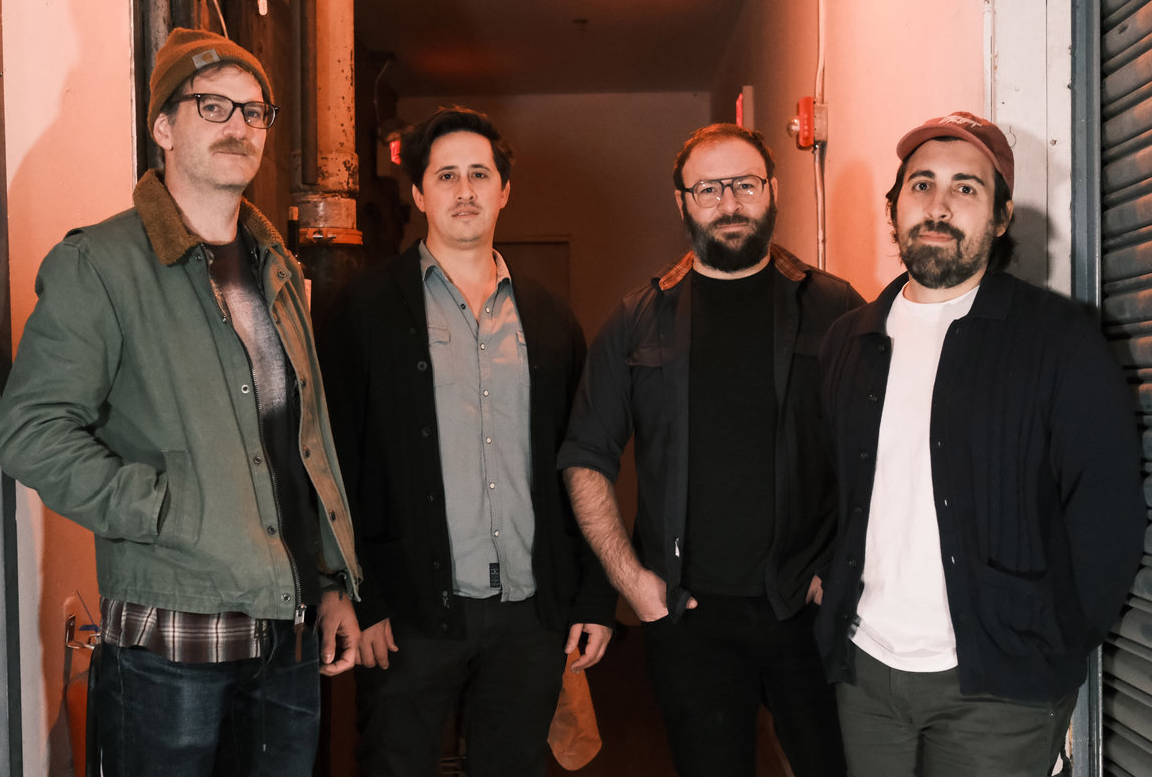
Part of the album was recorded directly at Napoleon Complex Studio in Somerville, giving the songs a live, slightly rough quality that emphasizes the intensity of the sound. The lyrics on “Imposters” explore themes of loneliness, emotional distance, and the strange feeling of living someone else’s life. The mood of the album constantly shifts, and within the chaos, moments of clarity occasionally shine through. The ten-track release opens with “Orcas” – atmospheric, slightly unsettling, and evoking imagery reminiscent of “Twin Peaks“, with its warm melancholy. Omnichord, deep bass, and hypnotic guitar blend into an arrangement where each instrument feels slightly “out of place” – and that’s part of its charm. The musicians often pick up instruments unfamiliar to them, and that spontaneity adds a touch of oddness that has become a signature of Tequila Sirens.
A similar feel can be found in “The Eaves” – although its more restrained vocals betray feelings of loss and family grief. The band admits that “The Eaves” became one of the most collaborative tracks on the album: its structure and sound were born during the process itself, with each member contributing ideas on the fly. The result is a cohesive and sincere piece. Next comes the quirky “On My Rays.” It reminds me of college rock music, perhaps because, while the song did evolve into a full arrangement, it still retains the intimate atmosphere of the original demo. There’s a documentary-like feel here: as if the songwriter is recording thoughts in the dark, trying not to disturb the fragile feeling that once inspired the track.
Fourth on the album, and one of the more energetic tracks is “Scenery Chewer.” It begins like a casual flirtation with hardcore: noise, groove, a flash. But the melody gradually builds momentum – tense, urgent, breaking out like a monologue. This is a track about frustration, about trying to break through the noise, about the desire for someone – anyone – to finally listen. There’s a lot of anger in it, but even more exhaustion – from silence, from how hard it is to find one’s place in the collective choir. After the energetic “Scenery Chewer,” “Dark Trapper” feels especially deep, with melancholic guitar and a languid vocal delivery. Added at the last minute, it grew out of an old Wurlitzer progression the songwriter would play from time to time without any particular purpose. But something about those chords stuck. The song turned out quiet, a bit shy, but precise.
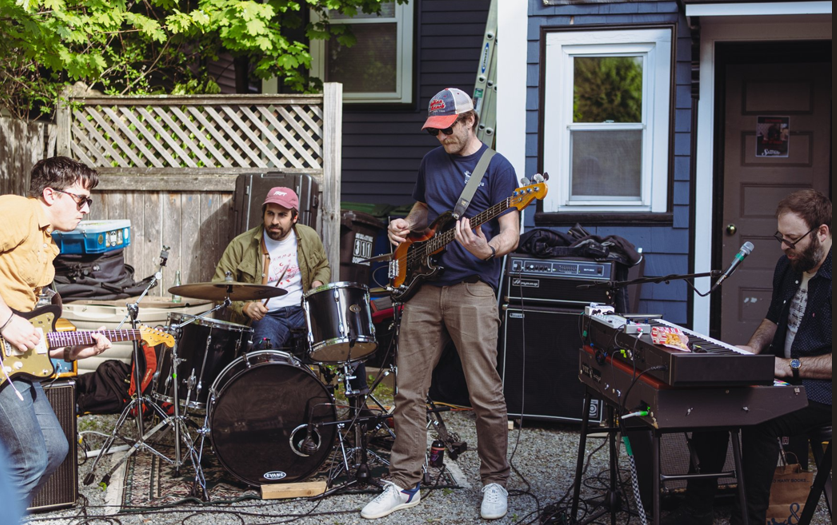
“Snow Falls” is another track that, in my opinion, evokes the atmosphere of Twin Peaks. It carries a sense of winter stillness, hidden tension, and a special kind of melancholy – where beneath the calm surface, something uneasy stirs. The song drifts through fog: slow, slightly trembling chords, muffled drums, and vocals that sound like a distant call dissolving into the cold air. This atmospheric pause leads smoothly into the title track, “Imposters,” which sits at the heart of the album and reflects its central theme – the feeling of otherness and the identity of an outsider. Originally conceived as a louder rock track, the band transformed it into a beatless rhythm piece with percussion and sub-synths, creating a distorted, hypnotic sound.
On the opposite emotional pole is “I Don’t Understand,” one of the earliest tracks and among the first performed live by the band. The rough vocals are half-whispered, like a personal confession. Melodic, fragile guitar and barely-there drums allow space for silence between the lines. And in the very next track, “Stray,” everything changes: this is a sharp, two-chord surge with a relentless, oppressive bass – one of the longest tracks on the album. It sounds like a stuck emotional state – monotonous, as if time stretches into a long, unchanging day. The album ends with “Max Cherry” – a slow, hazy track that gently wraps everything up. It sounds like an afterglow: a bit cinematic, a bit like something from a dream. After several attempts to rethink the arrangement, the band returned to the original demo, recorded with an Ace Tone drum machine, and added bongos and a shaker – to preserve that very blurred, diffuse atmosphere. “Max Cherry” doesn’t draw a line under the album – it rather dissolves, like a final shot that lingers just a bit longer than necessary.
Musically, “Imposters” intersects with rock, psychedelia, and post-punk moods. It’s less about genre, more about atmosphere: ranging from sharp to hazy and introspective. For those who grew up with this kind of sound, Tequila Sirens’ album will feel familiar and close. Its emotional tone conveys a sense of instability, searching, and constant inner tension.



 Voxwave Magazine: Music, Culture, Interview, Fashion