
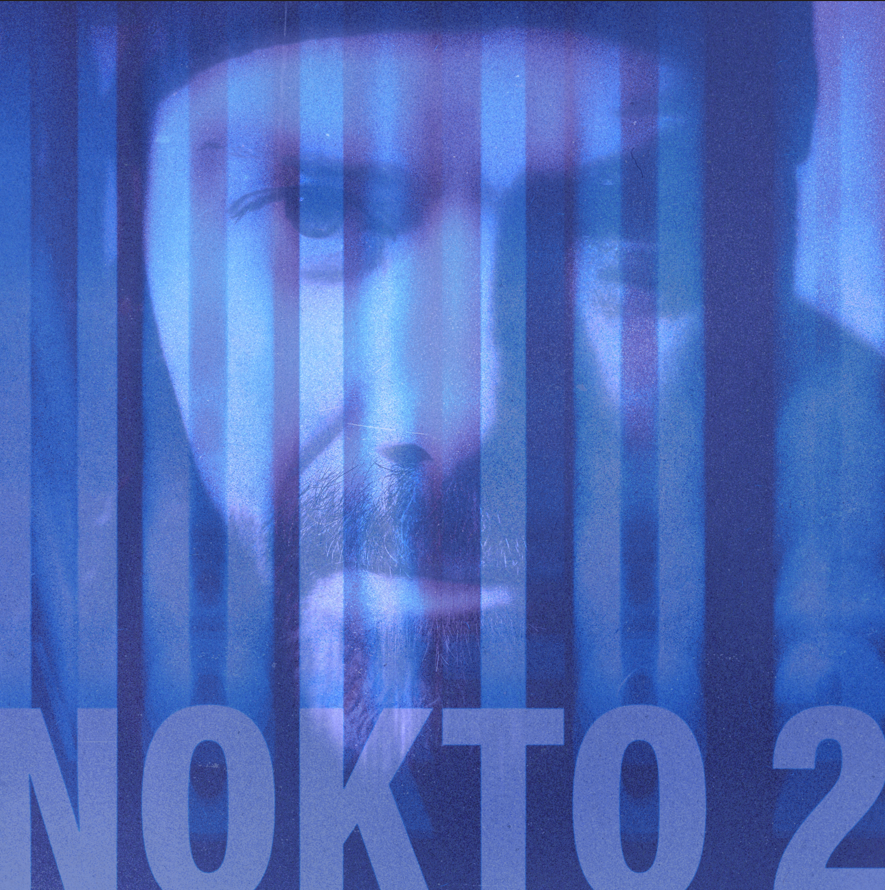
What listeners value in piano music, lyricism, virtuosity, and deep emotion, reaches a new dimension in Jordi Forniés’ EP “Nokto 2.” For Jordi, a Spanish musician, composer, and visual artist, this release marks a step into new territory. “Nokto 2 ” is a cycle of piano pieces that became a kind of way for the composer to cope with a difficult period in his life. Through these works, he was able to emerge from a state of depression and see the world anew – with reflections on humanity and the value of life’s everyday joys. The work of Jordi Forniés combines neoclassicism and ambient, distinguished by a blend of gentle motifs and clearly evolving structures.

He writes for piano, strings, and chamber ensembles, merging acoustic and electronic sounds. Forniés received a classical music education at the Vila-Seca Conservatory and a master’s degree in composition from the University of Chichester. He is a member of the Composers Society of Singapore and often collaborates with artists and filmmakers. Among his projects are the score for Bouvaque (in collaboration with Han Sungpil), music for the film Aletsch: Of Ice and Men about a Swiss glacier, as well as participation in the art project Mother River for the Venice Biennale.
But let us return to the EP “Nokto 2” and take a closer look at the six pieces presented on the EP. The sound of “Nokto 2 “is compact and muted. The instrument’s soft timbre responds sensitively to every touch, so each nuance of the music becomes a sonic event. You won’t find the brilliance of loud climaxes or the roar of full-bodied passages here, instead, there is an incredible intimacy of expression. The opening piece, “It’s Time To Dream,” represents the artist’s aesthetic stance. In my view, it expresses a period of emotional and physical fragility. Jordi’s playing is especially piercing, he offers an almost frozen, focused silence. Against this backdrop, “Blue Air” comes across as unexpectedly airy and strictly rhythmic. There is little overt passion here, but one feels restraint and the lightness of flight. The performance is free from excessive sentimentality, and the felted piano hammers lend a sense of transparency to the sound.
At first glance, the EP might seem to focus exclusively on solo piano, and formally speaking, that is indeed the case. However, with deeper analysis, the multi-layered nature of the work becomes clear. Attentive listeners, especially professional musicians and critics, will note the distinct traits of ambient music in this release, as well as elements characteristic of the new age genre. This combination gives the EP a special atmosphere of contemplation and sonic clarity, extending its scope far beyond the bounds of classical piano tradition. The selection of pieces in the release demonstrates Jordi’s taste for restraint. Take, for example, “The Rain That Shines” – it begins hesitantly and declamatorily. One senses the composer is in a state of reflection. The melody under the pianist’s fingers is fragile and evokes poetic imagery.
The composition perfectly embodies the composer’s idea of telling stories that are both personal and universal, drawing the listener into a space of silence, empathy, and inner connection. I recommend paying attention to the piece “Beings “- it seems to encapsulate the essence of Jordi’s style: a strict, almost ascetic texture with echoes of longing, in which a recognizable intonation sometimes surfaces, becoming an expression of emotional state, a breakthrough of inner tension.
The hidden conflict in the EP’s melodies flows into a special musicality – restrained, yet quietly “burning.” It’s not a fever of passion, not romantic fervor, but a certain heat of the working intellect – this, in my view, is the temperament of this music. Take “Morning Drops”, for instance: the playing is incredibly clear, conceptually structured, and not without artistic tension. Jordi does not so much “interpret” as he transforms – finding a new artistic identity, a different internal center of gravity. It’s a rare case when a pianist performs like an actor, dissolving into the dramaturgy – chamber-like, restrained, and utterly sincere. The closing piece, “Love Me More Than Ever“, centers on the intellectual depth of the musical fabric, striving to overcome all-consuming minimalism through thoughtful elaboration of each intonation. It reveals an extraordinary melodic gift, beauty, and tragic charm. I would say it is a whole whirlpool of hidden emotions, while the surface remains calm and unshaken.
Captivating performance, a sense of a long journey, a unified gesture, this is what makes “Nokto 2” so impressive. The cycle sounds vivid, emotional, even passionate – but it is the passion of thought, not of feeling, the quintessence of “music of the mind.” Such a recording can be called bold – in an age when solo piano albums are often subject to marketing logic, Jordi Forniés chooses rarity, difficulty, and thoughtful risk. And this is a call to listen to something entirely new.
Published in partnership with SubmitHub







 Voxwave Magazine: Music, Culture, Interview, Fashion