
New Yorkers joke that: “If you want to see the real city – come in the first week of January”. After the stormy meeting of the New Year, the noisy megapolis suddenly takes a pause. The streets of Manhattan seem like decorations for a film about an abandoned planet. The wind chases skeletons of thrown-out Christmas trees along the sidewalks, confetti glitter freezes into gray slush, and people in the subway look at each other with the facial expression “I survived the end of the world, and I didn’t like it“. Therefore, Lacey Lune’s decision to move the release from New Year’s night to January 9th seems to me like a brilliant curatorial gesture.

Lacey Lune is a multifaceted artist and fearlessly adventurous creative personality. “Apocalypse” is her third full release, and if you count EPs, then the fourth. The singer’s new work is “assembled from shards” – smoky soul of the 70s, torn guitar edges of post-grunge, synthetic shine of modern pop. Lune doesn’t choose between genres, she lets them collide, burn in each other. A vivid and emotionally charged statement at the intersection of glam-pop and alternative rock with a post-feminist message. The release touches on themes of sexual freedom, experienced traumas, industry cynicism, life on stage, and self-irony that helps survive an internal apocalypse. A recording of 13 tracks, and I will share my opinion about several of them.
Opening the album is «She’s a Symptom» (feat. Vic Merrick), setting its sound palette: soft vocals, synths and drums, electronics gradually fills the space. A song about toxic masculinity and female self-demonization: the heroine sees herself not as an “ex”, but as a symptom of male trauma, turning what she experienced into a stage performance. In the text – anger, pride and satire on how society and industry make a spectacle out of female pain.
I recommend paying attention to the track “Thanks for the Exposure” – it has a refined sound of acoustic instruments, enticing rhythmicity of arrangements and vanilla vocals. It’s about exposing the music industry and male producers who exploit female artists under the guise of “patrons”. “Thanks for the exposure” is sarcastic gratitude for trauma that has turned into material for creativity.
The light, endlessly sweet track “Lipgloss Apocalypse”, I have a special relationship with it. Its agitated feminine and stylish naivety hypnotizes, although in the lyrics there are no hints of naivety. Lacey sings about her own scars, breakdowns. «Apocalypse» here is a metaphor for crisis and female evolution. «I photograph fine» is an ironic statement about how depression and glamour merge into a single stage image. In turn “Sandy Eggo (Sonnet for the One Who Won’t Call)” is an intriguing track that switches between hypnotic verses and a dance drop. A sonnet in the spirit of Shakespeare, dedicated to unrequited love. A soft contrast between high style and modern intonations; the heroine admits dependence on a person who doesn’t answer, but maintains self-irony. Successful, it seems to me, is the song “Turn on the Water” – a cover of Afghan Whigs. Lacey tried to recreate the familiar sound and make it modern. The singer managed not to go too far and show individuality. The cover sounds like a ritual of dissolution: “take me to the ocean“, “don’t let me breathe“, “let it wash away” – the language of depression, voluntary departure from pain through zeroing out and water as an erasing force. In the album this expresses the moment “after the show“: the need to turn off feelings.
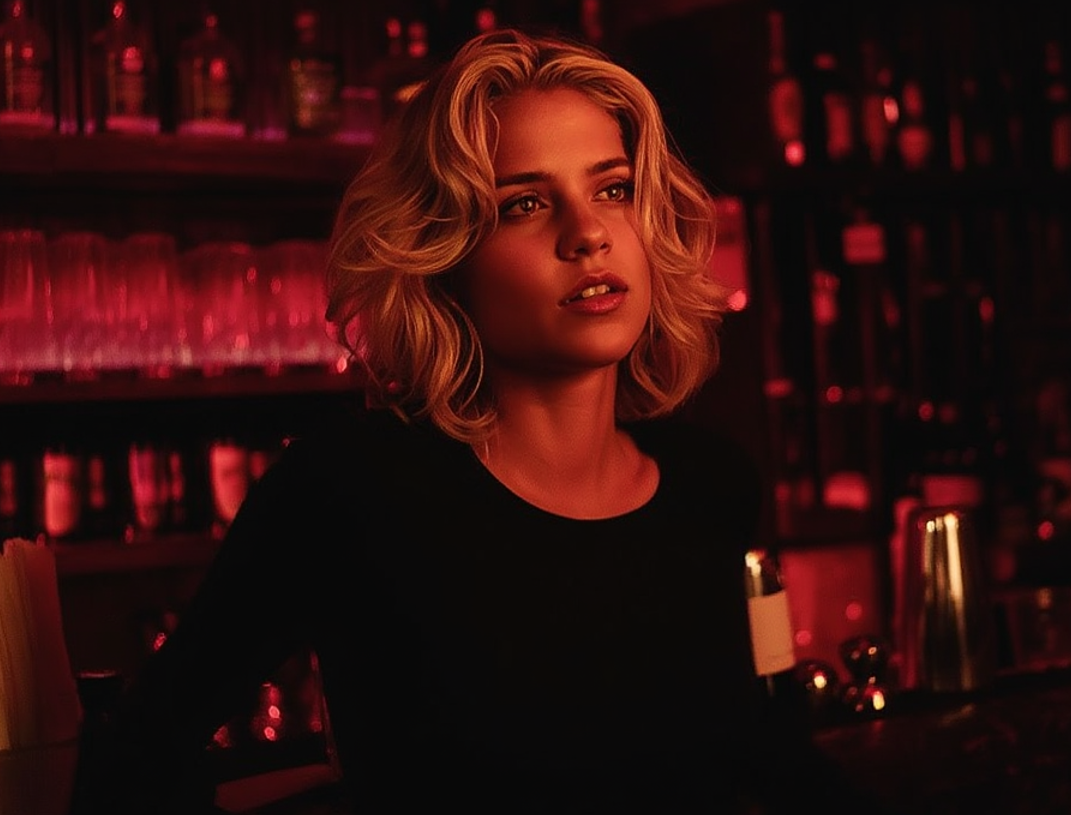
My personal favorite on the album is “My Own Private Apocalypse“. The track transforms anxiety into a comedic apocalypse: everyday trifles are edited like a catastrophic film, the heroine is both director and clown. Instead of seeking salvation, she dances, jokes, arranges her «meltdown mambo» and thus returns to herself control over her own disintegration. This is no longer dependence (as in “Sandy Eggo”) and not a desire to dissolve (as in “Turn On the Water”), but a third answer to pain: aestheticization of chaos and managing it through the language of pop culture and performance. A single longer than four minutes is already considered a bold step. In the final track-epitaph “Quit While You’re Winning” glamour meets entropy, and apocalypse – liberation. Lacey Lune sounds with cool relief: the protagonist finally took off her shoes after a party where no one noticed her departure. The singer theatrically plays with nuances. In her there is both sadness, and tenderness, and drive, and strictness – this shows the diversity of Lacey’s talent. Here are many interesting details: there is something bass dull-gloomy, and clicking, and delicately-tonal, and overwhelming – at the same time everything is clear, everything falls into its corners of attention.
“Apocalypse” by Lacey Lune is a magnificently mature and masterful work both in terms of melodic hits and in richness of arrangements and instrumental diversity. I will end with a quote from Nina Persson, vocalist of the group Cardigans, who said: «It’s difficult to give pop music a precise definition. I would suggest considering good music and bad music. Good music is good regardless of its genre».
Published in partnership with SubmitHub



 Voxwave Magazine: Music, Culture, Interview, Fashion