
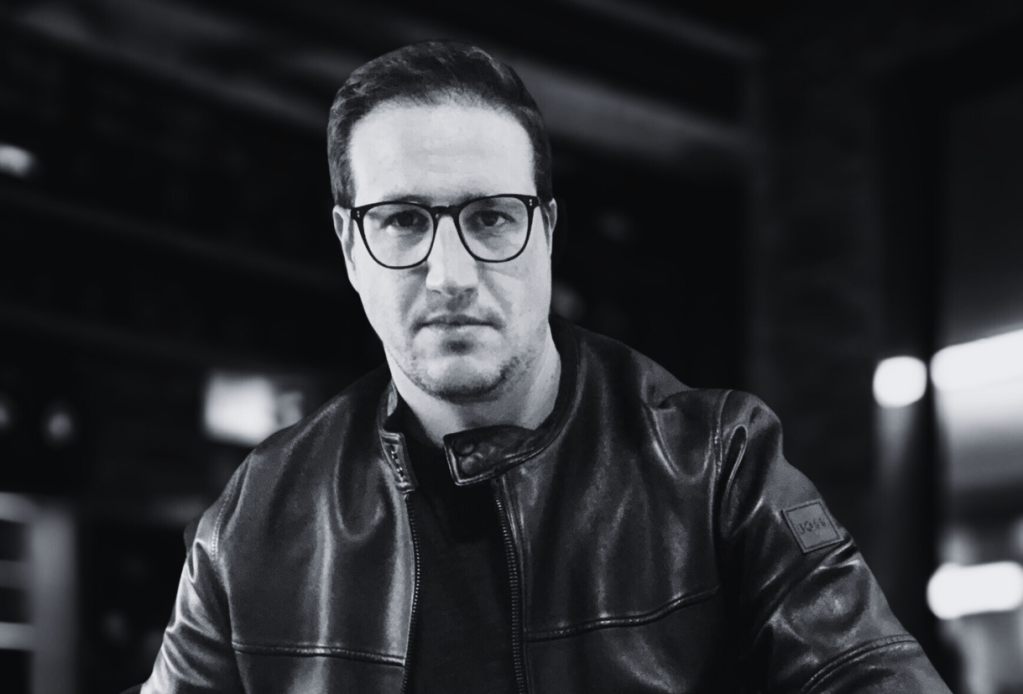
Winter in Los Angeles is, to be honest, conditional. January there smells not of snow, but of dust from highways and overroasted coffee. The city lives in a mode of eternal rehearsal – as if everything is still ahead and the main stage is only being built. In such an atmosphere, voices that don’t try to shout over the noise but work with it are especially sharply heard. This is exactly how the debut album “Hard To Be Human” sounds, by Jacob Tell, an indie rock musician, produced by Don Douglass, and distributed by Ekletrik Rekordz. In the new release, Jacob Tell paints a picture of resilience, exploring the difficulties and anxieties faced by Americans in today’s polarized environment. Musically, the author creates chamber architecture: acoustic and electric guitars, double bass, keyboards and drums form the solid foundation of the album. From the eleven presented tracks, I selected several that I want to share impressions about.
I’ll start with the first title track “Hard To Be Human”. In my opinion, it contains the entire sound world of the album – the world of artist Jacob Tell, personally penetrating into every particle of sound. Instrumental parts are carefully woven into the harmony of the composition and seamlessly connected with spatial vocals. Guitar chords dissolve in reverberation, and the double bass enters the fabric of the track and remains somewhere on the periphery of hearing. The restraint of the opening track contrasts with another successful find of the album – “Zero Street”, stretched to 7:03. The most ambitious thing, but ambition here is not in complexity, but in patience. The track moves like a long walk through an empty district: the guitar draws the same figure with small variations, drums add harmonious shifts, and the voice tells a story without a climax. By the end you begin to understand that the absence of a climax is the essence.
The mood of the album changes slightly on the track “Cracks Appearing All Around”. Rhythmic ease, graceful guitars interweaving with drums and along the way adding elements of folk – deep, bright and spiritual – a kind of homage to great Americans, and a personal, authorial vision. However, the album doesn’t lock itself in seriousness – “Cool As A Customer” plays with irony, but without a smirk. The title promises detachment: slow tempo, keyboards with a touch of nostalgia, weighty double bass. Precise guitar lines are elegant and clear. The calm, touching voice makes the text sharper. Such organicness – when form doesn’t overshadow content – becomes the calling card of the album.

In “Shutdown” the unchanging, recognizable voice sounds without tension, flows easily and evenly. Guitar passages and chamber “nylon” acoustics, enveloping bass, smooth drums, thoughtful double bass and lingering keyboards – here you can find everything. I recommend listening on repeat. In turn, “Trad Wife” intrigues with its deliberate unhurriedness. Acoustic guitar opens the track with fingerpicking and it repeats until the end – it would seem not a complex technique, however such monotony gives some kind of trance state. Double bass and drums hold the rhythm with delicacy. The voice sounds muffled, mysteriously – more of a half-whisper with melody than full singing. The most interesting thing happens closer to the finale: the guitar plays sustained notes, and the vocal at this moment practically dissolves in the music, becomes part of it. And here it’s clear that the endless repetition of the same chord hypnotizes – that’s the main trick of the track.
My favorite on the album was the track “So Much of the Time” – it’s like a chamber miniature, where the absence of drums is a conscious gesture toward vintage aesthetics. The playful, nostalgic mood reminded me of the era of Hollywood musicals of the 1940s-50s, but purified from orchestral pomposity, the same lightness and music for creating the atmosphere of a quiet moment. The track doesn’t develop linearly – it rather circles around the central theme, returning to it with barely perceptible variations, like a jazz standard that they play in a small club for their own. By the final track “Names of the Dead” the album arrives at something similar to acceptance, though a grim one. The arrangement is minimalist – acoustic guitar, barely audible keyboards, and vocals with touching vibration. The lyrics address memory, those who were forgotten and the responsibility of the living to remember. A touching quiet ending for the album, an act of resistance, a refusal to allow the noise of the world to drown out the voices of those who deserve to be heard.
What impressed me most in the album “Hard To Be Human” by Jacob Tell is its chamber quality and live sound. The author works with simple elements – guitar, double bass, voice – but assembles from them something whole and sincere. The musician behaves like a person who doesn’t need to be strong to tell how hard it is to be human. And in my opinion, honesty without a sign, tolerance for one’s own weakness – this is the position that today sounds most human.





 Voxwave Magazine: Music, Culture, Interview, Fashion