
There are things that many people love secretly. Not because they are ashamed – but because their surroundings are convinced that, for example, loving classical music and being passionate about anime looks ridiculous. Mozart or Pokémon. Chopin or Naruto. The concert hall or the anime screen. But does an unspoken law exist that forbids these contradictions from meeting? Even if it does, Victoria Daninisa broke it. And she did it beautifully.
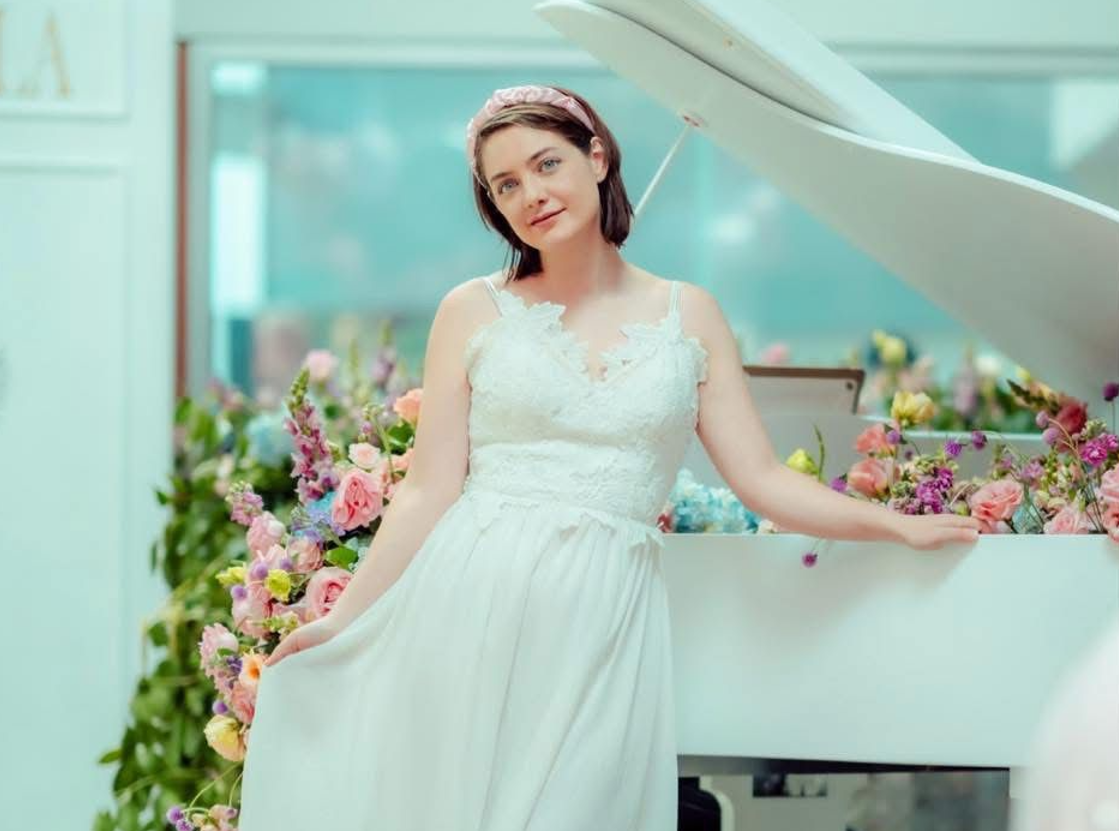
Daninisa is not a debutante with a couple of viral TikTok videos. Performances on stages in Mexico and Romania, work as a soloist with symphony orchestras, years of academic training on Beethoven sonatas and Rachmaninoff études. She knows virtuosity firsthand. That is why her choice – to dedicate an album to anime music – sounds not like a capricious experiment, but like a conscious gesture. From the age of five she had two passions: piano and anime series. From the age of five people explained to her that these were incompatible. Growing up, she hid her love of anime – because the stigma of “otaku” in academic circles sounds roughly like “not serious.” Then came her master’s degree, academic papers on Studio Ghibli, and a firm conviction: anime is art. Fully legitimate, mature, complex. Evangelion explores the psyche and existential crisis. Psycho-Pass raises questions about the nature of power and freedom. And the music written for these stories carries meaning and emotion.
That is why “Abrazo Musical Vol.1 Animes” is an album – an embrace with one’s own childhood. The choice of material speaks of taste and of a certain creative maturity. Dragon Ball, Naruto, Elfen Lied, Mashle – four completely different emotional worlds. Dragon Ball – excitement and a childlike delight in power. Naruto – loneliness, stubbornness, and that particular bitterness of growing up that the Japanese know how to convey in their own way. Elfen Lied – entirely different territory: the music of this anime is built from the outset on a classical foundation, and in a piano arrangement it acquires an almost liturgical severity. Mashle – relatively fresh material, and its presence signals that the series does not freeze in nostalgia but lives in the present.
Each theme in Victoria’s interpretation is a separate little story. There is no averaging toward a “neoclassical style” or the sterile minimalism that today is easy to mistake for depth. The arrangements are dense, dynamically rich, at moments almost orchestral in texture – while remaining chamber-like and intimate. This is a delicate balance, and holding it is not so simple.

In the album’s repertoire, what matters is not only technique, but also how Daninisa feels each piece. The album opens with “Yo Te Atrapo, Tú Me Atrapas” – a lively, slightly playful beginning: the piano seems to wink at the listener, inviting them into the story. Dragon Ball is recognizable by its spirit and that energy that as a child made you want to leap off the sofa. Next comes “Mi Corazón Encantado”: cinematic, elegant passages glide across the keys. The chords shimmer, the melody stretches, the notes flow into one another – and at some point you stop noticing the seams. The Bösendorfer opens up to its full power: its singing middle register carries the melody and sounds truly inspiring.
Particularly memorable is “Blue Bird” – the melody and Victoria’s playing resemble the beat of wings. Not pompous and not heavy, but light, almost weightless. It seems the melody itself does not know where it is flying – and that is its freedom. Then comes “Lilium” – and everything falls still. The piece wins you over with a tender, at times fragile melody. Those who have watched Elfen Lied know this paradox: one of the most brutal anime opens with music resembling a church chorale – Latin, Klimt, innocence. Victoria takes this fragility and unfolds it to its limit.
“Bling-Bang-Bang-Born” bursts in like a cold shower after meditation – undoubtedly intentional. An accelerated tempo, sharp accents, fingers barely keeping up. Mashle in all its absurd energy, translated into the language of piano without losing a single gram of its madness. One of the most unexpected moments on the album. Everything closes with “Remember Sadness” – a smooth, lyrical composition, performed with elegant grace. The album closes the way good anime closes: quietly, and not letting go for a long time.
Daninisa once admitted that of all genres, anime brings her the greatest pleasure when transferred to piano – and, listening to the album, you understand why. Anime music is by its very nature epic. It is written for moments of overcoming, for final scenes, so that the viewer’s breath is taken away. When such music meets an academic pianistic tradition, something unexpectedly powerful arises. Not a “simplification” of classical music and not an “ennobling” of pop culture, but a conversation as equals between two serious musical languages.

There is something symbolically precise in the fact that it is precisely Victoria Daninisa who stands behind the project “Abrazo Musical Vol.1 Animes.” A master of aesthetics, convinced that art exists not for the initiated, but for everyone who has ears and at least one memory worthy of music. Abrazo Musical – that is her: technique in the service of warmth, classicism in the service of memory.
Published in partnership with SubmitHub






 Voxwave Magazine: Music, Culture, Interview, Fashion