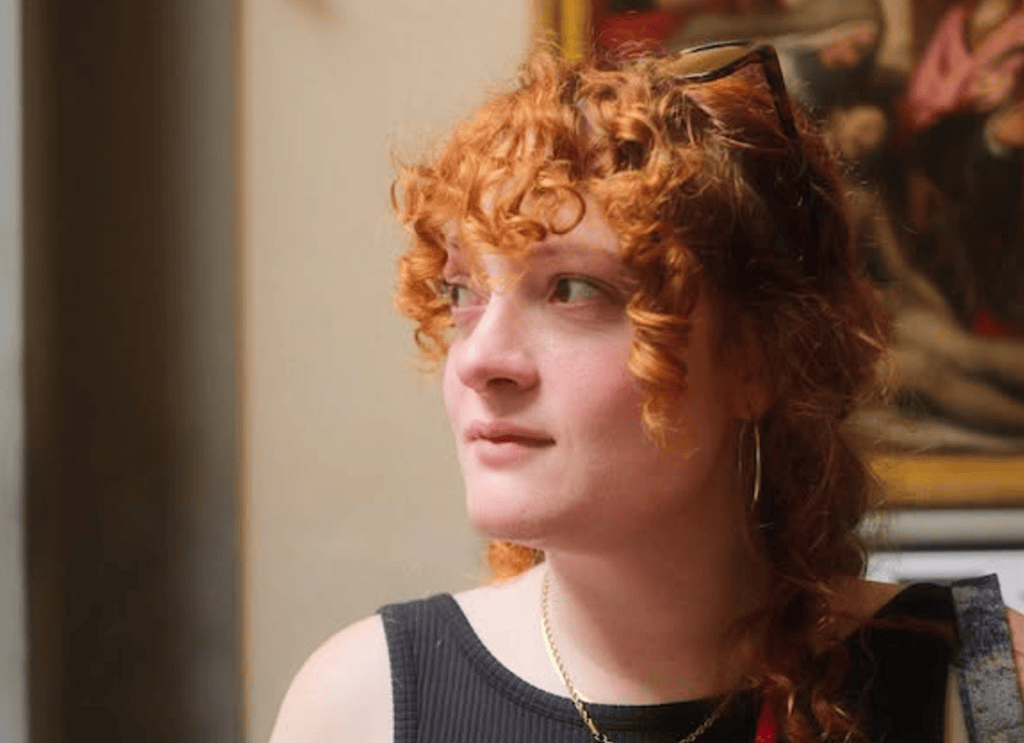
I have long suspected that many of us have a sixth sense: the ability to feel the air thickening before someone utters the fateful “we need to talk.” And then you grab your bag, invent a polite excuse, and dissolve into the evening lights with the look of a person who suddenly has urgent business. Except sometimes you have to run not from a party or from a person, but from thoughts in which a storm is brewing. No polite excuse can hide you from that. That is the weather I heard in “Runaway” by Adrienne Leska, a singer and songwriter from Cleveland.

The song begins with smooth piano chords: the sound is soft and slightly muted, without any effort to fill the whole space at once. Slowly, the percussion and the singer’s vocals with a caramel-like quality join in the melody. Her voice has a remarkably close and personal feel. The musical background matches that of the vocals. Soft acoustic elements are combined with a subtle electronic layer which shimmers just at the edge of hearing, like the sound of rain heard from outside a window. The composition carefully includes pauses-and it is in these pauses that you hear what is most important. Rather than offering a grand cinematic escape, there is here an inner moment of pause: an effort to pull oneself out of the never-ending race known as “I have to measure up” and to dull the noise of other people’s expectations. The gentle electronic discomfort in the background is like the clouds outside the window, yet it is simply the natural background for someone who has finally allowed themselves to stop.
Adrienne doesn’t talk about breaking away from the world but rather about momentarily stepping outside it-about taking a breath somewhere to the side and recalling what it feels like to be yourself. The title has two meanings: firstly, it refers to the desire to get away; on the other hand, it signifies an effort to find the way back to oneself. In the lyrics there is a clear distinction drawn between who you are and who you might become; underneath your feet is ice which will not support you. The music enables the story to stay recognizable and genuine. I enjoy the fact that “Runaway” comes to an end in a calm way. There is no triumphant conclusion-just the recognition that at times strength consists in allowing oneself not to be strong, in taking a break for a while, and in standing in the rain without making an effort to stop it.
Adrienne Leska has for a long time written on the subjects of self-discovery and freedom, and ‘Runaway’ carries on this theme-in a close, gentle manner with the warm tone of folk-pop. It is a song to play when you want to switch off the light but don’t want to be left alone in the silence.