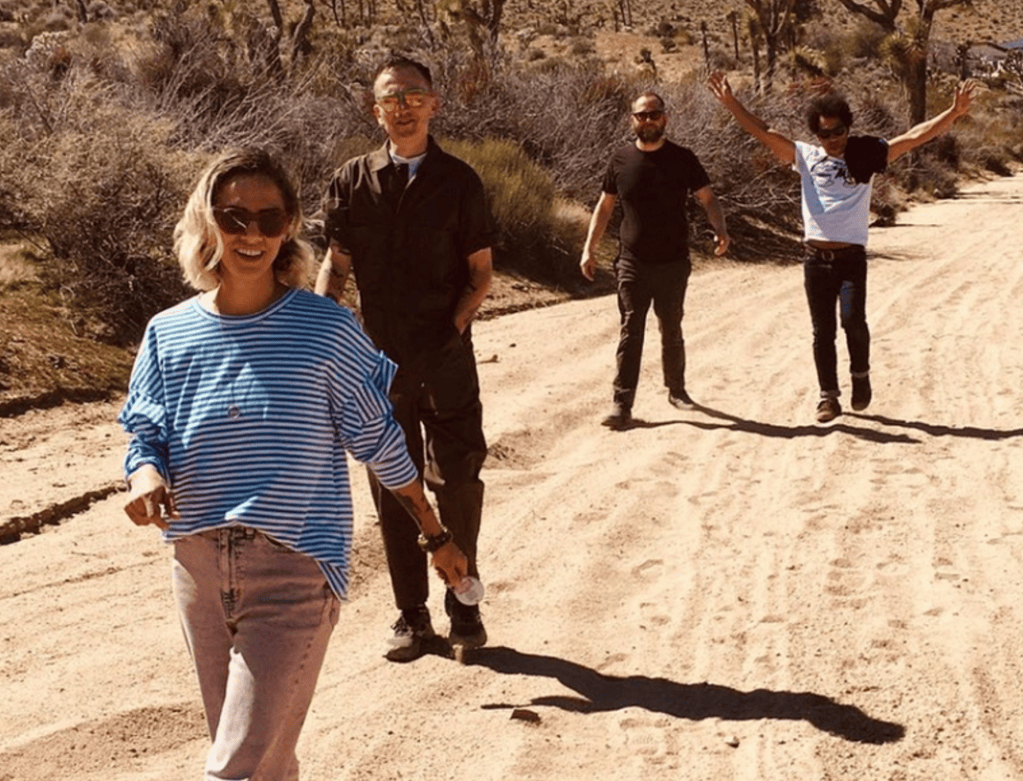
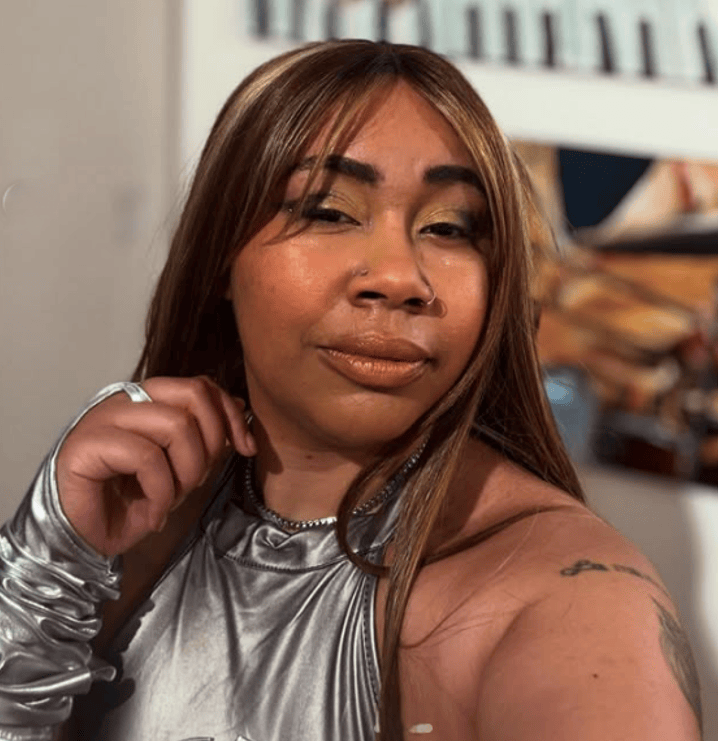
Brooklyn-based band LAPÊCHE enters a new chapter of its story with “Autotelic” – a release about inner movement, acceptance, and the ability to value the process itself without worrying too much about the final destination. Recorded in Joshua Tree with producer Alex Newport, the album blends shoegaze atmospherics, gothic undertones, and melodic restraint. Ahead of their December tour with Endearments, we spoke with Krista Holly Diem about the band’s musical evolution, creative chemistry, life on the road, and why sometimes it is better to simply be here and now.
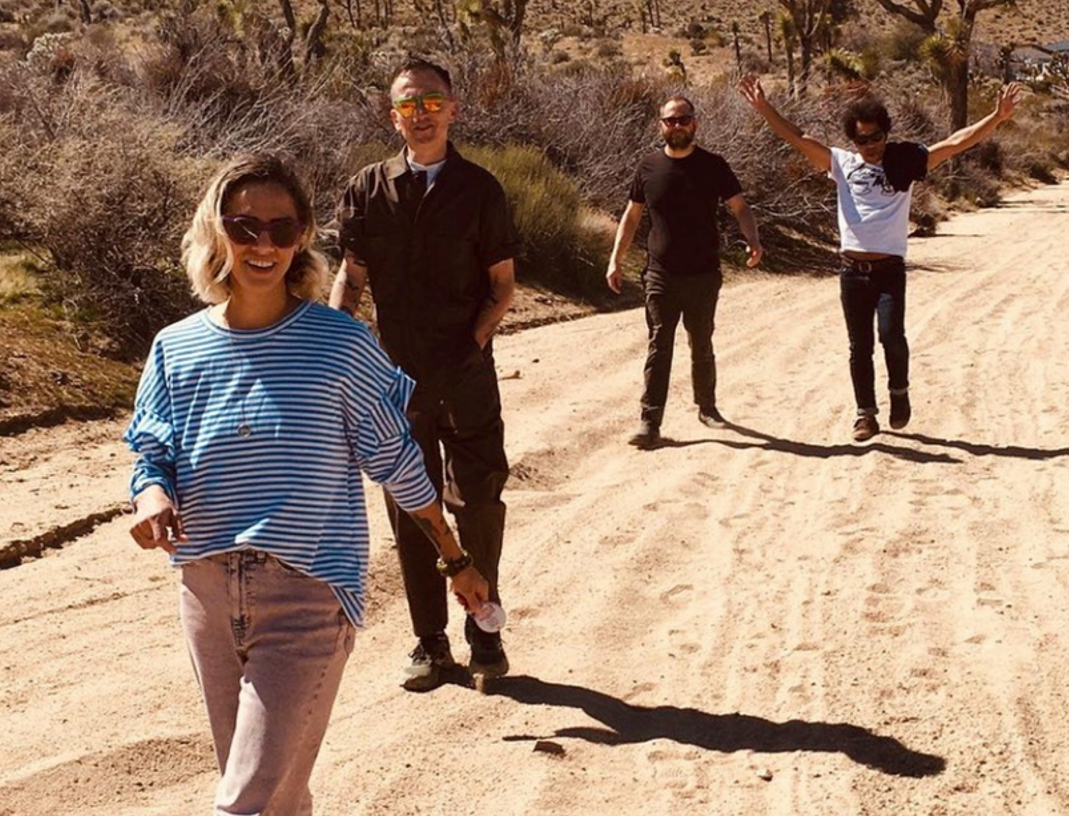
Hey guys! We’re thrilled to meet you and get the chance to chat, especially right now with a fresh release in your hands and suitcases practically packed for your December tour. Be honest: are you currently soaking in the zen of the moment, or quietly panicking while checking if all your guitar pedals actually fit in the trunk?
I don’t know how good I personally am at soaking in the Zen, I like to be very VERY prepared. For this tour luckily we are sharing some gear with the Endearments. Touring for me is more of a wardrobe delemma. How many pairs of shoes are “reasonable”? I love fashion so much, and winter clothes take up so much space! So rather than what pedals can fit, it’s like…. can I squeeze in non-essential accessories? I am dying for the tour to start tho, it’s been a little too long.
LAPÊCHE started out in 2016 as Krista Holly Diem’s solo project before evolving into a full-fledged Brooklyn band. Krista, how did music first come into your life, and what pushed you to trade the quiet harbor of a solo project for a noisy rehearsal room with a live band?
My parents always had records playing and my dad taught me guitar: song writing came very natural to me. I think folky music is just the easiest to do without a band so that’s what I did. I stopped playing music the year I got sober; because writing and playing always included alcohol and I wasn’t sure how to preform without liquid courage. But Dave, our bass player and my husband, really pushed me to start playing music again and much like sobriety I needed to not go it alone. LAPECHE was a natural evolution of collaberation. I love when songs I write to go in an unexpected directions, because I am not the only one contributing anymore. I didn’t think I would be good at “rock” but it now feels very comfortable.
Every band has its own internal chemistry, and yours is also built on years of knowing each other, friendship, and shared experiences. How are the roles divided within LAPÊCHE? Who usually brings unexpected ideas into the rehearsal space, who’s in charge of the fine details, and who knows when to step in and say, “I think we’ve got enough”?
Drew, our guitar player is an ideas guy, and his ideas sometimes come at rapid speed. So fast that even he doesn’t remember what they were! Dave is the admin (which he does and does not enjoy), he also writes alot of the guitar riffs that get transformed into songs. Colin is the easy going machine! He can come up with the perfect thing for each song instantaniously and is “cool with whatever” always. I am the melody maker, facetime call and rehersal ender, and I have the final say most of the time. Drew and Dave work well together (most of the time) on getting the best “sound” for each project.
LAPÊCHE already has several stages of musical evolution under its belt. Looking back at your previous releases, what shifts in your own sound do you notice today? Is there anything from your earlier era that you consciously decided to leave behind, and anything you’ve actually felt drawn to revisit?
On our first EP and LP, I played alot of guitar. But because I am not as proficient as Drew with the guitar, my guitar writing and playing has taken a back seat. I recently have been playing it more and would love to bring back some of my weird finger picking into our next album. But with Autotelic, we wrote the entire record remotely; i think there were 2 songs that we finished in the studio. It’s kind of amazing to get to sit with something someone wrote and come up with something to go with it, without having anyone elses input. Then we would pass it on to the next band member to come up with something. Rather than working it all out in our practice space. Everone takes a turn with each song and adds a layer. We quickly wrote 18 songs in a matter of months; a pace that I usually cant keep up with.
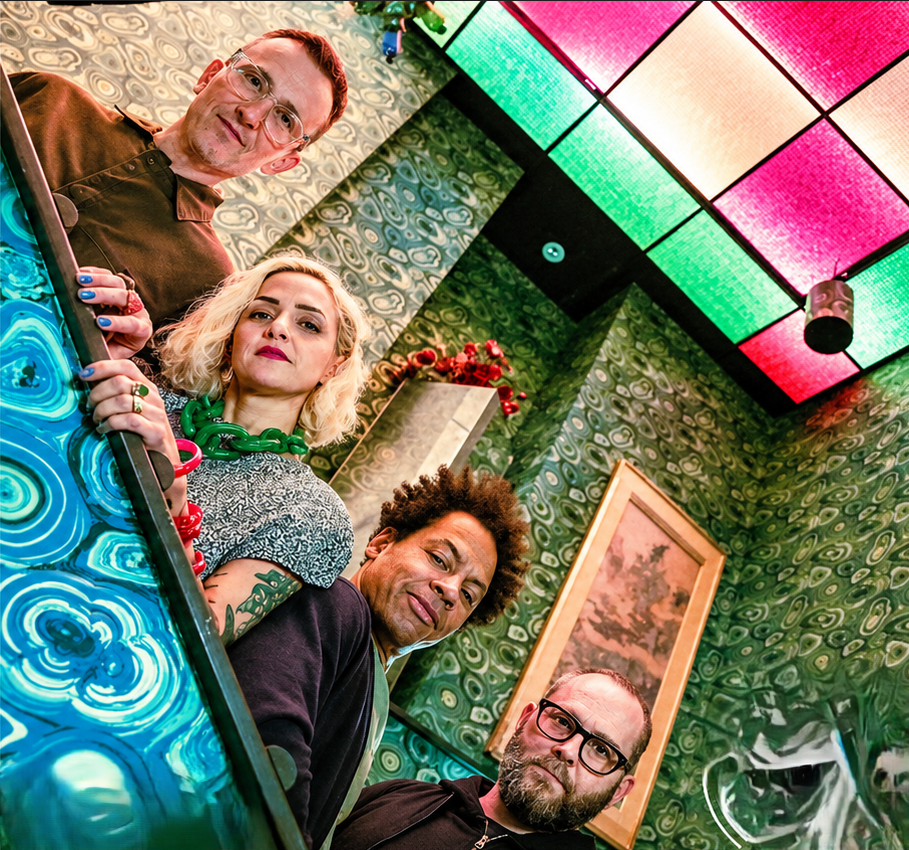
Moving on to “Autotelic”-an album that invites the listener to slow down a bit in a world where everyone is rushing somewhere. The title itself refers to doing something for the sake of the process rather than the end result. Why did this concept become so central? And would you say that working on the album became a kind of mindfulness practice for you?
TOTALLY! I think this album HADto be a “practice project” for me. The mindfulness practice (the doing) really is the reward. I feel like before I was disappointed ahead of time when previous albums didn’t catipult us to the “top of the charts”. For this album we made it to make it. It was a pretty rad feeling to be in the present every step of the way, rather than wanting it to be finshed already.
You’re based in bustling Brooklyn, yet you headed out to the Joshua Tree desert to record the new album. To put it mildly, that’s a radical contrast. Did you feel a slight pang of homesickness in those first few days, looking out the window at nothing but cacti and suspiciously loud silence instead of sirens and car horns?
Yes! I do not do well with relaxing and there were hours each day where I was just sitting and listening, like while the drums were tracking or Dave was trying every Bass pedal under the sun. I didn’t feel homesick but I did feel uncomfortable with the stillness. Another autoelic act, actively practicing really being in the room, and not watching Real Housewives on my phone.
There’s an interesting thought in the album’s description: sometimes it’s more important to feel what’s happening than to understand it. That’s a fairly bold approach for music that listeners usually try to dissect for meanings, lyrics, and references. How important is it to you that the audience interprets the songs on their own, without necessarily trying to find a concrete answer in every single one?
Sometimes I am actually not sure what a song is about when I write it. It starts to come together once the melody comes. I also don’t like to be too literal lyrically so there is a lot up to the listener to interpret. There is meaning there but I always want the listener to lean into what it’s about for them. The hope is that whatever they interpret a song to be about, I want them to feel that they are not alone in what they are feeling.
Compared to more conventional rock structures, *Autotelic* features noticeably more space, repetition, and restraint. It feels as though you’re letting the tracks unfold at their own pace without rushing toward a climax. Was it difficult to resist the usual urge to make a song louder, denser, or more dynamic?
It wasn’t harder for me necessarily, but the rest of the band comes from a punk rock background, so the urge to fill up any and all spaces is pretty dominant. So this record was a lesson in restraint. Our producer had us “leave alot of room for vocals” while writing. Less is more, leave room for room, give the space some space.
On the new album, I was especially drawn to the complex “Happy 4U” and the tense “Double Knotted,” but “Autotelic Nosebleed” intrigued me the most. The repetition in it works like a real mantra. How do you find images and words like that – ones that don’t tell a linear story head-on, but rather convey pure emotion and atmosphere?
This question is such a compliment. One thing I do, even when I am not in writing mode is keep a list of words or phrases I like. So when I read something or hear something I love I put it in the log. When I get to writing, I have a topic or story in mind and I see if any of the words in the logbook fit the feeling. Sometimes it’s a word that is usually used in a different context but somehow makes sense to me. It sounds disjointed but I think the words sometimes were predestined for specific songs.

Thank you for such honest answers. And one final question: LAPÊCHE’s songs are steeped in personal experience and vulnerability, and Krista and Dave, on top of everything else, are married. How does this shared life background affect the band – do you manage to leave personal feelings outside the rehearsal room door, or does the music inevitably become an extension of your everyday conversation?
We both take things personally and think there are specific ways things should be done, so it’s not always smooth sailing. But we have had 10 years of practicing playing music together, so we’ve mostly figured it out and know each others strengths. The best is when we are disagreeing in front of Drew and Colin; they are so uncomfortable when “mom and dad are fighting”! In the end though everyone agrees that I am right most of the time;)