
“Who looks outward dreams; who looks inward awakens.” – Carl Gustav Jung. More often than not, awakening appears awkward-a painful recognition of oneself in what one has long avoided. This is how Martha Elizabeth Miller’s album “What Lies Within” begins-and how it ends. Twelve songs form a spiral of transformation and an intimate conversation with the self. The story of the album’s creation is already a narrative. At vocal workshops at the Banff Centre for Arts in the Canadian Rockies, Martha met Dawn Campbell and Marguerite Witvoet. The three women were united by one thing-the desire to tell women’s stories. That was the moment it clicked: this is the music they wanted to create, and these were the people who could bring it to life. Then came New York and Vancouver across the continent, Monarch Studio in British Columbia, with Marguerite as co-producer. The album was created through distance and meetings-as, in fact, any real connection is. At its core is Jung: anima, shadow, the search for one’s own voice in a world that suppresses it. The sound matches this: piano, violin, cello, percussion-nothing superfluous. Only space and silence between the notes. The three voices sound on equal terms, intertwining without division into solo and accompaniment.

Out of the twelve tracks, I will focus on a few. The album opens with a fracture-the song “Sing Your Broken Heart,” a graceful gesture that sets the main musical line: pain is not concealed, it is given a voice. Not “move on,” but first acknowledge the pain-the first step of individuation in Jungian terms. Piano and strings hold the entire structure, and in that restraint lies its strength. In the same vein moves the track “Dwelling Places.” After naming the pain, one must look around: in which rooms of your psyche do you spend the most time? “Dwelling places” is, quite literally, a Jungian question of which parts of ourselves we inhabit and which we lock away. Musically, it is a moment of stillness-a space for observation. Miller sings with a full sense of essence and style. She is distinguished by impeccable taste and a refined energy. The instruments carefully and precisely follow the dramaturgy of the overall statement.
A completely different musical line is offered by the song “Walk It.” After acknowledgment and observation comes the moment to move forward. A track of action, a shift in the album’s dynamics, with more rhythm emerging. The singer captivates with a vocal delivery rich in natural chiaroscuro. In slower sections, she skillfully extends melodic lines, striking with seemingly endless breath, never sinking into melancholy but maintaining control over emotion. Movement leads to a question. “Self Searching” is the central track of the album and perhaps its semantic core. The search for oneself is not a romantic прогулка, but at times an anxious, faltering circling. A spiral instead of a straight line. Richly layered in arrangement, the voices sound in complex counterpoint, reflecting an internal dialogue.

The album takes an unexpected turn in “Fortune Cookie Wisdom,” viewing everything with gentle irony. Fortune-cookie wisdom offers ready-made answers the world gives when you seek real ones. “Everything will be fine.” “Believe in yourself.” “Follow your dream.” Beautiful, convenient, useless. The track is a sharp observation of how society responds to a woman’s search for self-with simplification. Miller uniquely balances lightness, openness of delivery, and serious vocal mastery. When the piano is joined by her voice, it creates an unexpected beauty and strong support for the singer. Her performance style, in which delicacy prevails above all, demonstrates the inseparable union of soloist and accompaniment.
The three final songs stand out in particular. After the irony of “Fortune Cookie Wisdom,” “Swimming” becomes a turning point-fear gives way to trust. The vocal confidently retains freshness, youthful agility, and restlessness. “Ode to Sound” resonates as gratitude. An ode to sound-the artist looks back on the entire journey and realizes that music and voice were the compass all along. Art is not a way to escape inner work, but a way to do it. Here, the voices open more fully; the singers joyfully share their rich vocal erudition, sending associative rays in different directions. “Live It All” closes the album with an inner impulse: to accept everything within oneself, both light and shadow. Astringent, courageous harmonies, timbral blends, and rhythmic swirls trail from the first to the final chord.
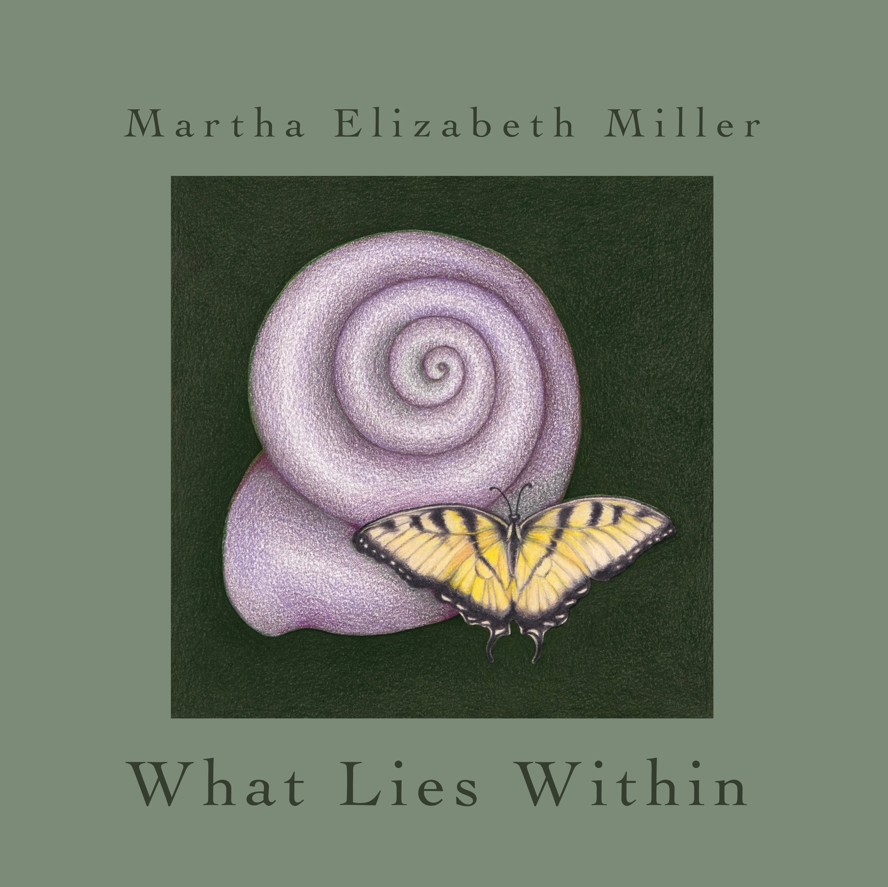
Twelve songs-out of dozens left behind the scenes. “What Lies Within by” Martha Elizabeth Miller resembles the result of archaeological work: only those pieces that speak of transformation are selected. Genre-wise, it stands on the edge of eclecticism: choir, hymns, theater, folk, classical, progressive rock. Yet instead of chaos, there is unity-styles are subordinated to emotional logic. Folk and rock bring intimacy; symphonic and theatrical elements bring scale.
Published in partnership with SubmitHub







 Voxwave Magazine: Music, Culture, Interview, Fashion