In Malay culture there is the concept of “merantau” – a tradition in which a young man leaves home in order, through encountering foreign experience, to return renewed. A metamorphosis of the spirit through contact with the Other.
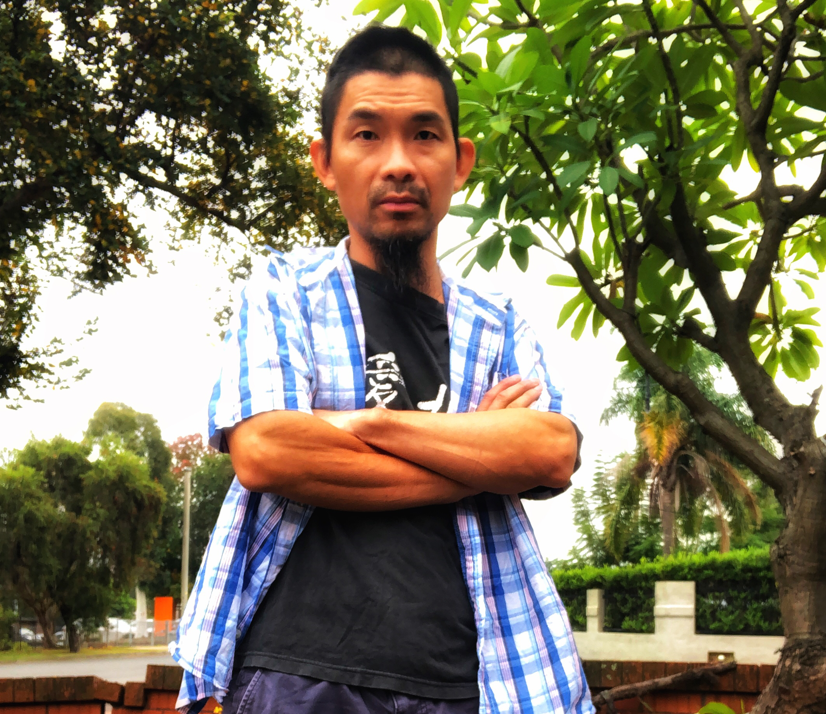
When you listen to “Octopus Fox” – Shu Lee’s third solo opus – you realize: before us is a musical “merantau”. A year ago we already wrote about him, analyzing “Fusion Of Colours” – an independent work where he laid the foundations of his MFDM philosophy. Even then it seemed like a feat to us that a guy born in Malaysia, raised in the melting pot of Western Sydney and having absorbed Australian and Chinese roots, managed with a budget of less than a thousand dollars to create an entire world. The new project includes 12 tracks, 17 subgenres, 20 themes, 27 languages – and behind all this there is still one author, acting as an attentive student of the world. Shu Lee does not strive to appropriate cultures – he touches them, explores, tries them by ear and feeling.
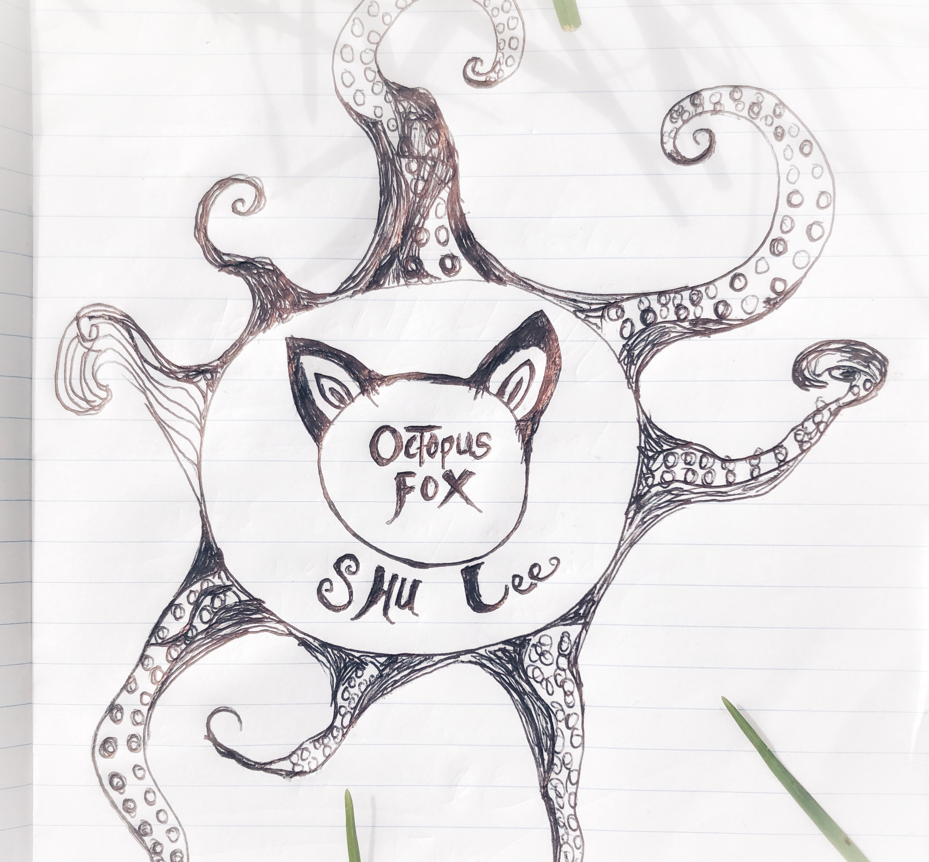
The title “Octopus Fox” may seem to many like a whimsical linguistic riddle, but it justifies its content. The octopus is a master of adaptation, the fox is a symbol of flexibility and multiplicity. Together they form a creature without a fixed identity – a totem of a new era, existing everywhere and nowhere in particular. In this sense, Shu Lee himself works the same way: his music is a space of trust, where languages become material. He fundamentally remains an “eternal student”, and that is precisely why speech on the album sounds like living clay from which emotion is molded.
The album opens with “Al Ramad Wal Ghaith”, a track inspired by the coincidence of 2026: the Lunar New Year overlapped with the eve of Ramadan. Shu Lee perfectly weaves English, Arabic, Mandarin and Cantonese, capturing the collapse of a monocultural world for the sake of a new, hybrid reality. This happens once in a hundred years, and he decided to capture it with sound. Arabic melismas and Chinese intonation explain themselves to each other. “Ash” symbolizes the fading of old, rigid structures of the past. “Rain” marks the arrival of a new multicultural harmony that washes away boundaries. Under the melancholic sighs of a muted trumpet and East Asian liturgical motifs, the track conveys the chaos and beauty of a global transition. In “Ashtuta Dreaming” there is a transition from East Asian motifs to urban rhythms. The track tells about a sales assistant escaping from capricious clients and monotonous shifts through a milky Middle Eastern dessert that became a viral hit in Western Sydney. The “Ashtuta” cake has a dual meaning. It is both an entrance into another reality and an awkward sympathy for a random person. A domestic scene written with sensitivity and tenderness. In another key sounds “Harika”: here a grand drama of relationships unfolds in the scenery of the Greco-Persian wars and the fall of Constantinople. Shu Lee takes a thousand-year conflict – and transforms it into the story of two people. “Harika” in Turkish means “miracle”. The track in English, Persian, Greek and Turkish sounds like an EDM opera with a gothic aftertaste.

The boldest experiment of the album is the song “Ibis In My Hair”. An ibis in the hair is an image from funerary texts, and Shu Lee is not afraid of solemnity. In Western Sydney the ibis is a garbage bird, a “bin chicken”, chased away from markets. In Ancient Egypt – a sacred embodiment of Thoth, the god of wisdom. He combines both images in one track: Northeast African folk music, hip-hop and opera in English and reconstructed Ancient Egyptian. From the scorching sun of Egypt in the song “Oymyakon” the author transports the listener to the coldest city on Earth – Oymyakon (Russia), −67°C. The journalist cannot speak – the eyelashes are frozen. Locals go to work. Shu Lee learns about this from a documentary and asks himself: what is the limit of normal at all, if somewhere people consciously choose what seems impossible to many? He overturns well-fed notions of “comfort”, showing the human ability to consciously choose extreme conditions and find life in them.
An existential paradox is packaged into a stylistic hybrid: Slavic liturgy, Chinese opera, gothic metal and reggae, and the Russian, English and Mandarin languages literally freeze in space. Three languages, six genres, one uncomfortable question. From Russia we go to Africa – the track “Saobona”. You cannot fit all of Africa into one song – Shu Lee does not even try. He chooses a triangle: south, east, west – Zulu, Swahili, Yoruba. The first verse is the Orange River and the fauna of South Africa as a metaphor for persistence. The second is an imaginary journey to a Nigerian village, where a stranger calls everyone to play together. Afrobeats, jazz and Latin – five languages, one big greeting to the continent.
In the finale – a piercing requiem for those who left “Why Did You Leave?”, uniting Japanese, Korean, Vietnamese and English. The linguistic basis was a story: Shu Lee brought together cultures that once shared a common writing system (hanzi). Inspired by personal losses and digital “ghosting”, the song exposes the pain of loss and unrequited love. A contrasting, sensual cocktail of reggaeton, R&B and hip-hop, stitched with Asian liturgy and opera. A minimalist beat, deep bass, melancholic piano and edited backing vocals sound like an aching echo of human memory.
“Octopus Fox” is an album in which identity has become a choice. Shu Lee listens to the world with incredible attention. His music is a conversation, with all the accents of international communication, its pauses and misunderstandings, which also transform into melody. The octopus knows how to be everywhere at once. The fox knows where the exit is. Together – they do exactly what is needed: they change form without losing themselves.
Published in partnership with SubmitHub