If you’ve heard “SNAP” – and you definitely have – know this: behind that hit stands a woman the industry once wrote off. Tamar Kaprelian landed deals with Clive Davis and Jimmy Iovine, lost them, took a pause, left for Columbia University, and came back – but this time on her own terms. Today she’s the co-writer of a song with four billion streams, the founder of Nvak Collective, and the person who has trained over 5,000 women in emerging markets. And also – an artist who is finally singing again herself. Her new single “The Only” sounds exactly like someone who has nothing left to prove. We talked with Tamar about what it’s like to be a vulnerable artist and a clear-headed CEO at the same time, why constraints still matter in the streaming era, and why seeking male approval in the music industry is, to put it mildly, so last century.
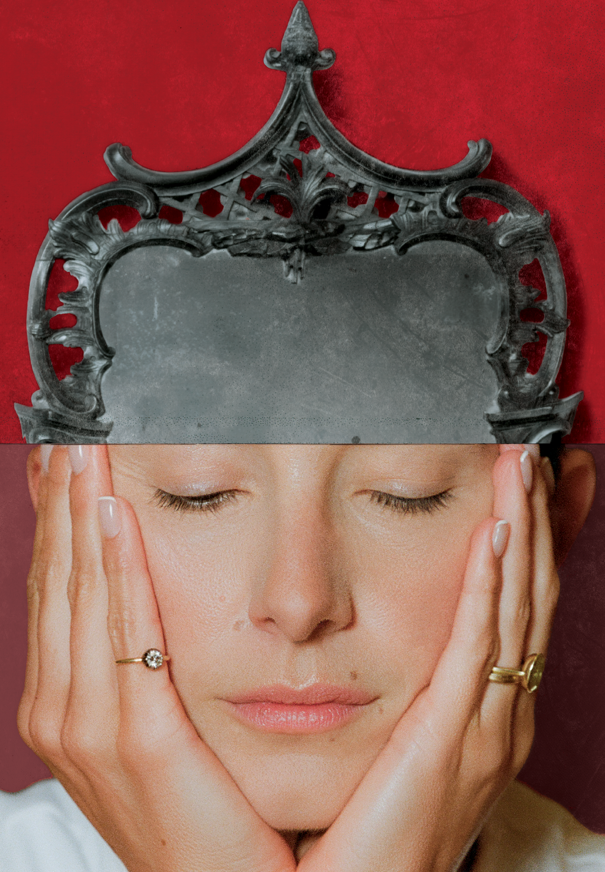
Photo – Carly Sharp & Jesse Solomon
Tamar, we’re very pleased to meet you – especially at a moment when you’re going through a new creative chapter. If we start with something simple but important: what has this stage of returning to yourself as an artist been like for you?
One thing that’s made this chapter especially fun is that I’m releasing the music through my own company. For years, I’ve spent as much time thinking about artists as being one. I’ve built programs, advised careers, and developed infrastructure designed to help creative people thrive. Now I get to turn the lens on myself. It’s a fascinating experiment because I’m simultaneously the artist and the person testing the system. Every release teaches me something new—not just about the music, but about the business, the audience, and whether the ideas I’ve spent years championing actually hold up in practice.
Many people know you as the co-writer of “SNAP” – a song that quite literally went around the world. Behind loud success there is often a less obvious story of the journey. Looking back, what moment in your career was the most “turning point” – not obvious, but decisive?
The most decisive turning point was probably when my business partner, Alex, left. At the time, I was newly postpartum, and it forced a kind of brutal clarity. Suddenly the lens came back to me — to my own capabilities, my own instincts, and the original reason I started building a company for creatives, by creatives. It was a real snap back into reality. In hindsight, it also taught me something I probably needed to learn: I did not need a male co-founder to legitimize the work or make the company successful. I had the vision. I had the discipline. And I had already built more than I was giving myself credit for.
Your story with Clive Davis and Jimmy Iovine sounds like a classic industry – a rapid rise and a sharp turn. You stepped away from music and chose Columbia University – quite a radical move. What did that pause give you: distance or a new perspective on the industry?
It gave me perspective. When you’re very young and signed to people like Clive Davis and Jimmy Iovine, it’s easy to believe the music industry is the entire world. Going to Columbia reminded me that it wasn’t. Suddenly I was surrounded by historians, writers, economists, and people asking entirely different questions about what makes a meaningful life. More importantly, it taught me how to think. Studying literature made me obsessed with patterns, themes, and human behavior—things that ultimately made me a better songwriter, entrepreneur, and artist. Looking back, I don’t see it as stepping away from music. I see it as expanding the lens through which I understand it.
In the end, music brought you back. Did the academic environment help you structure creative chaos, or did you have to relearn how to “switch off your mind” to write from the heart?
I don’t think the two are as separate as people imagine. Columbia taught me how to think critically, how to identify patterns, and how to sit with complexity. Songwriting requires all of those things. The difference is that academia asks you to analyze the human experience, while songwriting asks you to feel it. If anything, the challenge wasn’t learning how to switch off my mind. It was learning to trust that my instincts were just as valuable as my intellect. The best songs happen when those two parts are in conversation with each other.
A question for you as a businesswoman. You founded Nvak to, as you put it, “challenge traditional industry models.” Now you’re on both sides of the barricades: both an artist and a CEO. When Tamar-the-artist wants to record a five-minute melancholic piano intro, how hard does Tamar-the-CEO facepalm and say, “We need streams in the first three seconds!”?
I think people might assume there’s more tension there than there actually is. The truth is, artist-me and CEO-me agree on more than you might think. I feel very strongly that most songs shouldn’t be longer than four minutes. There are exceptions, of course. Billy Joel earned the right to write Scenes from an Italian Restaurant. The rest of us should probably edit. Part of that is creative; part of it is just practical. People simply don’t consume music the way they used to. We live in a different world. Attention is fragmented, there are more choices than ever, and listeners move through music differently. I don’t think that’s good or bad—it’s just … is. My job as a songwriter is to respect the listener’s time while still saying something meaningful. Sometimes constraints make the art better. More often than not, it forces you to get to the damn point.
Let’s talk about your triumphant return to your own microphone – the single “The Only.” What does it feel like to sing yourself again after spending so long as the “power behind the throne” for other artists?
Was it scary to step back into the spotlight? I think it would have been much scarier ten years ago. When you’re younger, there’s often a performance attached to being an artist. You want to be seen, understood, validated. Returning to music at this stage of my life feels very different. I’ve already built a career, a company, and a family. I have a much stronger sense of who I am independent of whether a song succeeds or fails. In some ways, that freedom has made me a better artist. I’m less interested in being impressive and more interested in being truthful. And that’s a much easier place from which to create.
When I listened to “The Only,” something inside me tightened – it sounds incredibly vulnerable. Today everyone is trying to appear like successful “iron ladies”; how difficult and scary was it to open up like that in front of millions of strangers?
First of all, I love that it made you feel that way. As a songwriter, that’s really the goal—not to be understood intellectually, but to make someone feel something in their body. And yes, it’s a vulnerable song. But I’ve come to believe that vulnerability becomes less frightening with age. When you’re younger, you’re often trying to protect yourself from being misunderstood. At this stage of my life, I’m much more interested in telling the truth. Ironically, I think what we perceive as strength in women is often just armor. Real strength is the willingness to reveal something tender and trust that it will find the people it’s meant to find.
We know that “The Only” was co-written with Ali Tamposi. Ali has written for Beyoncé, Miley Cyrus, Justin Bieber… When two such powerful women get in a room to write a song, is it more like a therapy session or a fortress assault?
Ha. That’s an amazing question. The truth is, writing “The Only” was probably more like a reconciliation than a fortress assault. Ali and I had gone months without speaking. Life had pulled us in different directions, as it sometimes does. And during that period of silence, something remarkable happened: we both got pregnant at the same time. We had our babies two days apart and were discharged from the hospital on the very same day. By the time we sat down to write, we had both been transformed by motherhood. The song became a way back to each other. In many ways, it healed our friendship. That’s one of the things I love most about songwriting. Sometimes you think you’re writing a song, but what you’re actually doing is repairing a relationship.
The music business has long been (and in many ways still is) a “boys’ club.” What’s the most ridiculous or stereotypical piece of advice male executives gave you early in your career that now makes you want to roll your eyes?
Honestly, it wasn’t any one piece of advice. It was the persistent assumption that I needed a man in the room to validate my ideas. Early in my career, there was an unspoken belief that women could be talented, creative, and hardworking, but that real authority still belonged to someone else. A male executive. A male producer. A male founder. Someone who could translate your vision into something people would take seriously. What’s funny is that the most important lesson of my career has been realizing the opposite. The moment I stopped looking for permission and started trusting my own instincts, everything changed. So when I look back now, I don’t roll my eyes at any particular piece of advice. I roll my eyes at the idea that women need to borrow credibility instead of building it themselves.
You have more new music coming out over the course of the year. Will it continue the mood of “The Only,” or are you planning to surprise us?
Both. What ties the songs together is not a particular sound, but a set of questions I’m interested in exploring. “The Only” was about motherhood. “Mirror” is about mentorship, projection, and another form of mothering altogether. The songs that follow move into friendship, heartbreak, belonging, and identity. So while there are certainly sonic threads connecting the project, I hope there are also a few surprises. I’ve never been particularly interested in writing the same song over and over again. I’m much more interested in following an idea and seeing where it leads.