
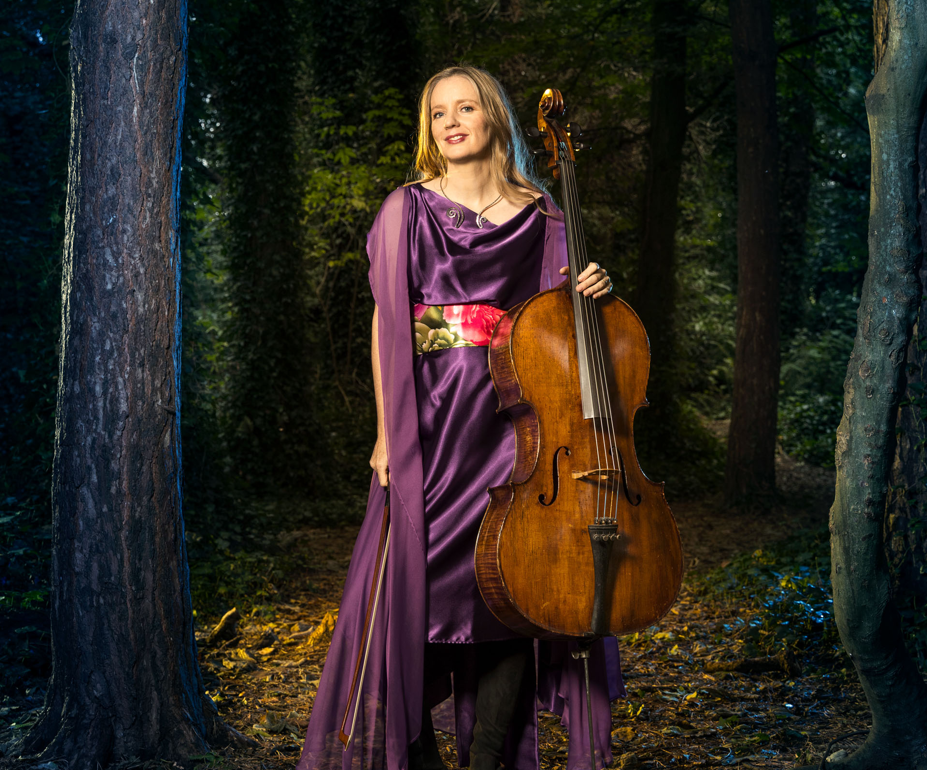
What will happen if an academic musician decides to go beyond the limits of a strict concert hall, take a cello, and head into the forest – not to perform, but to talk? Irish artist Clíodhna Ní Aodáin found her answer to this question, and that is how her new album “For the Love of Trees” was born. As it turns out, every tree has its own character – and Clíodhna decided to get to know them closer. Ancient evergreen giants, mysterious hawthorns, and soothing linden trees became for her not a backdrop, but real conversational partners. On the cello of the legendary David Darling, she wove Celtic folklore into the music, trusted intuition instead of a musical score – and allowed the forest to quietly sing along in response. And besides, in the forests, things happen that are hard to find an explanation for. We spoke with Clíodhna about mystical encounters in the Irish thicket, about a strange conversation with ravens on the Hill of Tara – and about what the ability to listen truly deeply teaches us.
Hello, Clíodhna, and thank you for taking the time to answer our questions – it’s a great honor for us. Your story with the trees and the cello is familiar to many, but we’d still love to hear it from you, right from the beginning.
Tell us, how did the idea of taking a cello into the forest come about – how did it all start?
I have always been fascinated by trees and I am lucky enough to live close to a forest. The cello is not by nature an outdoor instrument, but I was curious to hear how it would sound. Playing in a forest is like playing in a grand concert hall. There is so much resonance from the trees. After the first time, I was hooked!
In Celtic tradition, trees have always been considered living keepers of stories. However, moving from an academic concert hall with its strict parquet floors and sheet music to free improvisation in the heart of nature is a bold step. How difficult was it to shift your perception from “playing from a score for an audience” to an intuitive dialogue with the forest, and do you feel a call to your Celtic roots in this musical impulse?
For me it is all about listening. The greatest music comes from the sacred space where you deeply listen to yourself and to your environment. In the forest, there is a sense of trust and gratitude. A healthy forest is not silent, yet there is an inherent stillness and awe that comes from being in the presence of the ancient tree spirits. I definitely feel the call of my Celtic roots. However, I think all cultures have this similar call to connect with nature – if only we would listen.
Let’s talk about your new release “For the Love of Trees.” Taking your cello into the forest and trusting your intuition, you began to sing and find melodies – from these encounters grew the seven compositions of the new album. At what point did this personal, meditative practice turn into the realization that you had a complete album in front of you, one important to share with the world?
This was a gradual process rather than a single point in time. I just kept showing up for the music and entering the space of communion. I am deeply grateful to have had the opportunity of working with Grammy Award-winning producer Mickey Houlihan from CURVEBLUE records. This was a wonderful gift as he is a the perfect guide to discovering the magic and mystery along the journey.
Of the album’s 7 tracks, you call “Linden Tree” the main one.
Tell us about it: what did you feel specifically in the presence of the linden tree?
The Linden Tree is known to have an incredibly calming effect on people. There are many of these trees in Switzerland, often in the centre village squares. I like to think that many discussions were resolved under these Linden trees and I feel very peaceful when I sit under one. It’s like a deep relaxation on a physical and spiritual level.
Among all the tracks on the album, “Fairie Tree” leaves a particularly striking impression. In Celtic tradition, the Fairy Tree has always been regarded with special reverence and associated with many mysteries. What personal experience or story lies behind this image, and why did this particular tree call for a separate musical dedication?
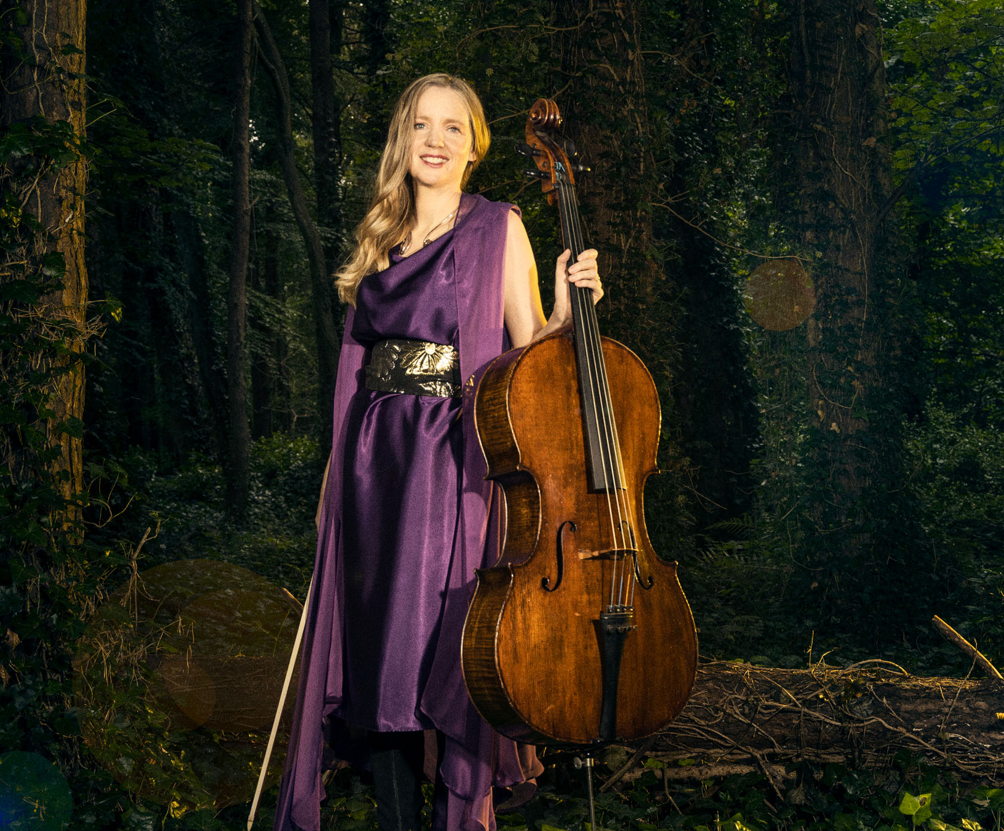
In Ireland there is a Fairie tree on the hill of Tara – the ancient seat of power for the High Kings. I visited this tree and had an otherworldly experience. When I arrived, there were crows cawing at me as soon as I parked the car. It felt like they were saying “Finally! You’re here! What took you so long?!” I remember saying, “Ok! OK! I’m here!” as I walked towards the Fairie tree. It was a beautiful day and I placed my stool in front of the ancient Hawthorn tree. As I played, a huge flock of crows gathered on the field below. It was like I had an audience from the winged creatures. I listened between the pieces of music that came through me and in the silence I heard music. Beautiful otherworldly music. I had my eyes closed and at first wondered if I was going mad. But I definitely heard the music on the wind. It was so enchanting and I could have stayed there forever. And that’s when I thought that maybe the fairies had in fact enchanted me. For a moment I was afraid to open my eyes in case 500 years had passed. I finally opened them and saw a strange older man making his way towards me. He was coming across the fields from where there were no other tourists. He was tall with longish grey hair, wore a long flapping coat, had a hooked nose and was clearly making his way to the Fairie Tree. My instinct told me to leave immediately and I packed my cello, grabbed the stool and ran to the ruins of the castle where there were other people. I spoke breathlessly to a group of tourists and asked, “Do you see that man over there?”. They looked and there was nobody there. Shaken, I made my way back to the car, sure that I had encountered the King of the Crows.
Besides the cello, the album features vocals, piano, and subtle field recordings. How did you find that balance, so that the sounds of nature wouldn’t drown out the music, and the music wouldn’t get in the way of hearing the forest itself?
It is all about listening – not just with the ears but also with the heart. I am lucky and grateful to have worked with Grammy Award-winning producer Mickey Houlihan, who is gifted with a beautiful heart that hears beyond the notes. He is always looking for the beauty and the magic. Creating this music was a collaboration with him, in person and through many long distance conversations.
Trees, as we know, are in no hurry – and that didn’t seem to bother you. On average, how much time did you spend with a single tree before finding a common musical language?
The connection was almost instant every time. Once I was open to the conversation I could feel the energy of the tree immediately. I talk to trees all the time. If I pass them on the street in daily life I always say a quick hello – sometimes out loud, sometimes with my heart. Bringing a cello (or any instrument!) to commune with a tree is an act of beauty that I encourage everybody to do. Singing for a tree with an open heart will open a portal to a place of peace, gratitude and belonging. The magic is available to us all!
Linden, Rowan, Giant Redwood, the Fairie Tree – it sounds like a list of characters from a fairy tale. How did these trees differ from one another in “character” and sound? Was there a tree that turned out to be especially “stubborn,” or unexpectedly open?
I agree – it does sound like a fairy tale! I think our love of stories is one of the things that connects us. The Linden was peaceful, Rowan was magical, Giant Redwood was majestic and Fairie tree was otherworldly. When you listen to the music I hope you will hear the different characters. I would love to invite listeners to listen to the music while sitting or lying under a tree. Any tree will be special and the same trees as the tracks will be magical.

The album was recorded in Colorado under the direction of Grammy-winning producer Mickey Houlihan, and you played on the cello of the legendary David Darling – also a Grammy winner. Could you feel the special energy of this instrument in your hands, and how difficult was it to translate the live sound of the forest into a studio acoustic setting?
David Darling was one of my teachers and playing his cello was a privilege. There was a lot of soul in his instrument. Darkness and Light in equal measures – a very special energy. This inspired me in the studio and I felt that David Darling was with us, as he worked with Mickey Houlihan for 40 years. I think we successfully brought the forest with us into the studio.
Clíodhna, thank you for this lovely conversation! And finally – do you have a dream of playing in some particularly unusual, beautiful, or even slightly crazy natural setting?
Thank you too for the wonderful questions! Until now I have only met individual redwood trees and I would love to play sometime for the trees in a giant redwood forest.




 Voxwave Magazine: Music, Culture, Interview, Fashion