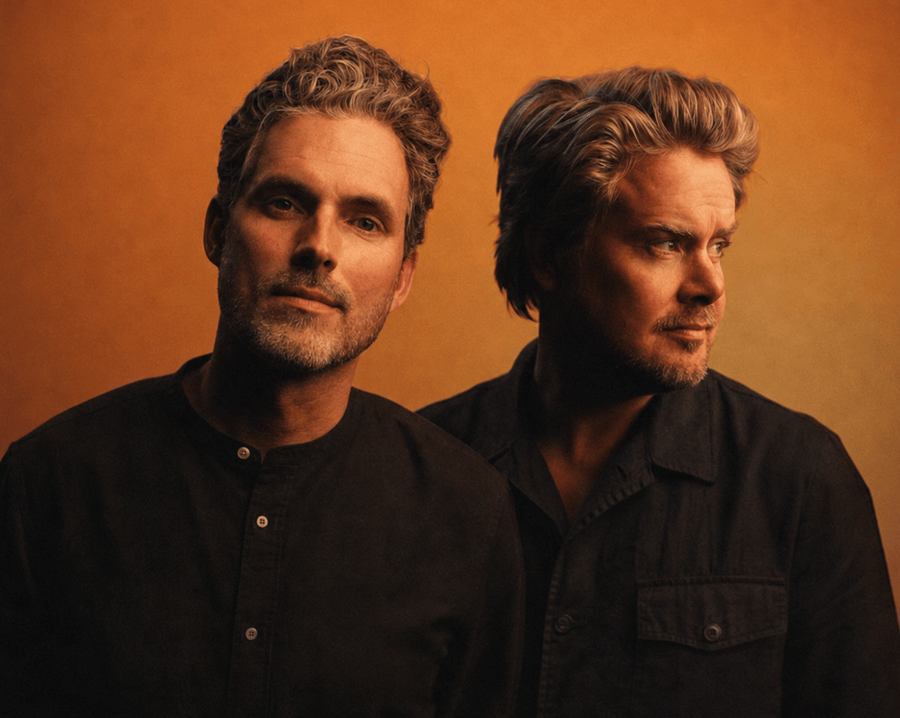
KOMBY DOT IO is a person who knows how to assemble a restaurant, a radio station, a startup, and an electronic track from the same ingredients: discipline, curiosity, and stubbornness. He began in the noisy kitchens of Paris, spent nearly ten years living to the rhythm of French radio, built his own record label, and then created the technology platform Komby. In 2026, music called him back: his album “Pattern” was released – fourteen tracks that read like chapters about fears, losses, journeys, and returning to oneself. In this interview, KOMBY DOT IO talks about why life is also a pattern, and what happens when a chef, an entrepreneur, and a musician finally find themselves in the same studio.

Hi! It’s great to meet you, and thank you for making time for this conversation. Let’s start at the beginning. Your professional journey didn’t begin in a studio or behind a microphone, but in a kitchen. That’s something to be proud of: not every musician can say they can both compose a track and cook dinner to go with it. How did you end up among chef’s knives and scorching hot stoves?
To understand that, we have to go back twenty years. At the time, all these media outlets and massive flows of information didn’t exist. I wasn’t an influencer, and there was no way to make a living through social media monetization. It’s crazy, actually: YouTube had just been bought by Google. That era is completely gone today. A young person starting out in life today has a choice between platforms, networks, and a massive flow of information to reach their goals. Back then, it wasn’t like that at all; we didn’t have all those resources, and you had to figure things out for yourself.
I had a certain passion for culinary arts and cooking, and I told myself, “Why not?” Above all, it taught me discipline. It’s a job requiring absolute rigor, an environment where you have to march in step, exactly like in the army. And I can assure you that people were extremely tough; it was no laughing matter. What I experienced back then—if you applied it today, everyone would resign on the spot. Moreover, if you look at the current situation, the restaurant and hospitality
industry is going through a profound crisis that is also tied to this behavioral legacy. Back then, verbal and psychological harshness was just part of the landscape, complete with hazing rituals for apprentices—such as having a bag put over your head or ending up thrown into a garbage can amid general laughter. I’ve seen chefs of absolute uncompromising standards, much like Joël Robuchon, send copper saucepans flying across the kitchen. It was an atmosphere that was both serious and completely nuts, where nerves could snap at any second, whether you were a head chef or a simple commis. It was an immensely heavy atmosphere.
Today, when you see a chef like Gordon Ramsay losing his temper, he is the direct heir to that period. But head chefs of that caliber simply don’t exist anymore. If a manager or chef behaved that way toward their staff today, it’s straight-up resignation: people walk out. People no longer have the courage or the resignation that we had back then to endure that furnace, telling oneself that it was a school of resilience, a mandatory rite of passage to grow up, become strong, and see what the future holds.
From the hot kitchen to the French airwaves: almost ten years at NRJ, Fun Radio and MFM. Radio is great at teaching you to grab attention in the first few seconds, though it does change how you hear a playlist forever. What did that experience teach you as a future musician, and at what point did you feel like moving from other people’s tracks to creating your own music?
Radio didn’t teach me music theory or how to play the piano; I had to learn that on the side. But before working in radio, I worked for an independent studio that collaborated with Warner Music back then, handling audio masterings. That’s how I learned audiovisual technique, the art of mixing, mastering, arranging, and even composition. It all started thanks to a friend who told me, “If you don’t know what to do after cooking, if you want, I can teach you the trade.” I said, “Okay, let’s do it,” and it took off from there.
Then, I went to a radio school called Studio École de France—which closed down not long ago after forty years of existence. It trained some of the biggest stars of French radio today, and even some international ones. That period was truly incredible. When I walked into their office for the interview, they asked me a question and I just answered something like, “Well, listen, I like getting a taste of life.” Something along those lines, I think. It made them laugh because I came straight from the restaurant kitchens.
Now, to come back to the question, radio taught me creativity, marketing, and effectively how to create a hit. It might sound crazy, but when you listen to music every day, you end up unconsciously absorbing how a track is structured. And having had that prior studio experience, it was quite easy for me to grasp the chord progressions that were most common and worked best, the most effective sequences to ultimately make a hit and end up on the radio.
So, that is what this album is meant to represent: this kind of alchemy, because music is an algorithm that reaches our ears, but it’s truly an algorithm of soundwaves. We could even break it down into zeros and ones if we were coding, but in a way, it’s a bit like that.
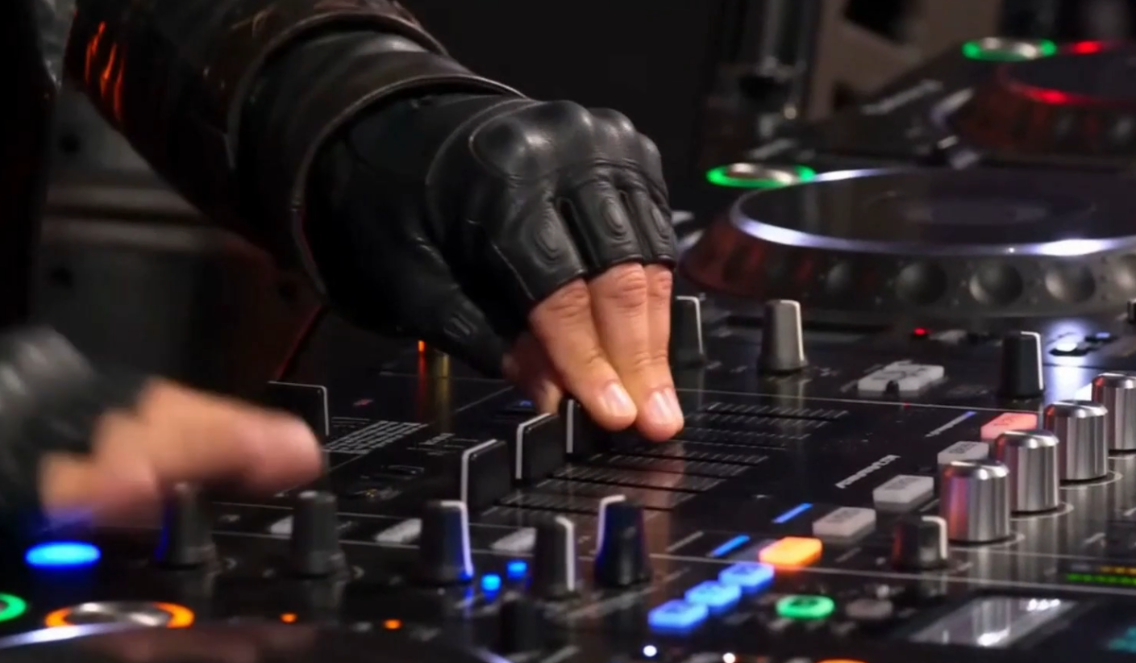
In 2007 you founded your own label, Electromix Records, which reached around 240 markets. For its time, that was as ambitious as launching a rocket into space. What pushed you to take that step: youthful maximalism, or a clear vision of how independent music should sound?
To answer that question, we have to go back to a pivotal encounter: my meeting with Denis Ladegaillerie. I crossed paths with him while he was laying the foundations of what would become Believe in his Parisian living room, at a time when the digital model was still widely associated with piracy. Seeing this former corporate lawyer quit everything to build a global distribution infrastructure for independent artists from scratch—shipping hard drives by FedEx and delivering stores by scooter—left a profound mark on me. Today, Denis is a billionaire, and looking back, his trajectory represents an absolutely incredible vision for me.
It wasn’t youthful maximalism, but rather a clear and pragmatic vision. If a man could build a global distribution network out of thin air from his couch, what was stopping me from doing the same? That epiphany is what ultimately pushed me to found Electromix Records. It was about seizing these new digital bridges to let independent music resonate across the globe, reaching nearly 240 markets.
https://francejetequitte.com/en/journal/the-early-days-of-believe-seen-from-the-inside
Around 2012 you took a break from music, and then came a digital marketing agency, restaurants, hotels and the Komby technology platform. It sounds like the plot of a story where someone decided to try every profession at once. What do an entrepreneur and a musician have in common, besides sleepless nights?
So in your question there are two parts for me: why the break in 2012, and the common ground between an entrepreneur and a musician.
Regarding the break in 2012, that marked the beginning of the end of my relationship with my wife, who one morning— a year or two later—woke up and told me, “I don’t love you anymore.” Some men may recognize themselves in that kind of experience. And on that day, for me, the music stopped. I hadn’t done anything special, I hadn’t cheated on my wife, I hadn’t done anything extraordinary; I simply think there was a deep misunderstanding between what I wanted, what I
was doing, and what she expected of me. These are things that happen in life. In my mind, the music had stopped, and so had the inspiration, because the love I had for her was also my inspiration and motivation. That is what explains that break in 2012.
Next, to answer about the common thread between the musician and the entrepreneur: it is freedom and independence. When you’re a musician, you’re on the road, you travel, you meet people. Being an entrepreneur is exactly the same: you embark on a different kind of journey, but you also meet people, build a network, clients, and partnerships. In a way, a musician is also an artistic entrepreneur. They have to find their own gigs, pitch venues in order to perform— especially when they aren’t lucky enough to be backed by a major label or a large production company. But even today, most musicians set up their own company just to emerge, because without public recognition and audience, this craft means nothing. If a musician makes music, it’s because they love it, but if there’s no audience, there is no career.
Komby brings together bookings, CRM, reviews, websites, AI and music systems: practically a digital Swiss Army knife for the restaurant business. How do you manage to keep so many systems in your head at once, and doesn’t it start to feel like working in a kitchen, where everything has to work at the same time?
So, Komby is a meta-software, the number one in its category since we even created the term “meta-Software as a Service,” which didn’t exist before—we checked. So it’s the professional term that actually brings together a CRM, a booking tool, and it adapts to different professions, not just restaurants. Meaning that even you, as a journalist, can use it. You can schedule your appointments, you can have your collaborator who handles social media work on it. You can host your media website on it. You can manage your recruitment, and you can also handle responses to your Google reviews if you’re a business, or your Booking.com reviews if you’re a hotel. In short, it’s truly dedicated to businesses
across multiple industries, not just hospitality. And that’s where we wanted to be different, because my experience through the crisis in the restaurant industry taught me that you cannot rely on just a single trade.
Yes, actually, it’s a bit like that, you’re not wrong. It’s a bit like an organized kitchen brigade. You have everything right at hand, there you go. It’s not a bad image after all. But the idea of gathering everything into a single tool stems from the fact that today the market is fragmented and, in a way, it’s an invisible tax. When you subscribe to a solution for your appointments, when you subscribe to a solution for a CRM and sending contracts, and another solution for electronic signatures, you’ve already paid three invisible taxes—meaning three different tools from three different companies. And the list can go on and on like that.
In 2026 you returned to music under the Komby Music brand and introduced the KOMBY DOT IO project, and with it the main story of this chapter, the album Pattern: 14 tracks based on real events and personal experience. The title itself suggests that life is made up of repeating figures, but each new iteration is a little different. What does “pattern” mean to you: a habit, fate, or a way to survive?
Well actually, you see, we all have a pattern. I’ve talked to a lot of people and noticed in conversations that in their lives, they don’t reproduce the exact same mistakes, but often somewhat the same patterns with different iterations. So you’re right about that. In my case, it was the fact that every 10 years, I launched something to succeed. Except that I’ve always had critical successes and never really massive breakthroughs. Until now, the biggest success I have is Komby. It’s a wonderful project that still needs to improve. But if you will, I’ve always had the pattern of the pioneer who creates before others do, and then others take it over afterward. It has always been like that. If you look closely at the pattern of my life and everything I’ve explained to you, you’ll see that I was always ahead of others. And once again, I am with Komby. And the difference is that I own the vehicle and I own the technology, and I know where I’m going and what I’m doing.
And you see, Komby will probably be my last pattern, since I am 48 years old and intend to dedicate the next 15 years of my life to it, probably until retirement. And then again, maybe like certain artists, I won’t take a retirement. Maybe I’ll love what I do so much that I’ll just keep working. You know, my wife is Thai, and in Asia people don’t have retirement. They work, and for them it’s normal, and they’re happy. That’s the craziest thing: here we complain about retirement ages, but in other countries, well, that simply doesn’t exist.
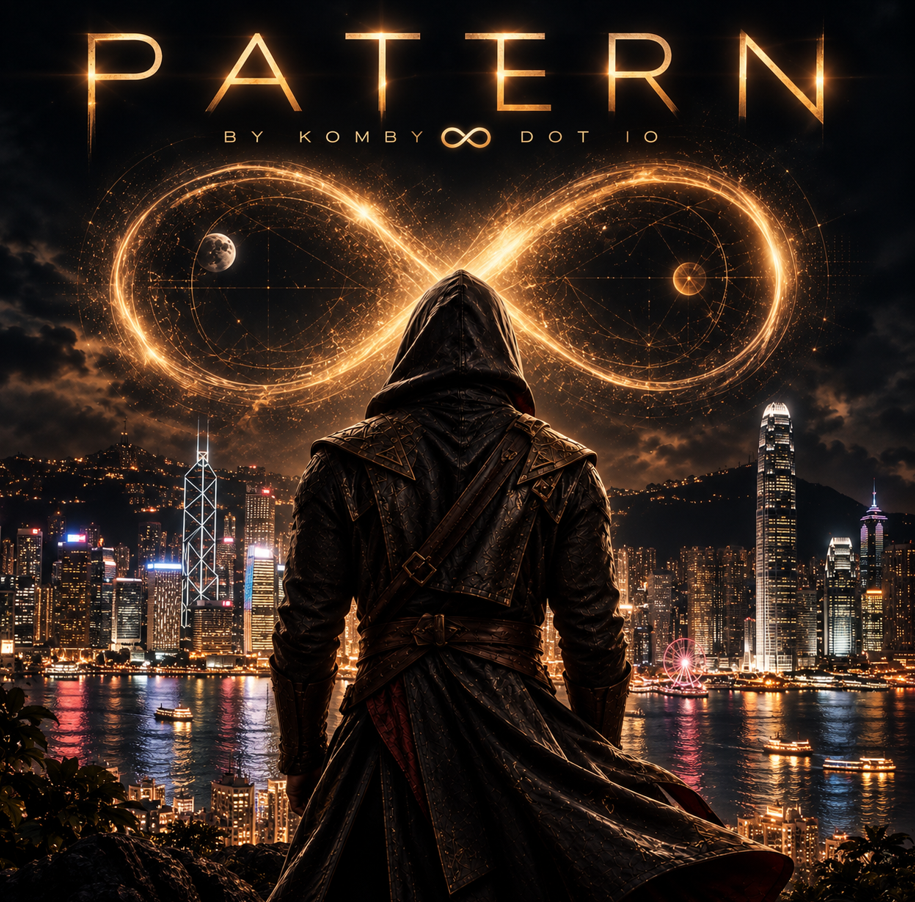
You conceived the album’s narrative as a gradual unfolding of chapters from your biography. That’s a bold structure, almost a memoir in sound. How hard was it to choose which chapter to show first, and why did “Komby Komby” become that chapter?
So why Komby Komby? It became the first track because I actually started with the present, with what is happening today, and decided to travel back in time. In a way, it’s an album that travels backward through time.
It’s a mix inspired by things I happened to hear: one day, I came across the track by Bruno Mars and Rosé singing APT.
APT. — which is the romanized abbreviation of the Korean word “아파트” (appateu), meaning “apartment.” I said to myself, “What on earth is that?” Everyone went online to check it out, and I thought, “Why not Komby Komby?”
And then I wrote the lyrics and thought, “This is absolute nonsense, well, let’s try having Amanda sing it.” By the way, Amanda comes from gospel and I come from restaurant kitchens, so you see, anything is possible ( laughs )! I’m a huge fan of EDM, and I find this vibe much more positive than rap and hip-hop, even though mixing genres is interesting.
Musically, it worked… At any rate, whenever I played it in public spaces, people hooked onto it completely. The only thing this track lacks a bit right now is notoriety, and I can assure you that if it gets radio play tomorrow, everyone will be chanting Komby Komby.
Following that, the promise we made was to make this software easy, which is why we created the second song, Make it Easy, which has a lot of energy. Everything is club-oriented, everything is designed so you never get bored listening to
it. So I hope this album will be something that allows people to discover what I love about music, while simultaneously introducing the solution I created, which I have already launched worldwide in 38 languages.
From personal victories over fear and self-discovery in tracks like “I Left My Fears Behind” and “Higher,” you effortlessly carry the listener into the atmosphere of the world’s capitals, from London to Hong Kong in “Wan Chai” and “Like a Dragon.” Tell me, in which corner of the world do you find it easiest to catch that global vibe and turn it into new beats?
Actually, I don’t think it’s necessarily about a specific place in the world where you can create better than anywhere else. Above all, travel is the true vehicle of creation; it’s the journey of your life. When you store up memories, when you receive love from others, when you exchange friendship with others, when you create interactions with all the people you cross paths with both professionally and personally, those are the things that pile up inside you and give you inspiration.
That’s how I interpret things. When I sit back and reflect on the past twenty years since I started out, now that I’m 48, I tell myself: “Well, I’ve had the chance to live a life where I am independent.” Now, sure, I’m not Elon Musk yet, but that’s my goal: to become someone respectable, to be both a recognized entrepreneur and a gateway to the artistic world. I’d really like that.
It’s a very big ambition. I’ve always been very ambitious. And this time, the difference compared to all my previous attempts is that it’s actually working. I sincerely hope the world will adopt Komby. In fact, you must never give up; you have to start over again, even if it takes 20 years.
Two music videos are already out, a third is on the way, and the project team includes Akil Wingate, who brought his cinematic experience from films like The Substance and Personal Shopper. How important is this outside perspective from cinema and a strong visual language to you?
Well, I’m not a film professional myself, but let’s just say I’m deeply inspired by watching films like Akil’s, which are so unsettling — after watching The Substance, it’s just “Wow!” By the way, he plays the role of the TV presenter in it.
But professionals who actually have that outside perspective help and can advise on different camera angles and ways of inventing things. What’s wonderful today is that we also have artificial intelligence, which can generate very beautiful HD images when we need a bit of extra creativity or to illustrate a scene. It’s a blend of both. The film industry is also undergoing a true revolution with AI, as it cuts costs while completely transforming the industry. Some might say it puts people out of work, but I believe it will primarily create new professions. Every end brings a new beginning elsewhere.
And finally, the last question. You have worn five hats: chef, radio professional, entrepreneur, tech specialist, and musician. What sixth role awaits KOMBY DOT IO in the future, once the world knows the album Pattern better?
That’s a good analysis. It’s true that it makes quite a few hats. I’d say the last one would be “dream creator.” My project is a bit like a “study case,” before it actually becomes a ‘study case’. It’s somewhat an anticipatory title on the album, by the way. Someone told me: “Believe in it very strongly until the moment it becomes real.” And I think that’s a very beautiful phrase. You have to keep the faith.
https://komby.io
https://electromixrecords.com/en/artists/komby-dot-io