
Forty awards. One former lawyer. And a film on VHS – the first in twenty years. Robert dos Santos isn’t trying to be a provocateur. He simply knows what he wants – and what he doesn’t. He doesn’t want to press a button and get a screenplay from AI. He doesn’t want his work dissolving into an endless streaming feed. He wants a film you can hold up to the light and see the people behind it. “This Is How The World Ends” is an apocalypse, an intimate story, and something of a personal confession – all at once. We sat down with the director to talk about cinema, law, imperfection, and why you’d bring a VHS tape somewhere you wouldn’t bring a camera.
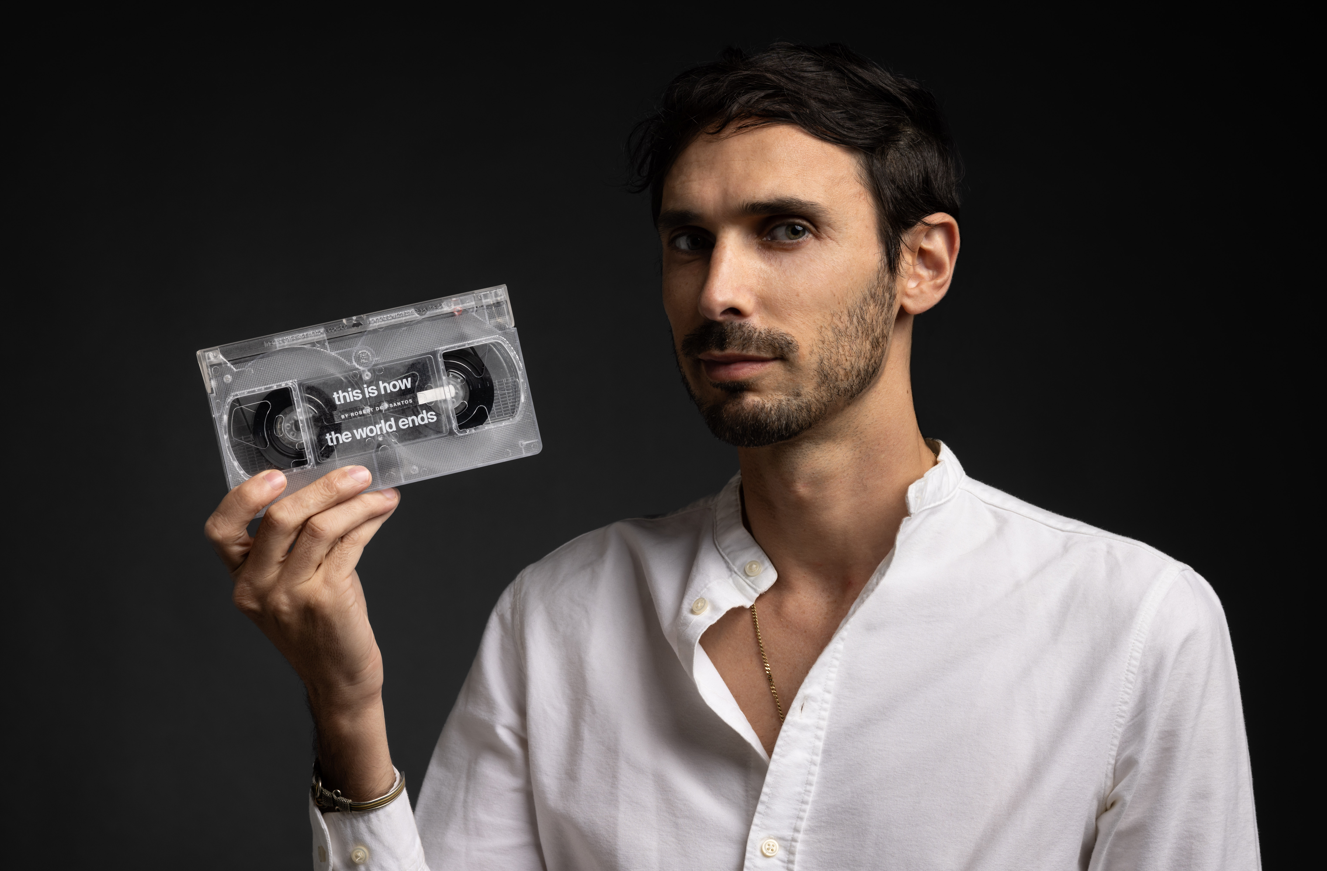
Robert, nice to meet you, and we’re glad you found the time to talk. Before we move on to your new film, we’d like to learn a bit about the person behind the camera. You were a lawyer. How does someone used to precision suddenly decide to enter a world where “that’s how I see it” is considered an argument?
Very easily, and yet with a lot of difficulty. It was easy because I realised that I would die one day doing something that was not for me, so it was change or live a life of regret. It was difficult because making such a life altering change of course is tough. For a year or so I lied to people about what I was doing. When they asked how law was, I told them it was great. Meanwhile, the reality was that I had gone from wearing a robe and standing up in Court to carrying coffees on set. There was a tangible difference between the two worlds. I was the saddest I have ever been on the day I was admitted as an attorney. But I had never felt as happy as I was carrying those coffees on set.
Legal thinking is, in many ways, about building a case, finding contradictions, and persuading. Have you ever caught yourself structuring a film like an argument in court?
Films are exactly like court cases. In both, you are telling a story to an audience in order to elicit an emotional and logical response. Audiences and Judges are paying attention to what you are laying before them. Both are seated, waiting to see if the story you are telling adds up. If a character does something which seems out of character, or unlikely, you will lose the audience, just like you will a Judge. The mark of a good film is whether your story adds up, and whether you can lead an audience to a conclusion. The mark of a great film is whether you can do that without the audience noticing.
Your work is described as having “strong storytelling and a confident cinematic style.” It sounds beautiful, but what does that mean to you personally – when you’re looking at the monitor and think, “Yes, this is it”?
There are two parts to this.
Firstly, is the right brain. One plus one equals two. If you can make sure that this shot is one, and the next shot is one, you are going to equal two. If it doesn’t, then you need to fix it.
Secondly, is the left brain. You just have to fall into your instincts and trust them. I am confident in what I like and what I don’t like. If I don’t like it, it can’t possibly be right.
Let’s talk about the new film. “This Is How The World Ends” – the title sounds like a warning. At the same time, the story is not only about the end of the world, but also about very personal experiences. As a director, are you more drawn to the scale of catastrophe or to the human drama unfolding within it?
Both. Some directors want big action films, some want deep character journeys. I say, why not both, budget permitting. Not everything has to be of scale and not everything has to be pure drama, but if you can, you should have both. People need a reason to go out and watch a film. They have limited time on earth, and a plethora of alternatives, so you need to give them something exceptional in exchange for their time. Sometimes you can find meaning in a story about searching for a lost sister, sometimes you can find enjoyment in a world falling apart, sometimes you can have both.
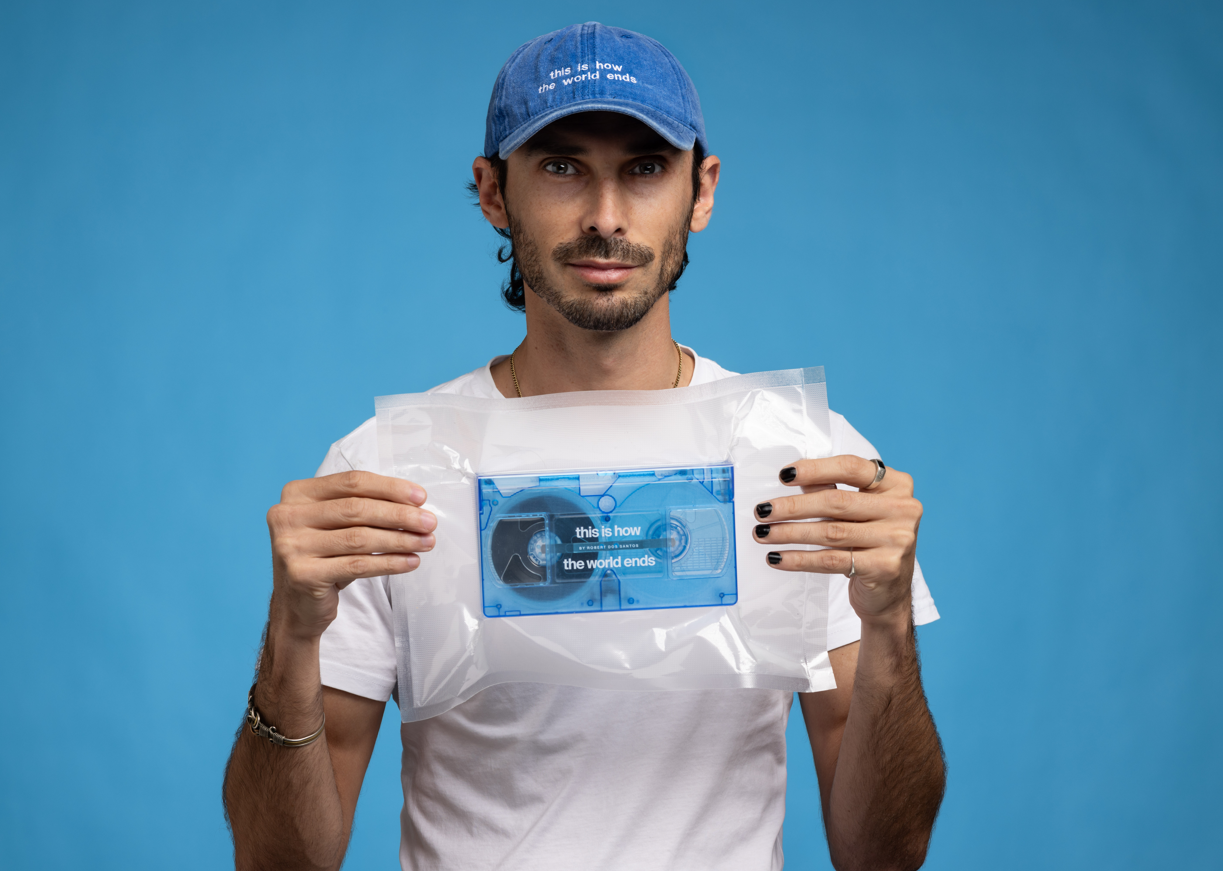
I watched the trailer – and honestly, it stays with you. It already makes you want to see the whole film. A war with AI, disinformation, chaos – none of this feels like science fiction anymore. Did you write the script as a prediction of what’s coming, or as a reflection of what is already happening right now?
While sitting in Court around 2016 I came up with an idea for a film which would be centred around the first murder trial of an AI android. This Is How The World Ends takes place in the same universe as the murder trial, but just years after. When the stories started to come in 2016 it felt like complete science fiction, now it seems vaguely possible. I wrote This Is How The World Ends in 2023, shortly after the AI boom began, and to be fair it’s hard to discern what is prediction and what is reflection.
Your characters respond to the end of the world in different ways: the sister chooses the last party instead of fighting for survival, while the brother goes to save her. One choice feels like an act of freedom, the other like an inability to let go. Which one feels more honest to you?
I have been both of these characters. I have been the lawyer with an inability to let go, and I have been the rebel who runs away to make films. Both are in a process of growing.
I’ve heard that the filming took place among 30,000 people – it’s hard to even imagine. What turned out to be the most unpredictable part of that experience, and is there a scene in the film that exists precisely because of that living, uncontrollable environment?
Due to the nature of the environment, we prepped fastidiously in order to allow the film to feel strong and not get lost in the moving nature of the event. With that said, it was an entire world we entered and we had an endless array of unpredictable occurrences.
One event in particular was a close call. We had an actor set to play one of the characters, but we couldn’t find them amongst the 30 000 people. In the desert, 5 hours from civilisation, and with no signal, we were at a loss. Then out of nowhere, our producer Suraya Suliman found Rafe Soule wandering around. Having acted in the Netflix series 1923 he just read the lines 20 minutes before the scene and took on the character, and we just ran with it.
Another fond memory is Josh Kempen and Frances Shalto-Douglas, the two lead characters, completely improvising a scene owing to being caught up in the world that they found themselves in.
Now to the most talked-about decision. In the 90s, “straight-to-VHS” was almost considered a verdict for a film. And suddenly – you’re doing exactly that, deliberately. Why VHS, and why now, and is there an element of playing with that old stereotype?
The same reason why this subject matter felt important to me.
I don’t think that anyone can argue that creativity is under threat. Ai apps can write screenplays, create images, and arguably make entire films. At the start of coming up with the idea for the film I was testing out these programs to see what it all meant. While I was amazed at what they could do, I also realised that that is not the filmmaker I want to be, so I wanted to draw a line in the sand of what kind of filmmaker I am. I want to make films with intention, that have meaning, and attempt to have a positive impact on humanity.
This film wasn’t created by amalgamating past works through the click of a button. This film was created by a group of incredibly beautiful humans who passionately believed in the story and process of coming together to tell it. This blood, sweat, and tears is not just uploaded into the digital world to be instantly consumed. Instead, you can hold it in your hands. To me, being able to hold a film you love, is so incredibly exciting. VHS isn’t a perfect format, but it’s the imperfections that make us human. So now, you can physically hold our movie up to the light, and with the right kind of eyes you can see that it says something.
You’ve worked with major international brands – Warner Group, Canal+, MultiChoice. And now an independent project with And Films. When you work with a big company, you have resources and a name behind you – but also expectations. When you work independently, there’s freedom, but also full responsibility for every decision. Where do you breathe easier?
Both worlds are so incredibly exciting. It’s an honour and a pleasure to be able to make films, especially in today’s climate of filmmaking. For me, it is all about the process. The people, the planning, the execution, all of it. It doesn’t matter who, or why, or how, just that you are doing it and having a good time.
And finally: if you had to go to the “last party on Earth” yourself, what would you take with you-besides, of course, a camera?
I don’t believe I would take a camera with me, why would you?




 Voxwave Magazine: Music, Culture, Interview, Fashion