
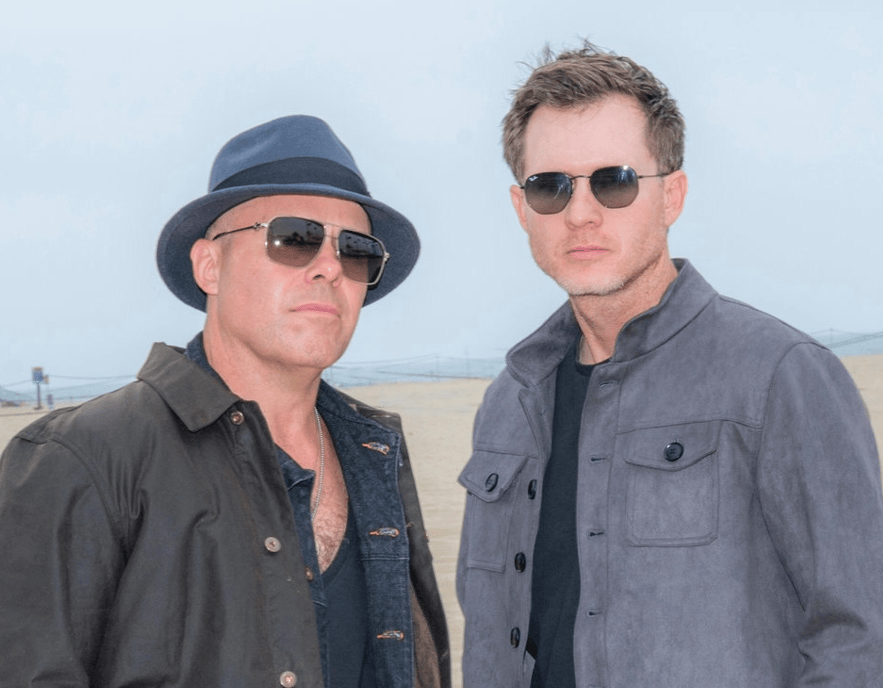
They build studios in their own homes, invite alt-metal legends over as guests, and somehow manage to do all of this without a label behind them and without much respect for algorithms. Riven by Ravens are back — a hard rock band from the heart of California’s Central Valley, barely off the road and already gearing up for the next tour. We talked with them about the new EP, eighties synthesizers, and why sometimes the best answer to a question about the internet is – “what even is the internet?“
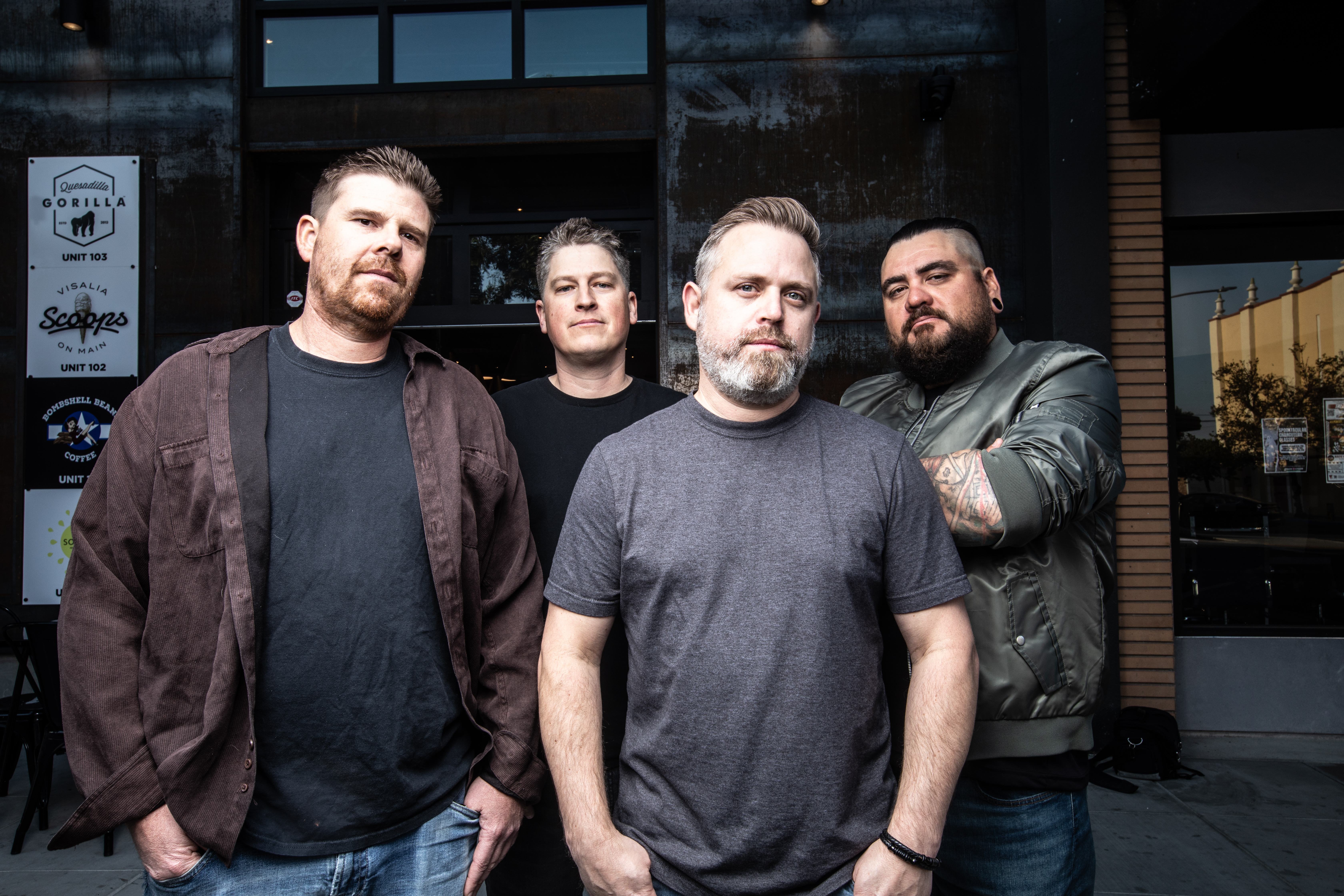
Hey, glad you could make the time. Let’s get right into it – I had a chance to listen to two tracks from the new EP, and even in early production, both already sound like the band has taken a sharp turn somewhere. «Salt In The Eyes» and «Buried and Forgotten» are two entirely different worlds living on the same record. When you sat down to work on the EP after the tour, was there some kind of internal manifesto, an agreement between the four of you about where to go next? Or did you walk into the studio without a map and start feeling your way forward blind?
Paul: I think we found our sound with the first record, Venerate. We never stop writing or working on new material so there’s always music in development. So we are always shaping and working on the next chunk of music even before we put out the current. We’ve been excited to get to our next album so we could write with Joe and Mikey. Incorporate their style and ideas into the band and mold the new sound into concrete. That in itself has been a new direction to some degree.
Joseph: Given that Brian is such a workhorse, I find myself trying to play catch up often. But given I have new material to work with, I’m always listening to new sounds and little tricks and ideas to incorporate from other musical influences. I try to keep a fresh take on things so I don’t repeat myself while at the same time writing and bringing things to the table.
Mikey: We all like to play in a similar style so that helps to narrow our focus. Joe and I have brought forward a few new concepts, and it is nice to be able to bring a different flavor to the table and have input on song structure, sound levels, etc.
«Salt In The Eyes» is a heavy ballad, and I want to talk about it in detail. Brian’s vocals on this track operate in a zone that’s hard to fake – you can hear real, physical strain in there. Ballads in heavy music often fall into the trap of slowing down the tempo while keeping the same emotional temperature as the faster tracks. This one feels different – the song breathes slower, heavier, through effort. What is this track about lyrically? And who brought it into the rehearsal room – did it come from a riff, from lyrics, from a drum phrase by Paul?
Brian: It’s started with the intro clean riff and I just started building it from there. It was one of the first songs I had started writing for the second album and to start I had a bit of a hard time with the lyrical content. But a conversation I had with my fiancée while she was listening to it and some concepts from a show I was watching at the time brought the lyricic ideas together in a story about how it hurts to look back into the past.
Now, «Buried and Forgotten» – another track from the upcoming EP – and I’ll be honest, this one stopped me cold. Retro cinema, neon noir, the synthetic chill of the eighties. Coming from a band whose reference points are Tool, Deftones, Architects – a turn like that sounds provocative. And then I find out Kellii Scott from Failure is doing drum work on this track. That’s a heavy name to bring into the room. How did that collaboration come about? And what did Kellii bring to the song that shifted it into a direction you wouldn’t have reached on your own?
Paul: We are 90’s kids. So there’s a lot of 80’s movie soundtracks and Nine Inch Nails influence behind all of us. The 80s had such dark, heavy, synthy sounds in movies that really defined that decade. We love those soundtracks and movies. All that bled into the 90s and early 2000s making some amazing music with a wide range in sound. The track you heard is a intro track that goes into the main track, “Buried and Forgotten.” We have always experimented with keys and synths and leaned into it a little more with this song. I had been talking to Kellii Scott about doing a collab and having him on drums for a song. We thought this song made the most sense. We wanted to feature and highlight him but not full-on sub out my drum parts. We had the song basically done and had an idea of what we wanted him to do but gave him the breathing room to have fun with it. He seemed to really enjoy writing to it and working with us. It turned out cool, maybe someday we can have Kellii and the Failure guys perform it live with us at a show.
Joseph: Yeah, this one really came out of left field and started taking a new form. Hell, I’m excited to see how it completely turns out.
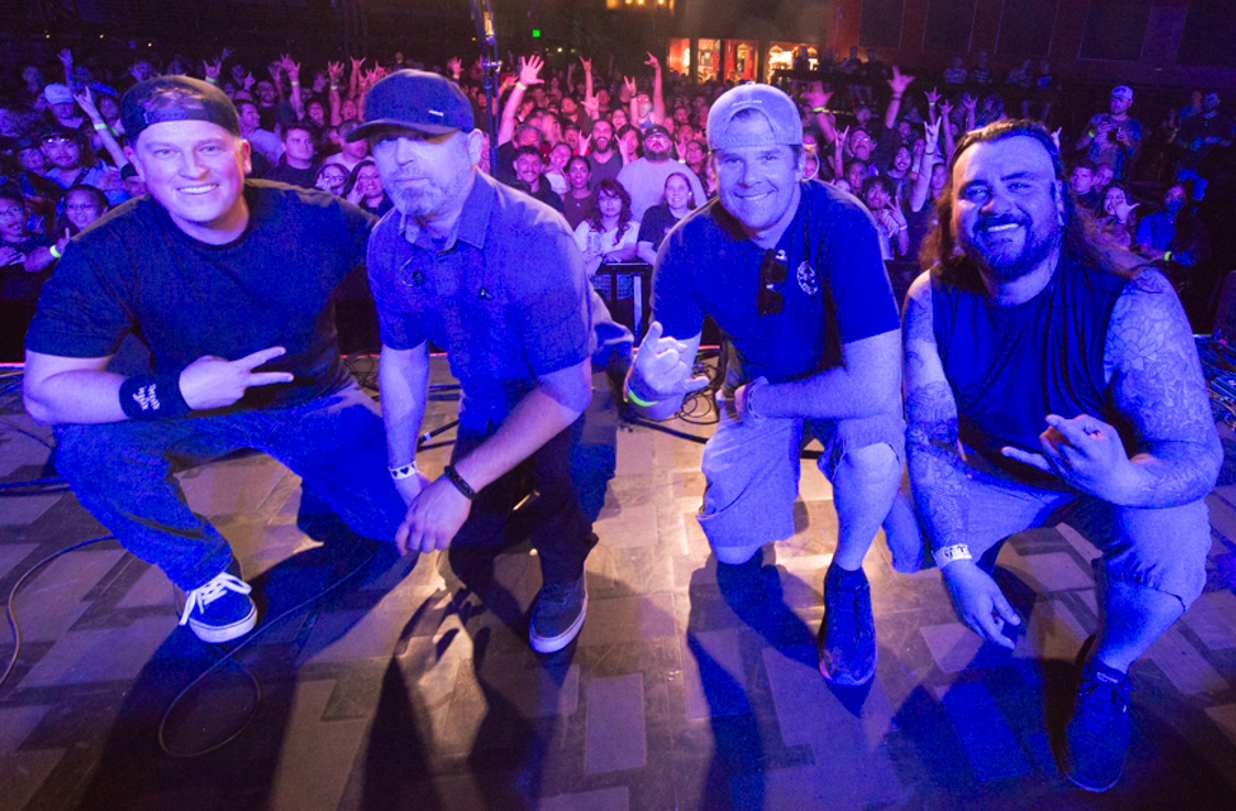
The two tracks I heard are at an early stage of production. And here’s what fascinates me – you’re recording this EP in a full-on professional studio that you’ve built inside Brian’s house. That’s a massive leap from how most independent bands operate. How did the decision to build your own studio change the way you write and record? Does having unlimited access to that space – no clock ticking, no hourly rate – make you more adventurous, or does it create the opposite problem, where you never stop tweaking because you always can?
Paul: Brian put a massive amount of effort and time into building a home studio. We have a completely pro set up now in his house. For me, I fully embraced the style of recording where I would go into the room with a song about eighty percent ready, leaving twenty to mold and work with in real time. It’s a huge privilege to be able to record and write like that. As opposed to the pressure and cost to head into a studio and have to knock out all tracks exactly and in a certain amount of time with almost no room for change due to the budget. I think as a band we are all good at really beating a songs parts to death until we get the best idea out and compared to some musicians, know when to call it good and move on.
Joseph: Again, Brian is such a damn workhorse. He crushed it when it came to building a new studio especially given the quality and craftmanship he put into it. The sound we are getting out of it already is amazing. It definitely takes pressure and a burden off your shoulders knowing that there isn’t a crunch time, constant money being spent on the clock or wasted time finicking with things when you should be recording. So with the pressure gone we have more freedom to really branch out, create and experiment.
Mikey: What’s truly great about having a studio with easy access is when we get that spur of the moment new idea, we can instantly lay something down and experiment with it you know? Sometimes this is where our best material comes from. When we (or one of us) have an idea and record it down we can sleep on it and come back and either scrap it or perfect it and that’s a huge advantage.
Brian, I want to stay on the studio for a moment. You’ve been attending audio engineering school online, based out of LA, and now you’re engineering your own band’s record. That’s a specific kind of pressure – being both the artist inside the song and the technician shaping how it sounds from the outside. How do you manage that split? Is there a moment where you have to stop being the vocalist and guitarist, step back, and listen purely as an engineer? Or do the two roles feed each other?
Brian: It’s a bit of both. You have to be able to be honest with yourself and any feedback you get, positive or negative. There are some things that are artistic and subjective, there are some things that are objectively good or bad. Sometimes I cringe listening back to a vocal take and know it just needs to be done better. If I’m on the fence about something I’ll get outside opinion and feedback from people whose opinion I trust when it comes to those things. It’s a process of having to be able to separate artistic and technical, but in the end I really like being able to mold our sound to what we want because I think we have the best idea of what the end product should be.
An EP is a short format – every track is exposed. On «Venerate» you had fourteen songs, and the album could afford different speeds, dips, and peaks. An EP has no such luxury. How many tracks will be on the new record? And how did you decide which songs make it into that tight runtime – was it a matter of «the best ones we’ve written» or «these five form a story together»?
Paul: I think even for a EP we still have a concept album style that will be there maybe just not as elaborate as Venerate with that many songs. But definitely a story and group of songs that all tie together in some way. I don’t think any of our albums will just be a random chunk of songs. We are working on two seven song Eps at the moment.
Joseph: I feel going this EP route definitely gives us a little bit more focus when it comes to these seven songs as opposed to another 14 song album where things might kind of fall under the radar or other tracks might get overlooked. You really have a smaller core to focus on and really build.
Mikey: I found that some songs played live just hit harder and resonated more with the audience. Say What You Mean and Trainwreck just felt different playing live. Those two in particular sounded more powerful being able to feel the music through the venues PA.
After «Venerate» you had a run of shows that took you across the west coast. Live performances change your relationship with your own material – a song that felt finished in the studio suddenly falls apart on stage, while a track you believed in the least becomes the defining moment of the set. What did you bring back from those shows into the studio for the new EP?
Paul: Hopefully we brought back that same live energy and passion we had on stage. We learned what songs really hit live and what were just more difficult to perform. Some of my favorite to perform were: Grey Sky, A Wise Man and Say What You Mean. Theres some really big songs off the album we didn’t get a chance to perform yet that I hope we can dust off when we head out again with the new material.
Joseph: After that run of shows and getting the feedback and compliments plus feeling that energy from the crowd. It makes me want to bring that raw energy and intensity to these next EP’s. Really transfer over from the album to the live show. I want people to be able to feel that energy and passion when they’re listening to it in their car or when they are standing in the crowd watching us on stage.
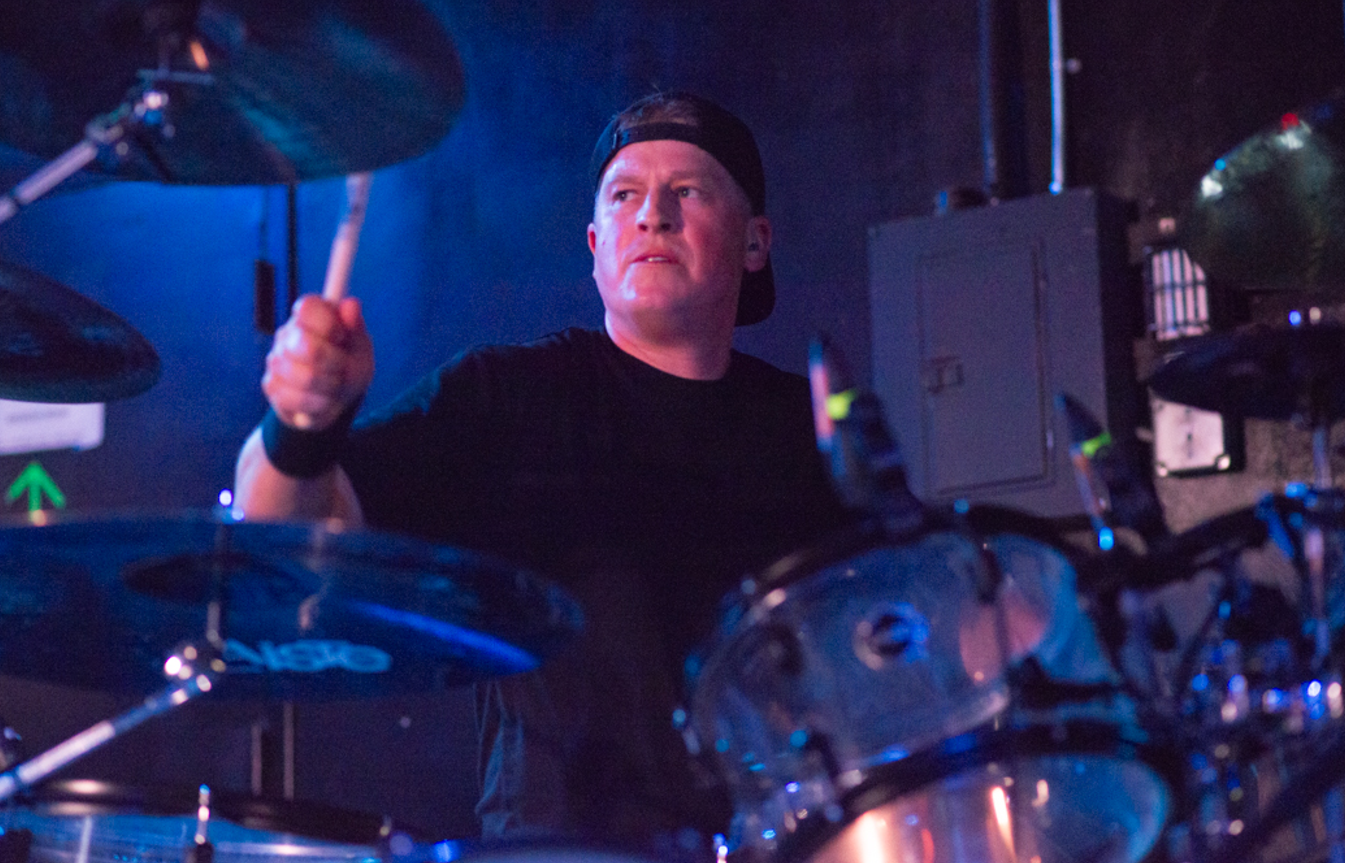
You released «Venerate» entirely independently – with no label, no distribution machine behind you. After the release, you ran a west coast tour to support the record. The financial side of an independent tour is a subject musicians rarely talk about willingly, but it determines everything: the routing, the number of dates, the choice of venues. How close did those dates come to paying for themselves? And considering you’ve since invested in building a full recording studio – I’d say the math worked out well enough to double down?
Paul: Like anything there are pros and cons to being independent. The reality of all musicians and bands on all levels is highly disproportionate pay, contract work and almost zero financial security. We all have careers outside the band, funding the band. Original bands make next to nothing. Maybe some food, maybe a few dollars or a beer. Nothing to even come close to a real payout. That’s the reality, it’s a horribly corrupt industry and everyone is making money off the artist except the artist. Touring is horribly expensive and mentally draining. Unless you are on the Metallica level its pretty much the same as taking an expensive vacation where you will need to work each night for free as well.
Joseph: Jay Weinberg was recently on the Garza podcast and he said when it comes to the music industry, give everything expect nothing. So given the level that we’re at, the expectations are low, especially being independent. At the end of the day there’s certain doors that just flat out won’t open unless you have a label backing you and certain opportunities and conversations won’t be had because a label isn’t backing us. But that also just gives us that drive to push harder, write better and perform better. While also keeping that door open because at the end of the day a good deal is a good deal and if it’s going to help, why not. But until then I’m happy with every show we get, every head I see banging and every set of horns I see raised.
Social media now decides the fate of a track faster than any radio play ever could. Fifteen seconds on TikTok can pull a song out of the basement and into millions of streams – or bury it, if the algorithm turns its back. Do the four of you handle the band’s socials yourselves – editing reels, thinking through content? Or is there one person among you who’s taken that role on? And honestly – does that side of the work energize you or drain you?
Paul: I do almost all the social media stuff but we try to put together ideas when we can as a group. You have to play to win but the entire system is despicable and genuinely so controlled its just disgusting. We try to be as present as we can in those spaces but at the same time we are not going to participate on the level at which it has consumed societies every moment. It’s designed to take all your energy and attention. And it has created a poisonous mindset that these numbers and likes matter. It can be a great tool for a band to reach so many people around the world but it’s such an unhealthy arena, we try to be cautious. We just refuse to lose sleep at night worrying about a post or a song hitting the right algorithm.
Josepth: What the fuck is the internet?
You’ve built a professional studio from the ground up inside Brian’s house, and you’re tracking the entire EP there. That means every piece of gear in that room is a deliberate choice – you bought it, placed it, wired it yourself. Give us the rundown: what does the core of that studio look like, and is there one piece of equipment in there that ended up shaping the sound of this EP more than anything else? Also, what kit are you behind, and did anything change for the sessions with Kellii Scott?
Joseph: So I can definitely be a bit of a tone dick, but at the end of the day who doesn’t like a good tone dick, lol, but for this new album, I definitely wanted to upgrade my gear that I’ve had for several years originally I was running a Peavey 6505+ through a Mesa boogie cab and a few selected pedals for effects. It got me by for the little tour that we did, but when it came to recording, I wanted a new fresh sound but still similar to what I like so I upgraded to the Peavey invective head. Which is a three channel head ultra high gain. I swapped out my pedal board for the line 6HXFX pedal board which is everything I would need and then some still running that through the mess of boogie cab with vintage 30s a classic never dies lol and then I got a new guitar a LTD baritone which helped so much with the tone and tuning stability. Very excited for everyone to hear this new album and this new tone.
Brian: I do a lot of the mixing in the box, but the idea was to get the best possible sound recorded at the source. The main inputs coming in go through the Cranborne Audio Camden 500 preamps, which I really like, they allow you to do a lot with the incoming signal and really fatten up some of the drums, we have a few more preamps for sound sources that don’t need to be as precise or big sounding coming in. That all runs into an Arturia Audiofuse 16 Rig. I selected that interface because I really liked the amount of inputs and outputs it has and allows for more in-depth signal routing. That’s going into the Mac Mini and I do most of the recording in Pro Tools, we do writing and production work in Logic, and some sound design stuff in Ableton Live. Like Joe, I looked at what I was using for the last album and through the small tour we did and made some decisions about where I wanted to go with guitar tone. I used to use the Helix and a baritone Shuriken Variax, which I thought ended up sounding good on Venerate, but there’s always that quest for better tone lol. After playing with a tube amp for a bit, I don’t think I’ll go back to using modelers for recording, maybe some cab IR’s through a Two Notes Torpedo, but we want the real amp and cab sound, mic’d in the room for the majority of the recordings. I went away from the Variax and started playing a Halo Salvus 6 string baritone with the Fishman Modern Fluence pickups and wow, those are really nice, and I moved to an Engl Savage 120 Mk2 for my amp. We decided on the Invective and the Savage for a couple reasons, one is they both sound killer, and two they have the ability to use MIDI for channel switching, so we can use our Line 6 processors to switch the channels on our amps while playing live or rehearsing and we get to keep all of our effects exactly as they were on the album. I wouldn’t say there is 1 piece of gear that has shaped the sound, it’s all of it, all of it was a deliberate choice with a lot of research put into each piece of gear, reading reviews, watching rundowns or demonstrations, and making a decision from there, and of course getting our hands on it and trying it out if possible. But a lot of times with gear like this, it’s not going to be sitting in a Guitar Center, so you have to take a little bit of a risk and put the money down. The good thing though, is if you do buy something from a Guitar Center, usually used, usually online if it’s a niche or higher end piece of gear, you have time to make sure it’s what you expected and you’re able to return it if it isn’t. There’s definitely been some trial and error for a lot of this. Paul is recording drums on a Boom Theory custom maple kit, from what I’ve read they’re similar to a DW but they are a small drum shop in Washington and not that well known but they sound really nice, I think Paul is using all Paiste cymbals at this time and DW hardware, and I can’t forget to mention his shotgun of a snare drum, his Danney Carey signature, the punch of that thing is pretty incredible. For drum mics we’re using the Lewitt Beatkit Pro mics on most of the kit with some 57s on the ride, snare bottom, and hi hat. Kelli recorded his drums with his engineer and sent over the drum track outs, which I mixed into the original idea for the intro piece. What they sent over sounded really good already and they did a great job capturing Kelli’s playing and I wanna say his kit sounds fantastic too. We were really grateful that he was willing to play for us on that piece. A very cool experience getting to work with someone that has that amount of time and experience working in the industry.
Mikey: Mikey plug in bass, it go boom.


 Voxwave Magazine: Music, Culture, Interview, Fashion