Paris WYA is an artist who erased all cultural boundaries even before recording her first track. Born in Shanghai and raised between Paris and New York, she has become the perfect embodiment of a cosmopolitan pop artist of Generation Z. By day, she studies the harsh laws of economics at the business faculty of the prestigious Cornell University, and by night she transforms into an independent pop diva. While music critics debate what defines her more – vocal polish or conceptual art-pop – Paris is storming the charts: her new EP “MANNEQUIN” has just landed on playlists, and the lead music video has already amassed half a million views. We spoke with Paris about her childhood dreams of being a “little princess,” her internal linguistic map, and why good music is impossible without high fashion and a touch of personal therapy.
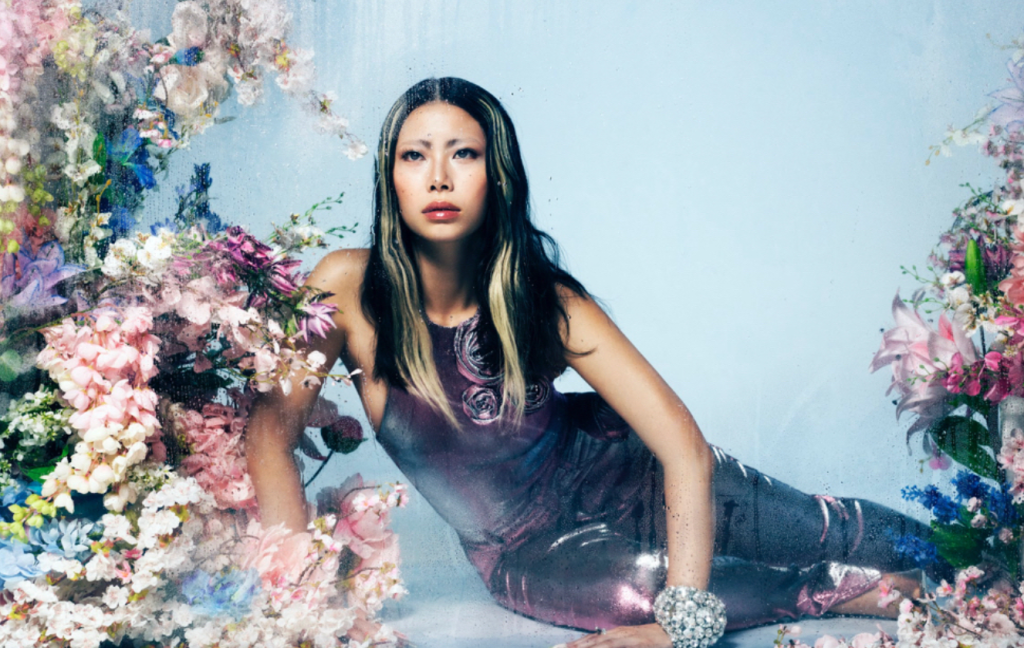
Paris, hi! We’re happy to meet you and grateful that you agreed to answer our questions. While the whole world is trying to wake up to an alarm clock, you somehow manage to study at Cornell’s business school, shoot fashion videos, and release pop hits. Our team is still trying to figure out where you hide your Time-Turner, but first things first: what is it like to wake up with the status of an artist whose new music video has just passed the half-a-million-view mark?
It’s a strange feeling: you spend so much time alone with a song, and then suddenly it belongs to other people. That part still catches me off guard. But I’ve learned not to sit in it too long. The milestone is real, and I’m grateful for it, but it doesn’t change what I wake up thinking about.
Your geography is impressive: from the traditions of Shanghai to the avant-garde of Paris and the rhythm of New York. It’s obvious that such a multicultural upbringing is a major contribution from your family. What were you like as a child? What did little Paris love to play, and were there already hints in those games that one day you would be putting on performances on stage?
I was definitely a bit of a princess. I had the wildest, most delusional dreams. I wanted to be a pop star. Everyone around me, including myself, thought I’d eventually grow out of it, yet here I am. I was also the kind of kid who wanted to try everything. I played five instruments, a handful of sports, and was actually a nationally ranked fencer in China for a while. I sometimes wish I’d focused just on music earlier, but I think trying so many things made me a more complete person, and it gives me a lot more to say. I spent a lot of time watching movies, television, and music videos, completely fascinated by the people on screen. I performed a lot growing up too: in bands, musicals, a cappella groups, and singing competitions. Looking back, there were definitely hints. I loved any excuse to be in the spotlight. Music was always part of my life. I just took the scenic route to making it the center of it.
Trilingualism is a Generation Z superpower. But everyone who grew up between Asia, Europe, and America has their own emotional “language map.” If we put your inner translator through a crash test: in which linguistic harbor do you hide when you need to pour out pure emotions, and why did you choose English as the main instrument of melancholy in your music?
English is probably my most honest language. I grew up mostly attending international schools in Asia, so English was the main language I used with friends, teachers, and the world around me. It became the language where I know how to say exactly what I mean, which is why it’s the main language I write in. Mandarin is more personal and familial. It connects me to family, childhood, and a different part of my identity. I also think I’m better at math in Mandarin. French is different again. I learned it through immersion programs and living with host families in France, so it feels less like a language I studied and more like a language I lived in.
Each language gives me access to a different part of myself. English is where I’m most emotionally precise right now, but I’d absolutely love to incorporate Mandarin and French into my music at some point.
Your early releases were more “digital” and electronic, but now you’ve moved toward dream-pop and synth-pop in the spirit of the ’80s. Is that nostalgia for the era, or do ’80s synthesizers possess some special magic for breaking hearts?
Before I started working on the Mannequin EP, I knew I wanted a change — something that felt more honest and more like me. My earlier releases were more experimental, but I wanted this project to have a different kind of vulnerability and a sense of timelessness. The synths became part of that. There’s something about those sounds that feels both emotional and elegant at the same time. They can make a song feel huge and cinematic while still feeling deeply personal. So yes, there’s definitely some nostalgia there, but I don’t think I’m chasing a particular era. I’m chasing a feeling. Artists like Ariana Grande, The 1975, and Valley all do that really well, and I’ve always been drawn to music that feels emotionally immediate while still carrying a certain sense of scale and romance.
Music critics compare your vibe to Ariana Grande’s, but with the caveat that you have much more art-house sensibility and fashion visualism. How do you personally feel about such comparisons? Is it flattering, or do you want to say, “Guys, look at my videos-I’m creating cinema, not just pop tracks”?
That’s definitely a flattering comparison! She’s one of the artists I admire most, and I definitely drew inspiration from the dreamy, ethereal qualities of her music while making this EP, so hearing that comparison makes me really happy. The visual side of this project is just as important to me as the music itself. Fashion, cinematography, and storytelling are all part of the same creative language for me, and with Mannequin I wanted the visuals and music to feel like they were telling the same story. I’ve always been drawn to artists who make those things impossible to separate. That’s what I’m building.
So I don’t necessarily see it as music versus visuals. The most exciting artists, in my opinion, make those things impossible to separate.
There’s a lot of vulnerability, heartbreak, and self-discovery in your songs. Is writing about these things a form of therapy for you, a way to get through personal drama, or do you sometimes think, “Oh, that argument was terrible, but it’s going to make a great bridge for a new song!”?
Absolutely a form of therapy. This EP came out of a lot of inner chaos — anxiety, uncertainty — and I think that’s what pushed me to write more vulnerably than I ever had before. It unlocked something I hadn’t fully tapped into yet, and I’m genuinely grateful for that, even if the experience itself was hard. That said, I don’t think songwriting has to come from pain. But when it does, there’s something incredibly cathartic about taking something that felt overwhelming and turning it into something that exists outside of you. The song becomes its own thing. That’s the part that feels like healing.
And yes, every now and then the songwriter part of my brain does have the very unhelpful thought of, “Well… at least this will make a good song.”
You’ve released your new EP, MANNEQUIN, and the video for the title track has already reached half a million streams. Congratulations! The title is intriguing. What does this image mean to you, and why a mannequin specifically?
A mannequin looks polished and put-together on the outside, but hollow within. That’s what I felt like growing up. A lot of my decisions were made for me, down to what I wore and what I ate, and I think when that happens for long enough, you lose the thread of who you actually are. I still feel that sometimes. The song is about sitting with that honestly. MANNEQUIN was actually one of the last songs I wrote for the project, but it ended up becoming its thesis — the question the whole EP is built around: if I could just be me, who would I be?
The EP is me navigating that question through grief, love, and self-discovery. I don’t have the answer yet, but I think asking it out loud is a step forward.
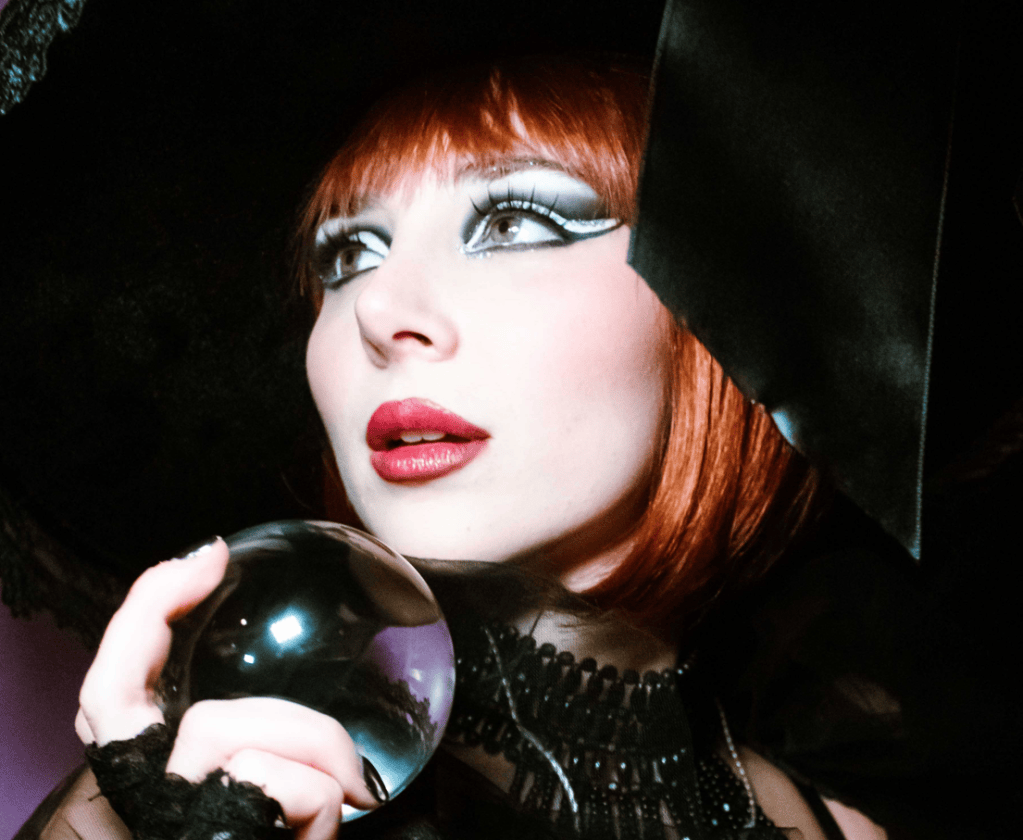
The visual aesthetic of MANNEQUIN looks as if a major fashion house campaign escaped from the pages of Vogue and turned into a music video. How many hours (or days) went into selecting the looks, and how did your neck survive all those complicated fashion poses?
For the visual world of this EP, I collaborated with the fashion duo Domen & Van De Velde, and they really set the tone for everything. The “Only Time Will Tell” video was the first thing we made together, and it ended up becoming the visual rebrand that the whole EP grew around. We spent weeks going back and forth, building mood boards and figuring out what this new sound actually looked like. They pushed me out of my comfort zone in the best ways: bleached eyebrows, avant-garde poses, the whole thing. They deserve a huge amount of credit for bringing that world to life. As for my neck, it was worth it.
You openly speak about your desire to create “a world without borders.” In today’s reality, that sounds like a beautiful but very bold utopia. Do you believe that pop music is still capable of uniting people more strongly than politicians and visa regimes?
I don’t know if music is more powerful than politics, but I do think it does something politics often can’t. A song can make two people from completely different backgrounds feel the exact same thing at the exact same moment. I’ve spent most of my life moving between cultures, languages, and countries, so the idea of connection across borders has always felt personal to me. Music has a way of creating that connection without asking where you’re from first.
Do I think one pop song is going to change the world overnight? No. But if it can make someone feel a little less alone, or help them understand someone else’s experience for a moment, I’ll take that.
And finally, Paris: MANNEQUIN is already conquering the charts, but we all know that a pop diva’s ambitions can’t be stopped. What’s next? A world tour, a full-length album, or a well-deserved vacation somewhere on an island without a phone or internet?
A lot is coming. I just graduated from Cornell in May, and I’m moving to Los Angeles later this summer, so it feels like I’m finally stepping into a chapter I’ve been working toward for a long time. I have some exciting collaborations dropping soon too, including DJ remixes of “Treat Me Right” with Dawty and Laurent coming in July. Beyond that, it’s more new music, more live shows, and hopefully reaching even more people with the project. And yes, a world tour is absolutely the dream.
As for the island vacation, maybe after the tour.