To gather six cool musicians in a basement home studio, record a track for the series The Blacklist, receive praise from BBC Radio 2, and still remain a simple guy from Yorkshire – that, in brief, is the story of Paul Stone. He created the project The Basement Collective, where the main values are sincerity, live chemistry, and a deep life experience. About music beyond time and about the importance of being there in difficult moments – in our interview with Paul.

Hello, Paul! Thank you for finding the time – I know that between building houses and recording albums you have a busy schedule. Let’s start with something simple: could you tell us a bit about yourself and about The Basement Collective?
We’re a group of friends and musicians here in Yorkshire who have known each other for many years gigging across the live circuit. I took a break from music to focus on the children and knew I needed to provide stability for the family, which took me towards the building world which I knew so well. Whilst building my extension on the family home, the Building Control officer asked me to dig down to a depth of 3m. Sat in a 10-tonne JCB, I knew right there this was my return to music.
I’d been in LA years back for a trip to meet Diane Warren and became a little obsessed with a film called ‘Muscle Shoals’. I knew that the only way for me to make music the right way was to design and build my own studio — more of a creative space with no clock or pressure to ‘cut an album’ in two days, which I had done prior to this. The band which I’m so keen to introduce is seen below:
Jim Corry – MD/Sax, Jamie Taylor – Guitar, Jason Scott – Keys, Jose Canha – Bass, Steve Hanley – Drums.
While preparing for this conversation, I caught myself thinking that your path feels more like following an inner compass than a classic industry route. At what point did you decide not to wait for your “moment,” but to take everything into your own hands?
I think having your own business makes you realise that if you don’t find work, no one will knock on your door with an opportunity. I still can’t tell you what the goal is, apart from making music that connects. I now know that a part of me is returning, and with the help of the incredible musicianship of the guys, it’s becoming a real thing that’s growing. This truly feels like the start for us.
For almost ten years, you were not professionally involved in music. In the industry, such a break is often called a “crisis,” but for you it clearly became a reset. During those years, did it ever feel like music was jealous of your bricks, blueprints, and business plans?
‘Jealous of your bricks’ — I love this! I believe life is a blueprint and none of us know what’s possible until we push ourselves into the unknown. Self-belief is often the biggest hurdle for me. Having the guys on board means so much and continues to make this journey possible. In any walk of life, I think surrounding yourself with great people is so important. Without the lads, our sound would have never been possible.
Fortunately, I also have some incredible lads working with me in the building game, and the balance is great.
You are a proud Yorkshire native with Irish roots – an ideal recipe for someone who knows how to work hard and then sing with soul afterward. How strongly do your hometown and your roots influence the way you write music? Is there a bit of Yorkshire character in your jazz harmonies?
#Yorkshire! Yes, I believe there is. I’ve become so much more open with my lyrics, and my honesty seems to be what people are connecting to. In my 20s, I was still trying to write about things that I didn’t really know about. I wrote the Tour de Yorkshire song, which was my Grand Départ back into music; this was a big honour for me, and I believe it may resurrect itself for the race next year which comes past my village! Once again, #Yorkshire.
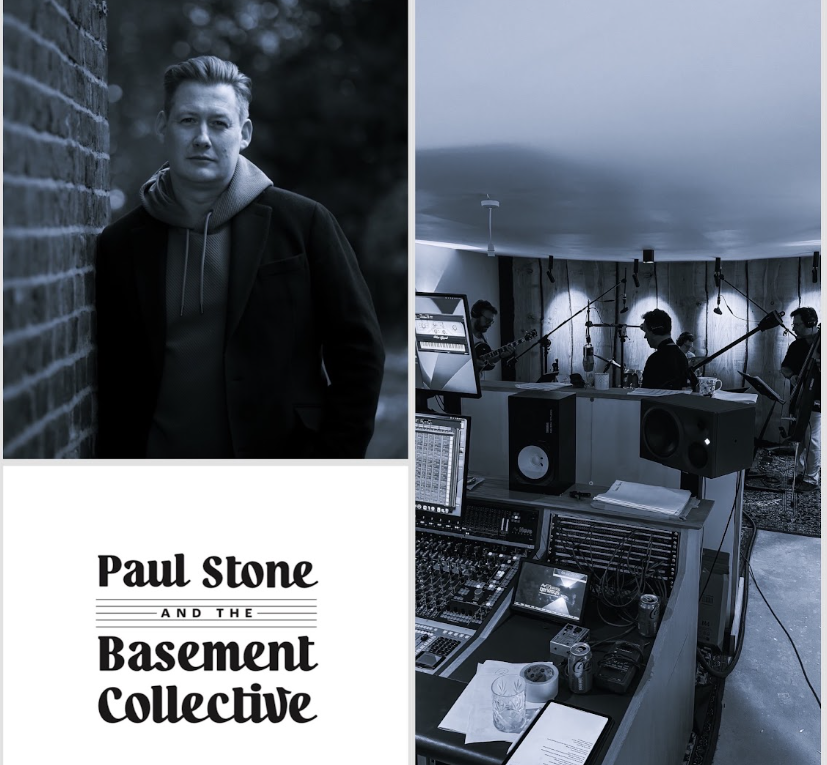
Quite often, bands call themselves “garage” or “basement” acts for the sake of image, but in your case the studio is literally located in the basement of your family home. How does your family feel about the fact that a full jazz-rock ensemble is periodically being recorded right beneath their feet?
I built the studio as a room within a room — lots of insulation and plenty of sound boards! The only sound that sometimes gets tracked from outside the studio walls is my dog’s piercing bark, Rufus! I think without knowing it, my children are now seeing that things are possible if you ‘never give up.’ My daughter was testing the ribbon mic for me on Brother, and I managed to capture her vocal on the backing vocals, which I kept.
I’d never heard of a ‘collective’ before the Ezra Collective, who have done so much for the industry. We were a bunch of tea-drinking musicians in my basement — the name was just so obvious and stuck.
Let’s talk about The Basement Collective. Six musicians, playing live. You know, these days getting that many adults together even for a cup of coffee can be a challenge – and you do it to record music. After all, it would be much easier to sample everything. How do you manage to preserve this live interaction and resist the temptation to simplify the process with digital solutions?
Great question. It’s tough to coordinate diaries, so intense in the sessions, and creatively exhausting at times. Looking back at my previous album, I was always focused on capturing human interaction. I strongly believe this is what connects people — almost a language within music. Yes, I use Pro Tools as the ‘tape machine,’ but getting the lads in one room who know each other really is a vibe in itself. There’s a musical chemistry and respect in the room of when to play and when to sit back.
That’s the same chemistry you’d see at a live gig.
A home studio is the freedom to create without looking back at trends and TikTok. Though, you pay for it with nights when you go in to “check a microphone” and only come out in the morning with a finished song. It seems that your new single “Brother” was born in exactly this kind of freedom – a тяжелая личная история that became a bright anthem of friendship. How did you manage not to drown in drama and instead find a sound that warms rather than weighs down?
This song may never have been released. It was me venting my emotions in a positive message to a friend to say, “I’m here for you.” Rarely is a song finished on the same night. I express my emotion through writing, and yes, this was an awful time with awful news. My message/brief was to remain positive and to never let that guard down, to stay strong for my friend as he had a big battle ahead (and won!). At the time, I was genuinely scared I’d lose my friend — someone who has been there for me as a brother, and someone I have an incredible amount of love and respect for.
The main message of the song – “I can be there if you let me” – sounds very bold, especially given its relevance. Is it difficult for a modern person – and especially for a man – to take that first step, to offer help or to ask for it?
It is, and it’s so important that we all do more of it. It’s often hard for a guy to break down and say it like it is. There are some cool people out there breaking these barriers down, like Jordan Stephens, and we need more of it.
I was struck by your idea that among good and bad people, there are also decent ones – and those are the people you try to surround yourself with. But in show business, everyone speaks in big words, and bright neon can easily blind. How do you recognize a decent person behind that glossy façade? Do you have an internal “detector”?
I think most people have a motive, and that’s not always a bad thing. I know my determination can often be a bit ‘much,’ and I struggle to calm that down at times, but it’s passion. My neighbour’s saying sums it up: “In life, there are good people, bad people, and Proper People.” I’ve gotten it wrong a few times, but I’ve won more than I’ve lost.
And finally, a more personal question. You are a father of four children. Managing a business, making music, and raising four kids is an art that can outshine even playing the piano. Do your children listen to your music, and how honest are they – do they say, “Dad, this one’s great, and this one… not so much”?
Absolutely! When I’m mixing a song to then send off for mastering, they will often hear it several times in the car on the way to their activities… (Dad taxi). They are brutally honest at times, which is good for me, but they seem to like Brother, as do I.