Often, the best answer arrives too late – somewhere between three and four in the morning, when the conversation ended long ago but your thoughts are still arguing with each other. Sophie Woods knows this feeling all too well. On her double single You’ll Be Fine / Let It Be, the Danish singer-songwriter explores love, breakups, awkward conversations and the habit of replaying the past in her head. Beneath the lightness, self-deprecation and quiet humour lie serious themes: the fear of being misunderstood, learning to let go, and accepting your own mistakes. In our conversation, Sophie talked about her childhood, creative crises, a nervous breakdown, and why sometimes the best answer is simply to let things unfold.
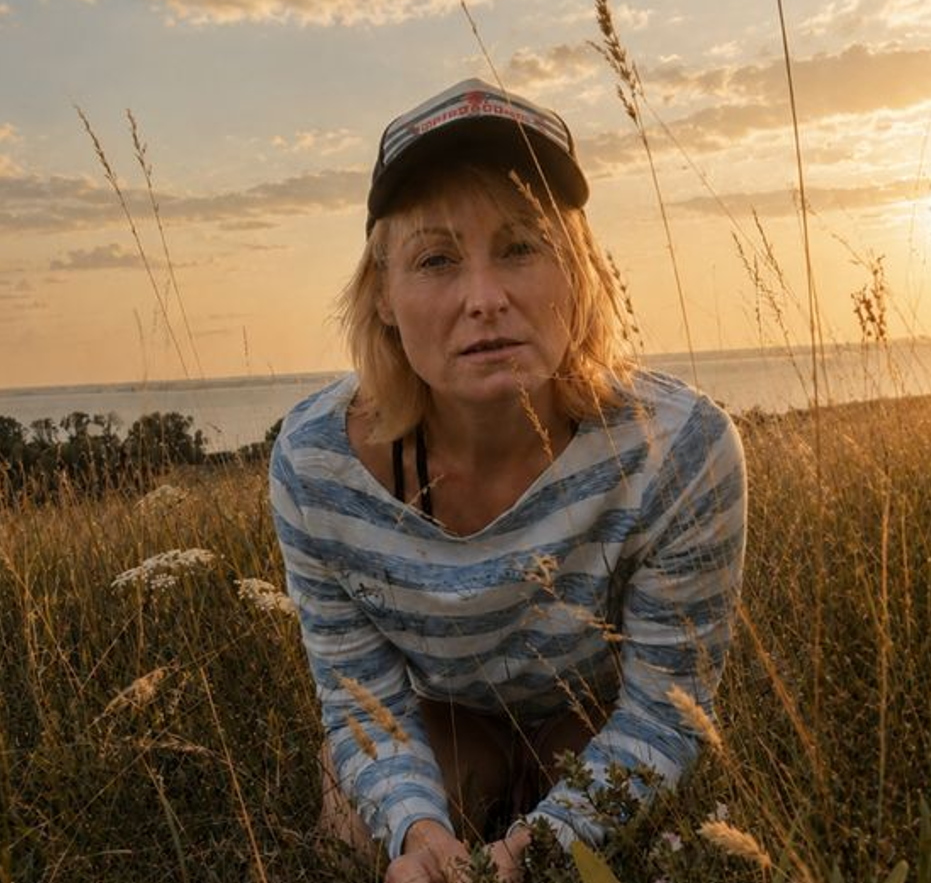
Sophie, hello! It’s a pleasure to meet you, and thank you for taking the time to talk with us. Let’s begin with a theme that runs like a red thread through your new songs: the ability to accept life as it is, even when you sometimes wish you could rewrite a couple of chapters. And if we go back to the beginning of your own story, how do you remember yourself at the moment you started writing songs?
The pleasure is all mine. I love talking about myself!
I grew up far out in a forest as the daughter of a forest worker (hence the artist name Sophie Woods – my birth name is Anne-Stine Olsen). And even though it was an absolutely fantastic place to grow up and become one with nature, plants, animals, birds and squirrels, I was also very much alone in terms of human company, with no other children to play with.
That meant I wasn’t very good at navigating social situations when they came up. And of course, I was teased quite a lot in school for being the forest girl with messy hair, smelling a bit of moss and garlic.
So I was left with a lot of frustrating feelings… and a piano in our house… And well… one thing led to another.
Your biography surely includes your first songs, your first awkward performances, and your first “what if it doesn’t work out?” What from that early experience still lives on in your work – even if in an altered, more mature form?
I’m not quite sure I understand the question?
Your music speaks to feelings that many people recognise but that are not always easy to put into words. At the same time, you don’t try to turn every emotion into a grand drama. How would you describe yourself as a songwriter: as an observer who closely studies human relationships, or as someone who finds it easier to write a song first and only then work out what they were actually feeling?
That’s easy: me, me, me!
My lyrics are definitely my own attempts to figure out what I think and how I feel. And sometimes it takes a reeeeeally long time to write a song lyric – if you know what I mean!
You have your own perspective on love, breakups, doubt, and the attempt to move forward. How has your attitude towards songwriting changed with experience? Have you come to understand yourself and other people better?
Nope! (hahaha)
Like most people, I keep stumbling around in the same patterns and making the same mistakes over and over again – even though I was absolutely sure I’d figured out what was going on when I wrote this or that song.
Let’s talk about the new release, the double single. Let’s start with “You’ll Be Fine” – a song that offers an unusual angle on the familiar story of a relationship that never came to be. The story is told from the point of view of the person who decided to leave. Why did it feel important to tell the story from this side?
Yes, it’s a bit unusual – especially because there’s a risk of making myself look like someone who goes around playing with other people’s feelings… The Female Player, Sophie Woods… hahaha!
But actually, it’s a kind of apology. I really did believe in us – but when it came down to it, I couldn’t live up to it. I felt embarrassed, didn’t know how to handle it, and just chose to run away… Sorry…
I think it’s an important song to write, because when you’ve been left behind, you often think it’s because you weren’t good enough. When in reality, it was “the one that got away” who ran off out of embarrassment over not being able to live up to it.
I hope the song can bring some comfort to those left behind.
… And as an extra little songwriter/musician secret, I can tell you that this feeling doesn’t necessarily have to be romantic. I actually started writing this song as an apology to my former band, which I had to break up because I had a breakdown and had unconsciously placed far, far too many big and undefined expectations on Sophie Woods’ career… (“I know I kind of lost it for a minute”)
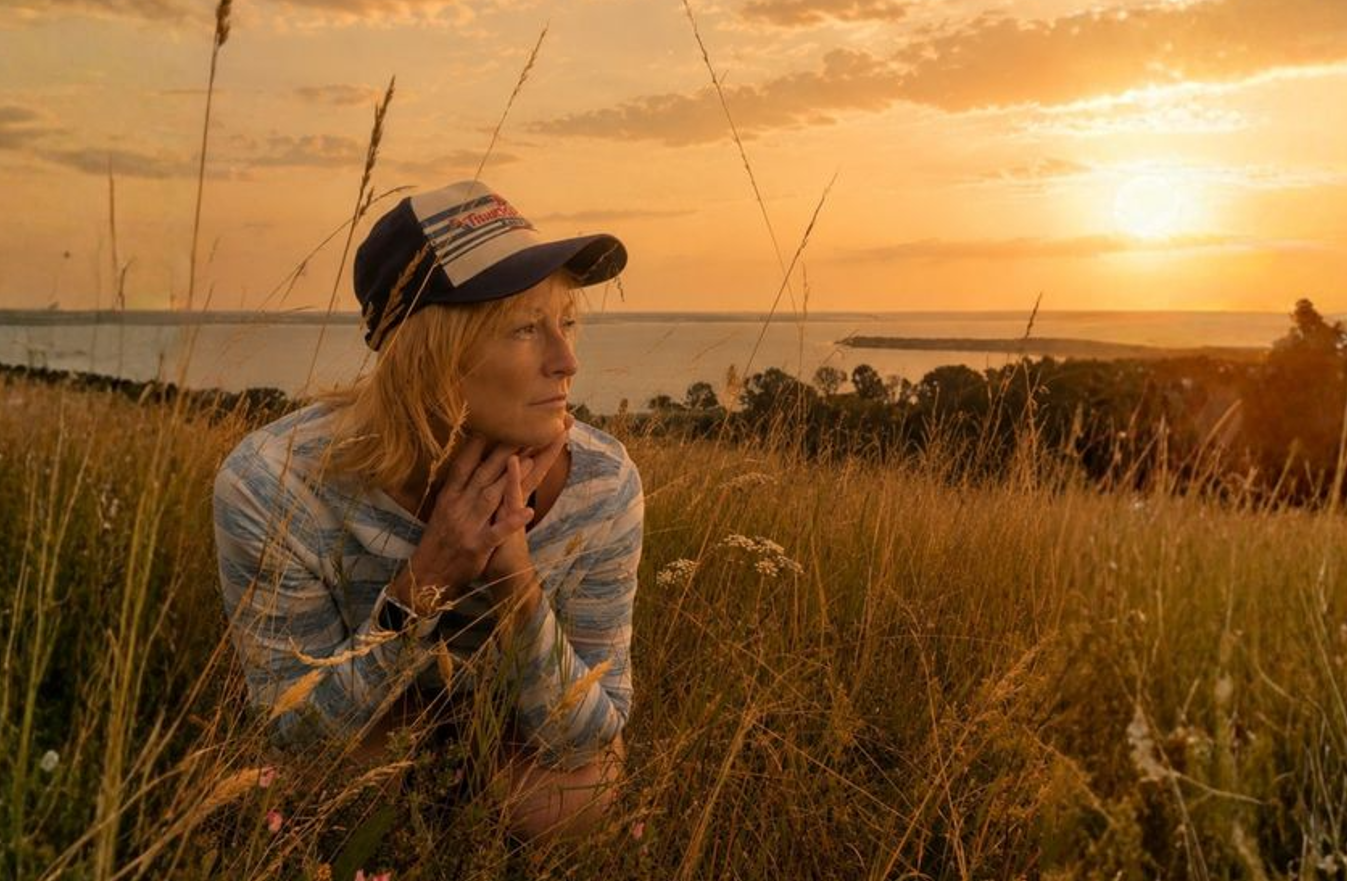
In “You’ll Be Fine,” it seems to me, there is a rather subtle idea: relationships can be meaningful and beautiful even if they have no continuation. Why do you think it is so difficult to accept that some people come into our lives not forever, yet still change so much in them?
Yes, you’re right about that… Hmmmm, my first thought is that it’s because we’re afraid.
Afraid that the memories we share will become public entertainment. Afraid that intimate moments are no longer secret. Afraid of having been misunderstood. Afraid that not everything was said. Afraid that too much was said. Afraid of losing the sense of security, and something I know many people become really afraid of as they get older = Afraid of having wasted their time…
I think it’s important to stay true to yourself and stand by what you felt – because it was real in that moment. No one can take that away from you.
“You’ll Be Fine” was written by Anne-Stine Olsen and Søren M. Poulsen, while Søren M. Poulsen and Lars Rahbek Andresen worked on the production. Co-writing songs requires not only creative understanding but also a willingness to let go of your own ideas. Is it easy for you to share personal stories and accept someone else’s vision of a song when it differs from your own?
Hehe, good question!!
Because no, absolutely not! Hahaha! It’s probably one of the hardest things in the world!
And with that said, I can reveal that the lyrics is all me. While Søren and I write the music together, I – as I said, use songwriting to figure out where I stand and how I feel, and that can take several weeks. And there are lots of tears, revelations and personal moments involved in my songwriting – so it’s incredibly difficult to let other people come in too early and start changing the words you’ve spent weeks figuring out were exactly what you felt!
BUT I’ve become much better at letting someone like Stefan Mørk, who is my songwriting consultant, help me improve what I’ve written. Making it easier for the listener to understand, rather than ending up with some complicated, navel-gazing lyrics.
Let’s move on to the second half of the single, “Let It Be”: a dedication to everyone who, at three in the morning, comes up with the perfect response to a conversation that ended years ago. Confess: is Sophie Woods also familiar with that late-night “here’s what I should have said”?
Hahaha, yep of course! – I’d say about every other night.
I’m one of the slowest people I know when it comes to figuring out how I actually feel, and therefore also figuring out what to say…
So instead, I end up trying to talk my way to an answer – and of course, I end up oversharing or overexplaining.
Sometimes I just stand there agreeing with whatever people are saying, while my brain goes into overdrive trying to figure out what something is called in Swedish… or actually, I have no idea what my brain is doing in those moments.
But it’ll make sure to tell me later… at 4 in the morning, when it’s finally come up with a reaction or something to say…
And there we are, tossing and turning …
In “Let It Be,” humour coexists with emotional sincerity. How do you find the line between self-irony and vulnerability? Does humour help you speak about painful things more honestly than an utterly serious tone would?
Hmmm… self-irony definitely hasn’t always been part of the way I express myself. I used to take myself very seriously earlier in my life. I’ve always had this underlying feeling of having been wronged or misunderstood, and therefore an uncontrollable urge to be understood and taken seriously.
Probably because it’s somehow stored in my earliest cells, being that forest girl who was teased for being different – while at the same time, that was exactly what I wanted more than anything – to be someone special. But other people made being different and special sound like something to be ashamed of. So that was quite a tangled knot to untie, hehe – thank you, somatic therapy! 😉
With age and a calmer nervous system, I’ve become better at seeing that everyone is the main character in their own life, and everyone else is a side character. We’re all just stumbling our way through life, mirroring ourselves in each other along the way.
I’m still practising saying “oh well” and letting things go – and this is where self-irony helps ALOT. So I’ve started embracing it much more in recent years, and it’s become maybe a kind of a safe companion to hide behind 😉 … “oh well”.
Sophie, thank you for such a candid conversation and for songs that help us believe that everything really will be fine. To finish, please tell us: what would you like to say to someone who is listening to your single for the first time tonight, at three in the morning, with a mug of tea and a million unfinished conversations in their head?
Hehe, I will take that as a leading question.
“Let It Be – You’ll Be Fine”
(hehe… if only things were that easy, right?….)