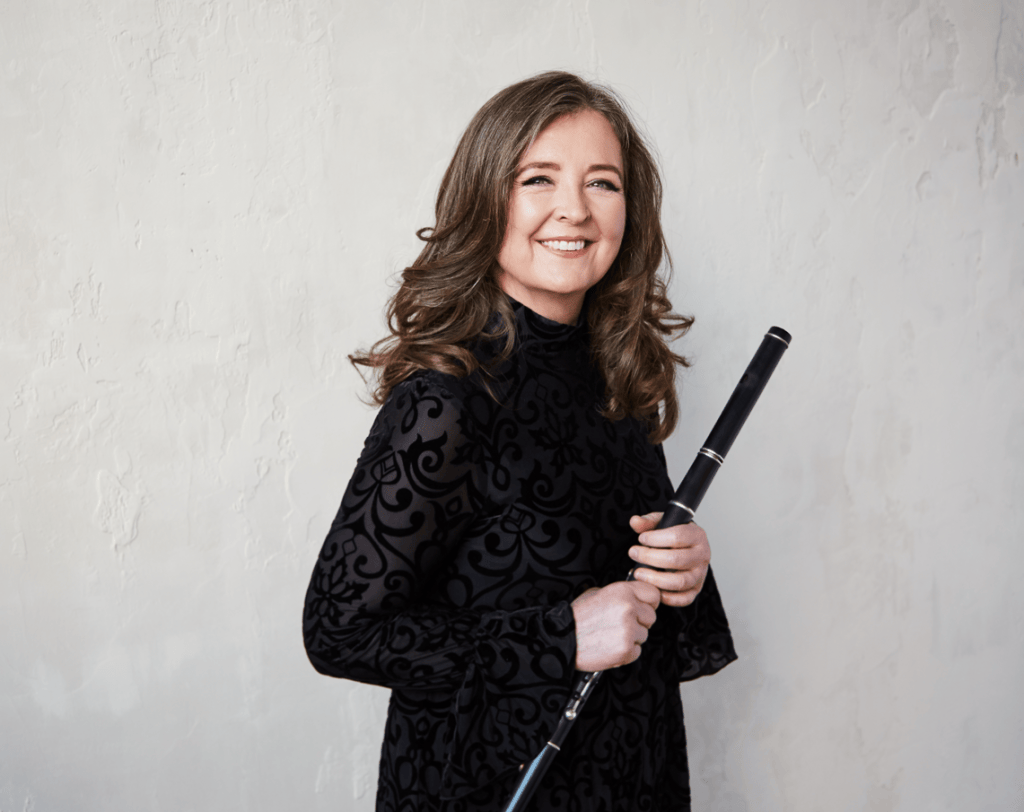
Solveig Sørbø writes music in which baroque can meet electronics, and an angelic soprano can meet cimbaloms that evoke skeletons from horror films. Her new opera Heroin Chic, based on the novel by Maria Kjos Fonn, explores addiction, identity, death, and the desire to break beyond one’s own self – without moralising, but with a sense of sweet unease. After standing ovations in Romania and Norway, this 90-minute work is finally reaching an international audience. We spoke with the composer about her musical roots, the child soprano, the dangerous allure of self-destruction – and why the ending is best left open.
Solveig, hello! Thank you for agreeing to this conversation. Your new opera, Heroin Chic, promises to lead the listener into topics that rarely lend themselves to light casual chat: addiction, identity, death, and the search for transcendence. Let’s start with something more personal: if you had to introduce yourself to someone who has never heard your music before, where would you begin?
Hello, and thanks for having me! I think I’d explain that my music has traces from so much I have experienced as a listener, performer and by being in this world – from baroque, avantgarde and electronic music to experiences of joy and pain that shape what I am able to feel and express. I’d say that it is quite emotional, often melodic and pulsating, maximalist and playfully feminine.
I’d like to talk about your previous works. Which of your earlier pieces do you consider especially important for your creative development? Are there any among them where we can already spot the ideas and techniques that later found their way into this new opera?
Indeed! If you listen to “Om Song”, one of my first releases as a pop artist, you may notice that the main theme has found its way into “Søster Morfin”. The same happens with “Sun” with elements continued into “Speilet”. They are different expressions of my musical DNA. So Heroin chic contains pieces of me from long ago (I wrote Om Song at twenty), but most of it was made in the half year before the world premiere performance in Romania. Another thing that is common is that I like to play with different textures and overtones that exist in found sounds, instruments and effects. In Om song I used water sounds with electronics and piano etc, in Sun I incorporated microtonal middle eastern instruments, and in Heroin chic the cimbalom is at the core of the sonic identity of the piece.
Now to the main event: Heroin Chic. The opera is based on the novel by Maria Kjos Fonn. How did you first encounter this book, and what made you decide it needed to become an opera?
I read the novel shortly after its release. At that time I hosted a radio show at an independent station radiOrakel. It was called Solveigs Speisa Musikk and was about the nature of (primarily independent) music, from its making, to its applications and effects. I invited the author because of the many musical references contained in her book. After the interview I asked if we could make the story into an opera, and she said yes on the spot. There is something very operatic about the story – its timeless existentialism combined with musical references from Velvet Underground to Purcell, and then the twisted references to a time-specific fashion.
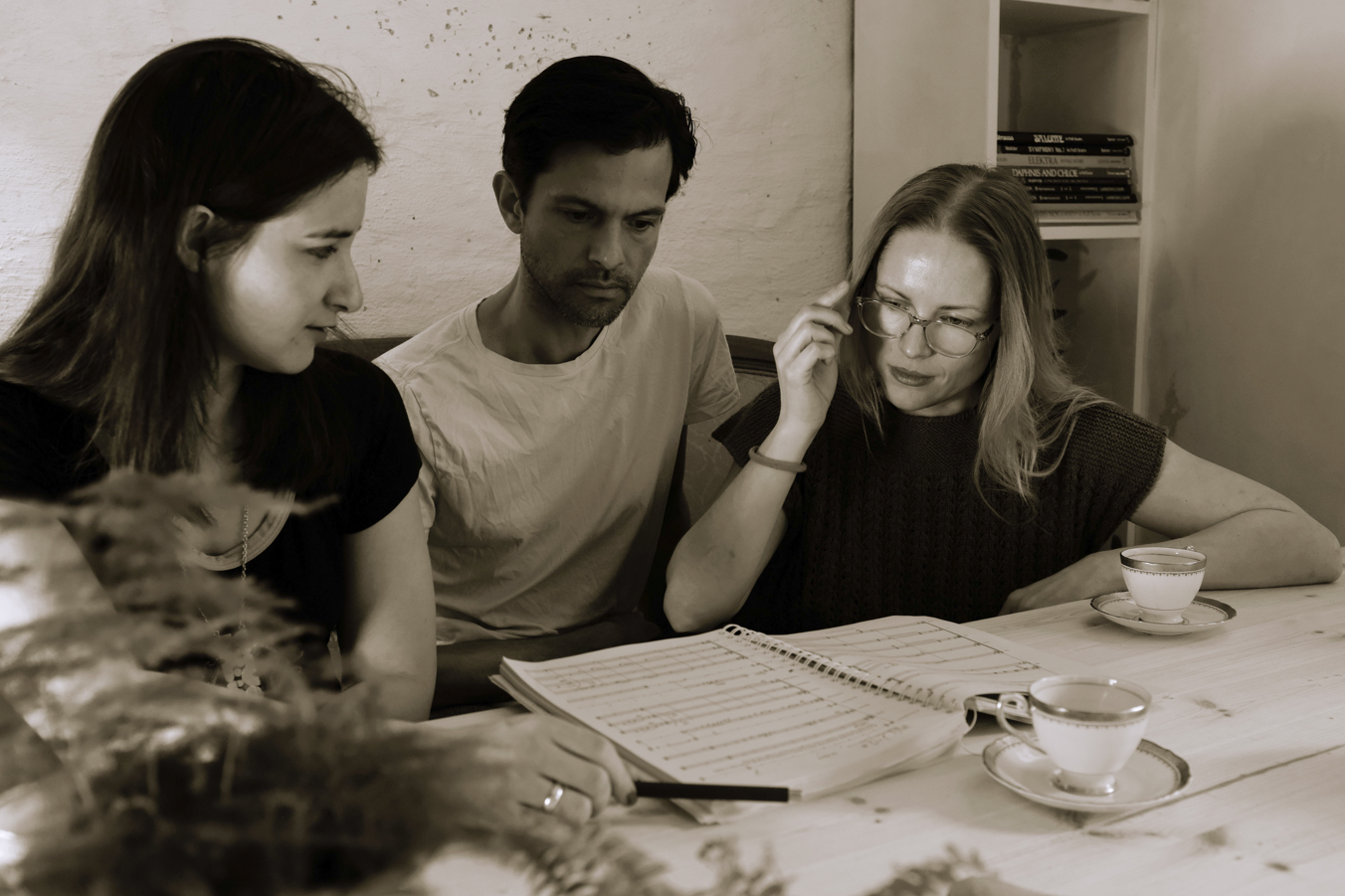
The title Heroin Chic references an aesthetic associated with emaciation, exhaustion, and the romanticization of self-destruction – most notably in 1990s fashion culture. It’s an alluring, provocative, and troubling phrase. Why did you choose it?
That was given by the novel on which the opera is based. But I think the heroin chic aesthetic combined fashion and existential matters in an intense way. It put self-destruction in vogue, and emaciation became performative. Self-staging is still very common today, and when you perform your identity and become all surface it is easy to lose touch with your inner self. In this opera that has been made quite extreme, with Elise entirely lacking a core while her surface being on display. She performs as a beautiful soprano, then as a rocker with dark eye makeup as if to bring her darkness to the surface. By the end she is still performing, now at her own funeral asking to be forgotten, while her fate to be remembered.
At the center of the opera is Elin Elise, a young woman torn between innocence, sexuality, self-destruction, and a longing for transcendence. Her story doesn’t fit into a simple binary of good versus evil. How did you construct her psychological profile?
That part was first done by the author Maria Kjos Fonn, and it is a quite intriguing premise. My task was to make the story my own, even if that meant adapting things quite a lot, and of transliterating the character into music. To me, that meant that the addiction had to have its own sound, and that Elise would be born with this essential tendency. I chose glissandi in both vocals and strings to express this. I also chose to portray the child Elise as angelic and innocent, with a touch of eeriness to foreshadow what is to come. Indeed she hints at her dark fate in the prologue. I let adult Elise sing much more boldy, it is almost like an operatic monologue, the other roles being much smaller, which is in line with her destructive self-centeredness. She also has some vocal scoops representing her self-indulgence. A lot of the character-work is in the orchestration and how the vocal lines are wrapped in sounds that support or contradict the sung words. The performers I worked with really brought out the psychology too with their expressiveness. From the athletic singer Susanna Wolff as “Elise” in combination with child prodigy Sofia Neacșu as “Little Elise” and the alluring voice of Johannes Nikolai Aas as “D”, and also Ivar Magnus Sandve (tenor) and Siv Misund (mezzo-soprano), to the sinfonietta (everyone is a soloist in a sinfonietta!), and of course the finesse of musical director Hans Petter Mæhle. It all came together in the recording.
Elise’s fate collides with two opposite poles: an overprotective mother and the dark figure D. – an embodiment of her destructive subconscious given its own voice and physical presence on stage. How did you build this musical triangle?
It was tricky, and I might have not made that choice today. I think I got swept into Elise’s bottomless self-centeredness, and the characters all started to support her journey somehow. For sure, some of her trauma comes from her mother’s fanatical preoccupation with her beauty and purity, but some of it is inherent too, carried within from the start, and herein is the actual triangle; between the fair and pure child who is a seed to it all, the seductive darkness, and the confused young woman in between. The embodiment of that darkness felt necessary in order to make it narratable vocally, and also it was great fun to write those deep melodies for bass. It is not the first time in art that a character is talking to inner demons! Maria and I are not in fear of clichés and really indulged in the light-darkness dichotomy allover with myths from fairytales to religion permeating both sides.
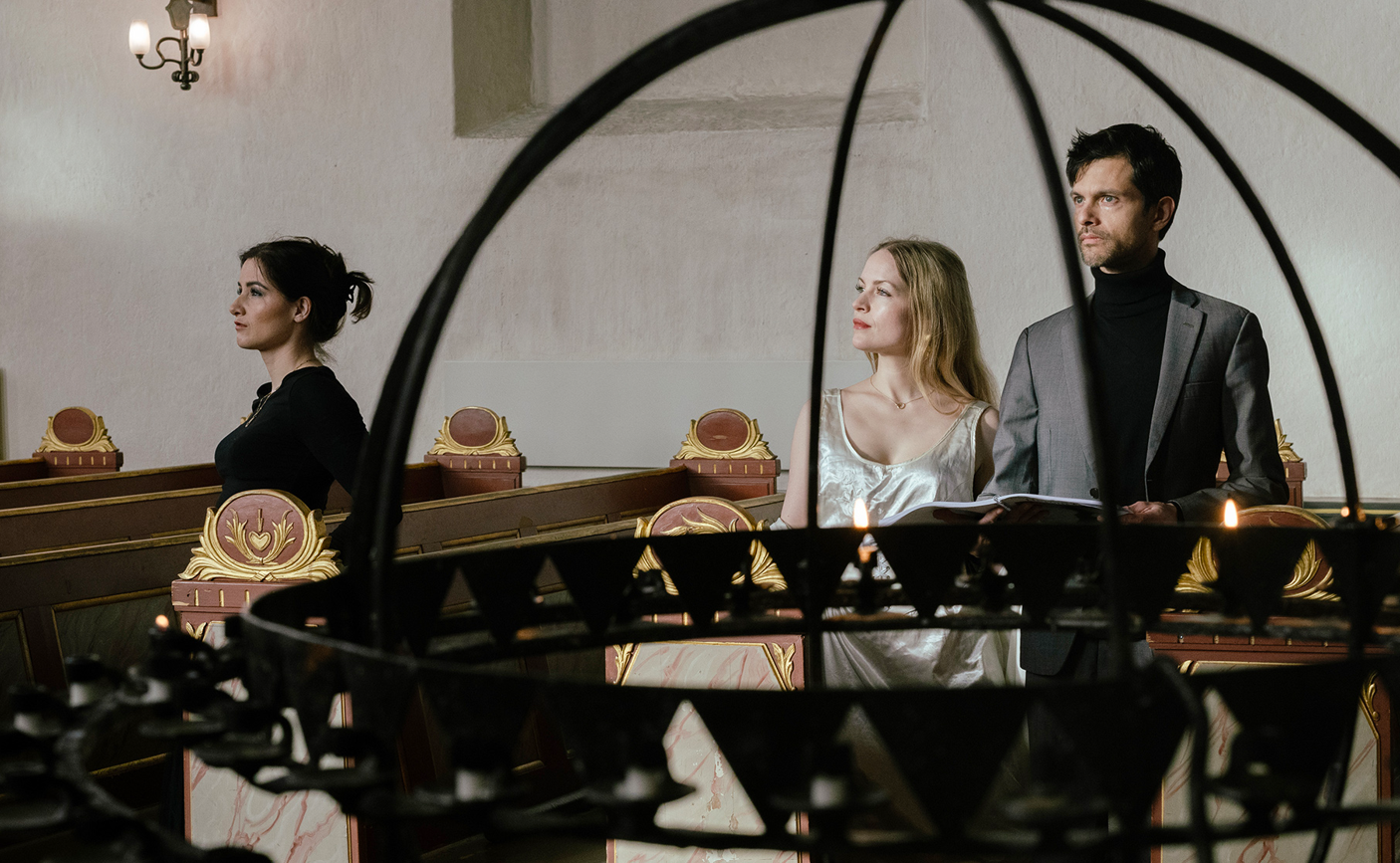
In the score, you make two bold choices: incorporating unconventional cimbalom parts and entrusting one of the main roles to a child soprano. Why did you need this particular contrast of rare timbre and childhood innocence, and how did these choices allow you to reframe familiar sounds to give the audience goosebumps?
I live and breathe for goosebumps, so would be so happy if I gave some! Well, the world of opera and classical vocal music is full of solo boy sopranos, but very few girls, so I thought I’d help rectify that… But it ultimately comes from the story itself, and my adaptation of it. I wanted the girl to be a common thread, the germ of self-destruction carried within from inception. The child in you never disappears, and in this case it is a destructive child that appears as a separate entity causing her adult self’s demise. The cimbalom choice was twofold. One very sensical reason was that the premiere was set for Romania, and I wanted to honour the festival by utilising a traditional instrument from the region. The other reason was that I really like its sound, and it sort of brings associations to skeletons in a horror story, which was a perfect contrast to the angelic harp. It is also excellent for percussive elements and riffs, and has a wide expressive range. The traditional repertoire for the instrument requires virtuosity of the performer, which meant that I was free to write quite fast and complicated things. The instruments I chose for the orchestration afford incredible colours, perfect for sweet uncanniness.
Heroin Chic touches upon anorexia, drug addiction, sexual exploitation, and rehabilitation. These are topics where it is easy to slip into either preachy moralizing or the romanticization of suffering. How did you manage to maintain a balance between artistic expression and responsibility to the listener?
That is a difficult question, and I have been questioning whether it is morally wrong to make this art at all. I aimed at making the music increasingly powerful and harmonically pleasing along the downward spiral of the main character, which could make drugs and other self-destructive behaviour seem nice. However, drug-induced euphoria is nothing new, nor is the fact that it destroys, as it does Elise. I don’t think the solution to a problem is to ignore it, and I don’t really believe in moralising, at least my purpose does not lie there. I rather think that when we process things artistically we bring them to a conscious level where they can be spoken about, felt, experienced by proxy, and hopefully help us lose the need for first-hand experience. Heroin chic explores how a wish to split body and soul can manifest in extreme ways when unfolding in the form of musical drama. It belongs to the realm of fantasy.
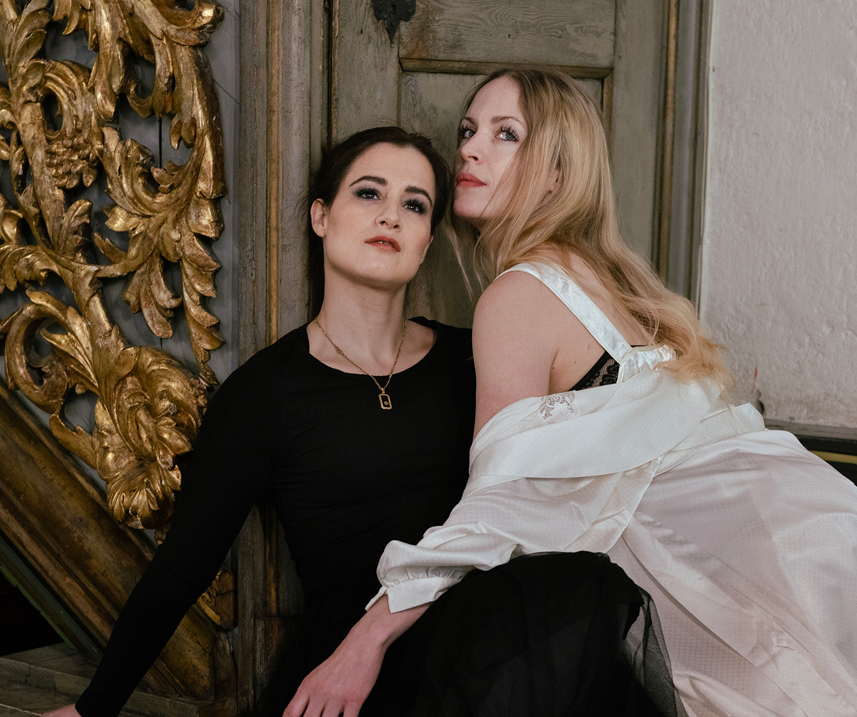
The finale leaves the audience in ambiguity: is it death, resurrection, or a drug-induced hallucination? People leave the hall with a question rather than an answer. Do you have a “correct” version in mind, or does the composer also have the right not to know?
This taps into a favourite topic of mine: the authority of the creator. In one way, every interpretation is equal. At the same time, doesn’t the intention of the writer count a bit more? What about the concrete signs in the ‘text’ (in the widest sense) itself? I love the idea of Elise “actually” performing a dramatic lament over her own coffin, just because it is so dark and melodramatic, and I imagine a staged version in which the singer flies above the audience making it even more wild and gloomy. I also like to think that we, as audience, have finally yielded to Elise’s own fantasy and that we drown in her own drug-induced dream. Will she wake up? The audience will, because the curtain drops! I prefer to keep it open!
February 2025, Romania: five hundred audience members and a standing ovation. A year later, Norway: the Parkteatret club, real-time visuals by Franciska Eliassen, and an afterparty where people were, by all accounts, not just listening to opera, but dancing to it. Now Heroin Chic is reaching an international audience. What are your dreams for its future journey?
They did not dance during the show, but they sang along at a point there, when invited, and they danced to the DJ afterwards. Dancing and other forms of participation is something I plan to explore more though! My dream for Heroin chic is to avoid the all too familiar archive drawer dwelling of so many other modern classical works, and reach more audiences. As a multimodal art form opera is not complete without the scenic elements, so I hope for Heroin chic to be staged.