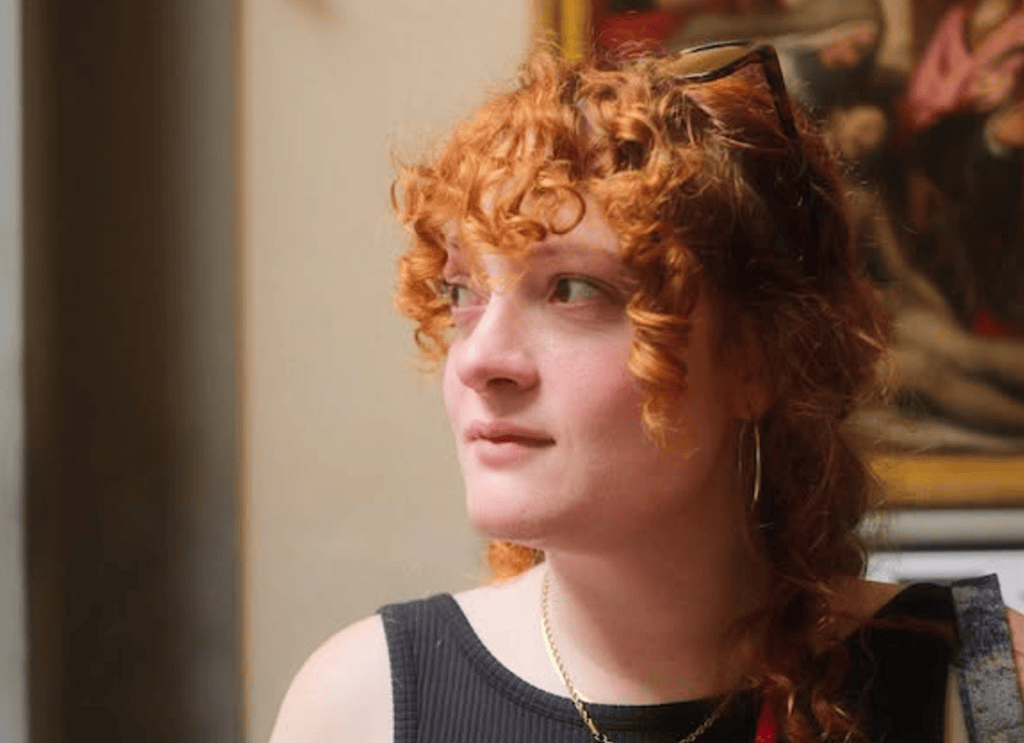
A few days ago, Allison Lupton’s single “The Wonder” seemed to me a small, self-contained event: a warm story about how good it feels when people sing together. Today, it has gained context – the new album Step Up Molly, in which it appears as one of eleven stories. Having listened to the album in full, I realized that “The Wonder” is part of a remarkably cohesive statement.

When I first heard the single, I immediately sensed a special depth in Allison’s voice. A Canadian singer, songwriter, and flautist, she has been performing at home and abroad for more than twenty-five years: she began with music for community dance evenings and now sings with orchestras. It seems that this path gave her her greatest gift – the ability to make people feel at ease. I listened to Step Up Molly less as a collection of songs than as a gathering of stories. They are written with such care, and with such faith in folk as a living language, that it is easy to imagine someone, fifty years from now, confidently calling them traditional.
That is the point. I love that Lupton writes where Canadian folk naturally breathes: Irish and Scottish roots, Ontario, Newfoundland, working lives, roads, friendship, hockey and, of course, love. All of this coexists in her music without strain. Here, Lupton served as songwriter, performer, and producer; David Travers-Smith handled recording and mixing, while Andrew Collins recorded one of the pieces live. Behind the modest word “album” lies almost an orchestra: an impressive number of musicians, vocalists, and a choir that, in the finale, lifts “The Wonder” to an entirely different height. You listen and understand how many people have put their skill and good spirits into this music. I applaud them all standing: without them, Step Up Molly would not be so generous and luminous.

Allison Lupton Band- photo: Jen Squires
The opening “Over The Line” is a fast bluegrass tune with a story about the “Mighty Men of Zorra,” a tug-of-war team that won at the 1893 World’s Fair in Chicago. Mandolin and voice lead a dialogue, joined by fiddle, dobro, and guitar. The best discovery here is poetic: Lupton transforms the contest into a metaphor for love, where “crossing the line” means both winning and falling in love. For an opening track, it is a very precise move. The dynamic start is followed by “Sea Glass,” a soft, soothing romantic piece. Guitar, fiddle, and mandolin shimmer like the sea-polished glass named in the title. Then the tempo picks up again: “The Big Cheese” begins with a rich, silky bass introduction before breaking into a whirlwind of reels. Each musician gets their moment, while Irish flute, fiddle, mandolin, and guitar compete without getting in one another’s way. The music says: “How wonderful that we are here together.” Such things cannot be played falsely.
My personal favorite for emotional depth is “The Hills of Harrington,” a Celtic ballad about deception. The vocal duet of Allison and Bobby Watt sounds raw and honest, and by the end, when the guitar gently leads into the Scottish march “Sullivan Ross’s March,” what remains is a quiet brightness. There is lightness here too, without saccharine sweetness. “Gems” is a small celebration: foot percussion, fiddle, flute, mandolin. The song is dedicated to a long friendship, and in it you can hear the joy of having someone nearby for a very long time. Yet this story has a darker side. “When Trouble Comes” moves into a pensive, uneasy tempo; Mike Stevens’s rich, dramatic harmonica perfectly conveys the atmosphere of troubled times. It is an expressive move that shows just how varied this music can be. A separate triumph is “Hockey Night.” Who would have thought that a hockey ritual could fit so naturally into a folk anthem? A springy rhythm, an infectious chorus, a proud “in Canada!” – and suddenly I am, against my will, tapping my foot. It is a contagious song about how sport and shared habit become part of cultural memory.

Allison Lupton Band- photo: Jen Squires
The title track, “Step Up Molly,” is the heart of the whole statement. It tells the story of young women from remote Newfoundland communities who were brought to work at a textile factory in Hespeler, Ontario, during the Second World War. Lupton’s duet with Matthew Byrne gives the story dimension: it feels as though two voices are carrying on a conversation between an abandoned home and a strange, new place. The closing instrumental, “Reel De La Pistroli,” returns energy to the narrative. Toward the end, the music opens up again. “Niagara Moon” is a swift bluegrass tune with virtuosic solos, but the main thing here is the tender three-part harmonies in the chorus. “The Wild Goose,” by contrast, is almost silent: austere mandolin, guitars, bass – and the feeling of a northern wind. It is a story about parting with a beloved place, and Lupton sings it with touching tenderness. Everything concludes with the already familiar “The Wonder” – and gathers together everything that came before. A triumph of communal singing: a choir of 140 voices lifts the theme above a personal story and makes it shared. After factories, roads, hockey rinks, and sea shores, such an ending sounds especially natural.
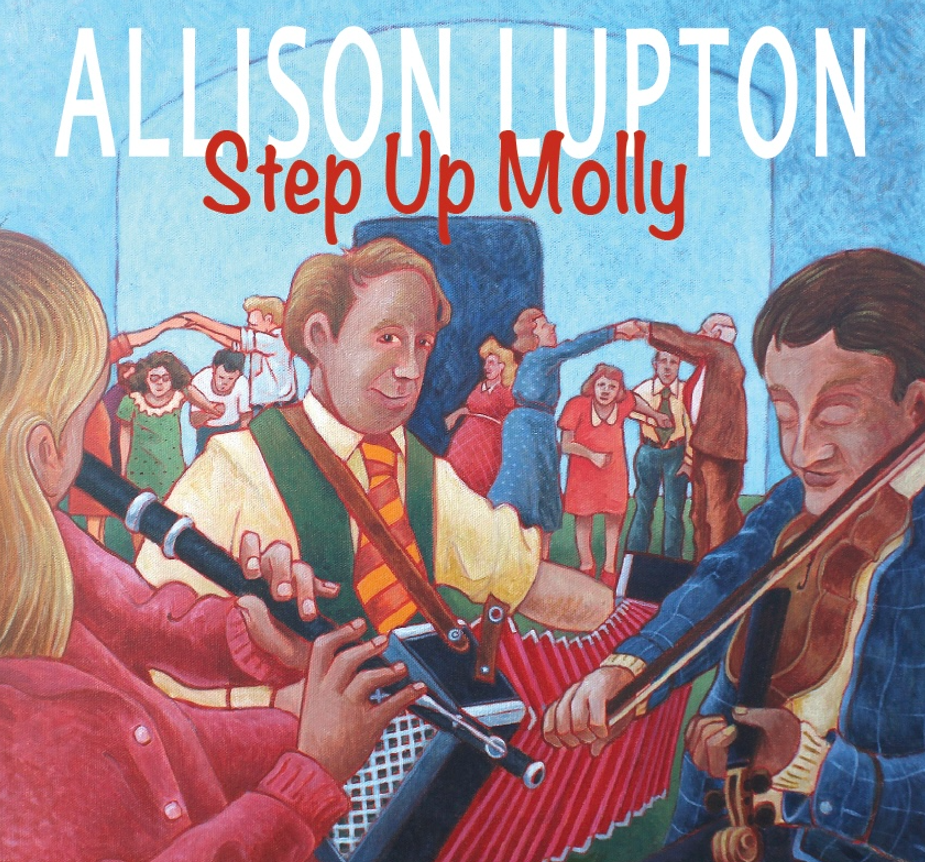
COVER- artwork: Ian Bell
Allison Lupton has a subtle feel for Canadian folk and singer-songwriter music – and knows how to present it not as museum material, but as living, contemporary speech. This is perhaps the greatest achievement of Step Up Molly: it makes no ethnographic or musical compromises, yet remains open and welcoming. This is music made with attention to every detail and a sincere love of folk as a conversation in which there is always room for one more voice.