Four years of gigs along the Ventura and Santa Barbara coastline – and a long-awaited record. Acid jazz and funk band Matterform releases their debut album (July 19, 2026), and the first singles already make it clear: there’s something special here. “Oxnardis” is a weightless, cinematic nod to Miles Davis, while “Toaster” shifts gears and pushes forward. Up next for the band – vinyl, artwork by guitarist Tony Pelosi, and, it seems, a long life ahead for these grooves. We sat down with the guys to find out how it all came together.
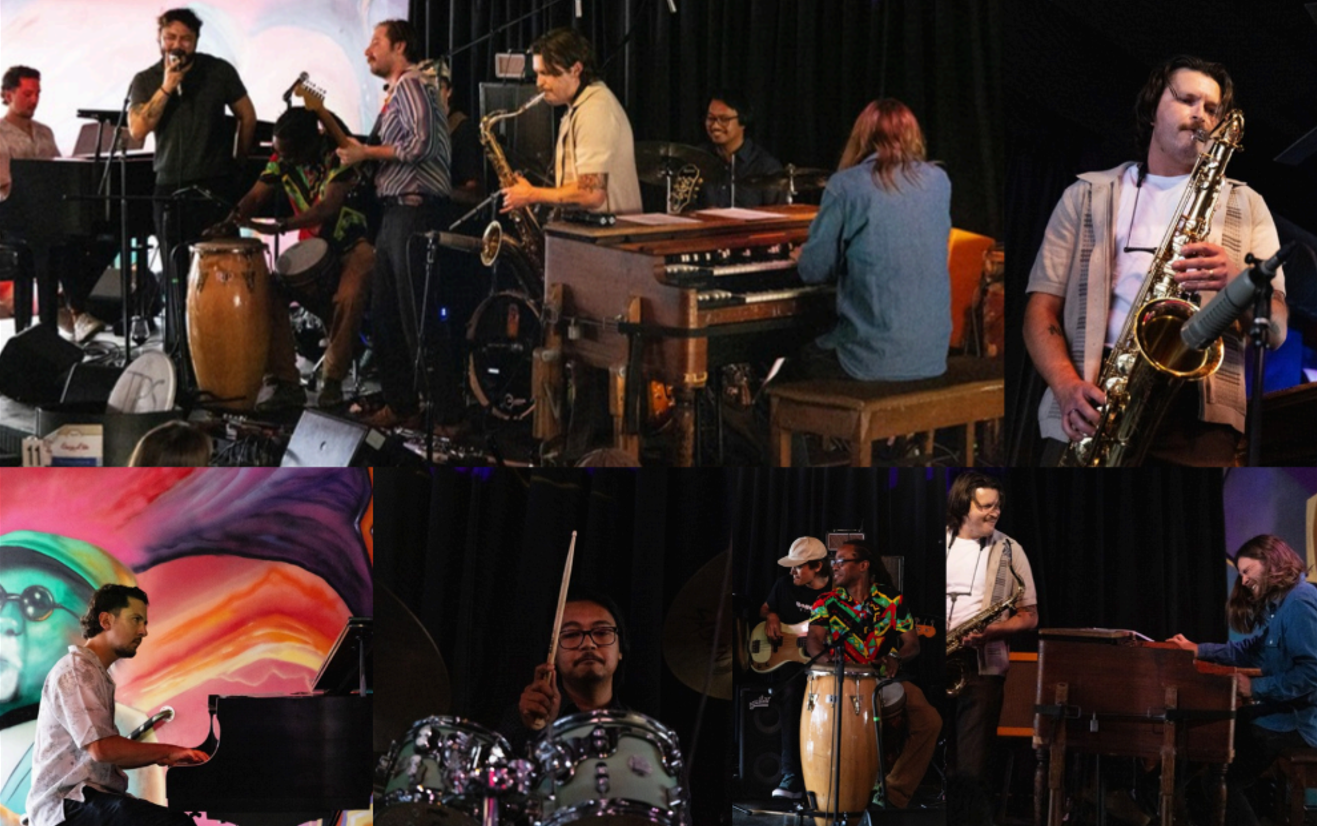
Hey guys! Glad to meet you, and thanks for finding the time to answer the questions. Usually, interviews start with the banal “tell us about yourselves,” but let’s imagine we’re filling out an application for a space agency. You’re heading on a flight to infect the Universe with funk. Who is responsible for what aboard the Matterform spaceship, and how did you even manage to dock in the Ventura area?
Drew: This exact question reminds me of the cover of Herbie Hancock’s Thrust album! I think The ship ends up being more of a space style U-haul truck rather than an elegant one man ship. I think the majority of band members would all be squished up front, and Zach curled up in a ball in the back with the cargo. I think it’s a very even field with the band, everyone’s input is important to me and I try to field it and wrangle it in. It’s much easier being a solo artist and having players do your bidding.
For four years, you’ve been storming the clubs of Ventura and Santa Barbara. Over that time, bands either become a family or start quietly resenting each other because of unwashed cups in the studio. How did you manage to keep the balance between “we’re writing great acid jazz” and “who took my pick again”?
Chet: We have had the mentality of playing as much as possible wherever we can, kind of like a head-down, just-do-it kind of thing. Never once have I griped over an unwashed cup but we definitely have moments of irritation, though those are very few and far between. I think for the most part we stay out of each other’s way while playing and trust that the person at the front of the section will do well.
From my point of view, we do this because we love it. So I try not to impede on someone else’s release and creation. I trust the members in the group and want them to express themselves.
Everyone in this band is a relentless woodshedder, and I feel very inspired to play with them because it keeps me motivated to continue honing my craft. This in turn has put everyone on an even playing field and in a continuous state of admiration and appreciation for one another. I feel that is what keeps this band healthy.
“Matterform” sounds like a little scientific puzzle. Tell us how this name came about.
Javi read Robert Pirsig’s Zen and the Art of Motorcycle Maintenance and was thinking a lot about the intersection of form and substance (matter). You asked, so here’s the long answer:
In the book, Pirsig argues that our Western philosophy, which stems from Aristotle’s strict separation of subject and object, causes us to intellectualize our experiences and miss the essence of life. Quality is the unifying force that bridges this gap. He argues that Quality is a tangible, objective reality as opposed to a subjective preference (eg. beauty is in the eye of the beholder). When you experience something and immediately recognize its value or excellence, that direct recognition is Quality. Quality is the goal of art, its what you experience before you divide the world into form (eg. what a thing is; nuts and bolts on a motorcycle) and substance (eg. what a thing means to us; a motorcycle trip with dad). The name “Matterform” alludes to this as our guiding light.
Your music is called “cosmically adventurous.” Lo-fi, funk, psychedelia… When you first got together, did you have a clear plan along the lines of “we’ll sound like Miles Davis on max,” or did you just jam until the neighbors called the police, and then you realized: “Oh, this actually sounds like a finished style”?
I don’t think we ever consciously set out for a sound. I was added later to the band but since I’ve been in we just start a song by collaborating and seeing where it goes. Very open to where a song will go and what speaks during it.
Seconded + to add on: the goal is to create something together that is Quality, something we can all (or mostly) agree on sounds like something we’d want to hear again!
Let’s talk about June 19. X-Day. You’re releasing your debut album, titled Matterform. It’s the result of four years of work. What in it most resembles the early period, and what clearly says: “we’ve become different, and this is good”?
Drew: “Morpheus” is in my mind the earliest period of jamming in Javi’s living room. “Paperweight” and “Duster” seem to reflect some of the refinements in our playing.
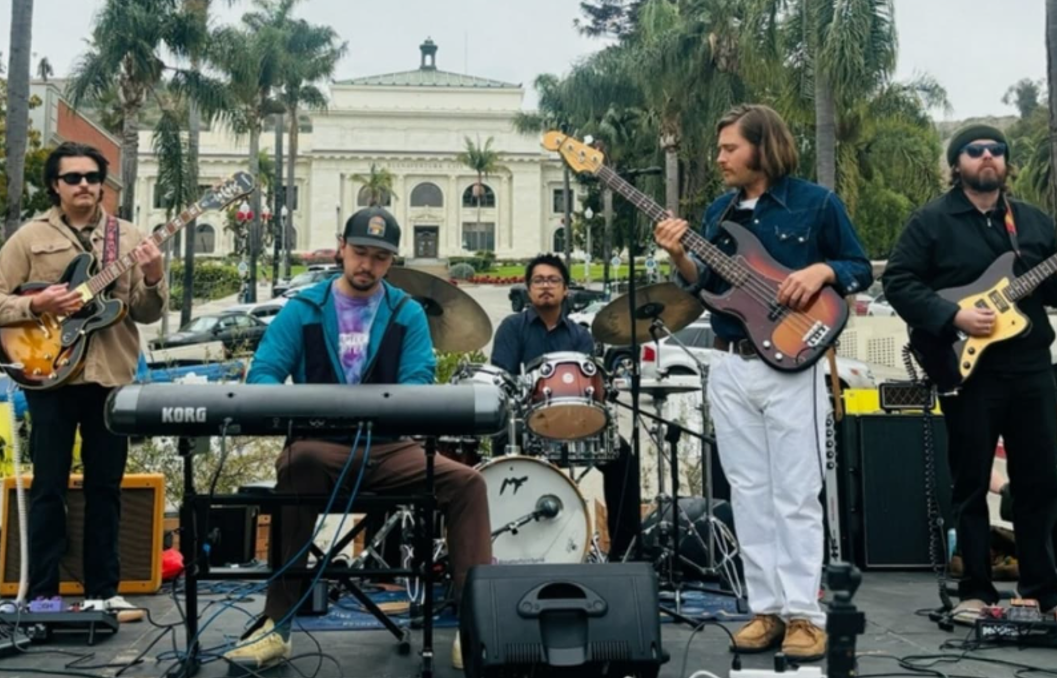
The opening track is “Awakening.” Why did you decide to start with it, and what’s more important in a single: its standalone character or how it opens the narrative of the album?
Drew: I think all of our songs do have some underlying meanings, but if we revealed them I don’t think it would be as fun for the listener. But, to answer, usually the first thing you do is wake up, but also be open and awaken your senses to whatever you’re about to listen to. Some songs are long, this song is heavily edited down. I think the melody is good, and like that it hits the listener with a really cool psychedelic jazz moment towards the end. Playing it live is really fun, because we can pad it out if we need to kill time while someone fixes their equipment (hah!).
To support the release, you released two singles from the album: the lo-fi tribute to Miles Davis, “Oxnardis,” and the more energetic track “Toaster.” The two singles show two different sides of the material. Was this planned from the very beginning, or did they themselves suggest to you how different the energy of this album could be?
Drew: Not planned at all. I’m a fan of bands and music that can show both sides as well as the other members. I think that these sides just come out naturally.
I’ve already had the chance to listen to the album, and personally, it hooked me. Although psychedelia and lo-fi are often associated with melancholy, in your case I heard more of a warm, attractive California groove. How do you manage to combine the light sadness of lo-fi with the desire to make hips move in time with the funk?
Drew: Sometimes a song just gets boring. It’s like Yin/Yang, can’t be happy with a sad/hopeful section. Zach also gets irritated when the song goes nowhere. I’m the same way.
Javi: Maybe to put this another way – Luke, I am your Father.
And finally: the album was released on June 19. What will you do first on that day?
Drew: I think I have to play a sub fill in gig that day (haha). I think I’ll make the stream farm in other countries farming plays, but in all seriousness, I think I’ll just relax and start thinking of ideas for the next round of songs. It’s a nice thing to get off your chest and move on to the next thing, that’s what gets me excited with this lineup.
Javi: Listen to the album in its entirety until I get sick of it again. Thinking about the things I could have done better will likely lead to me practicing.