“When the power of love overcomes the love of power, there will be peace,” Jimi Hendrix once said, reminding us that music knows how to negotiate where diplomats simply throw up their hands. In a world that has grown quite tired of the roar of news and endless stress, silence has turned into a luxury, and sincerity into a scarcity. Sometimes, for the planet to finally slow its frantic pace, it is enough simply to exhale. This is exactly what the Sydney quintet Armistice Flute Choir did. The group dropped in for December sessions at A Sharp Studios Riverwood and recorded their debut album “Hope”. Five flutes, a fragile melody, and a sea of warmth-they managed to transform pure acoustics into a powerful, beautiful statement about how important it is to remain human.
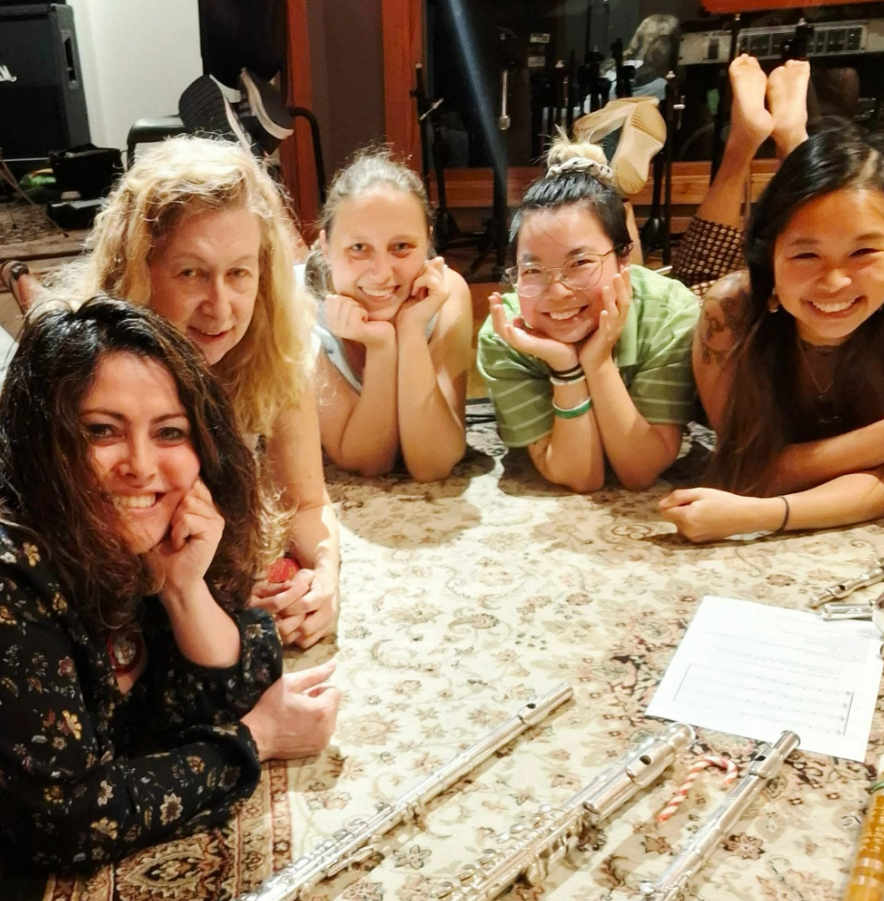
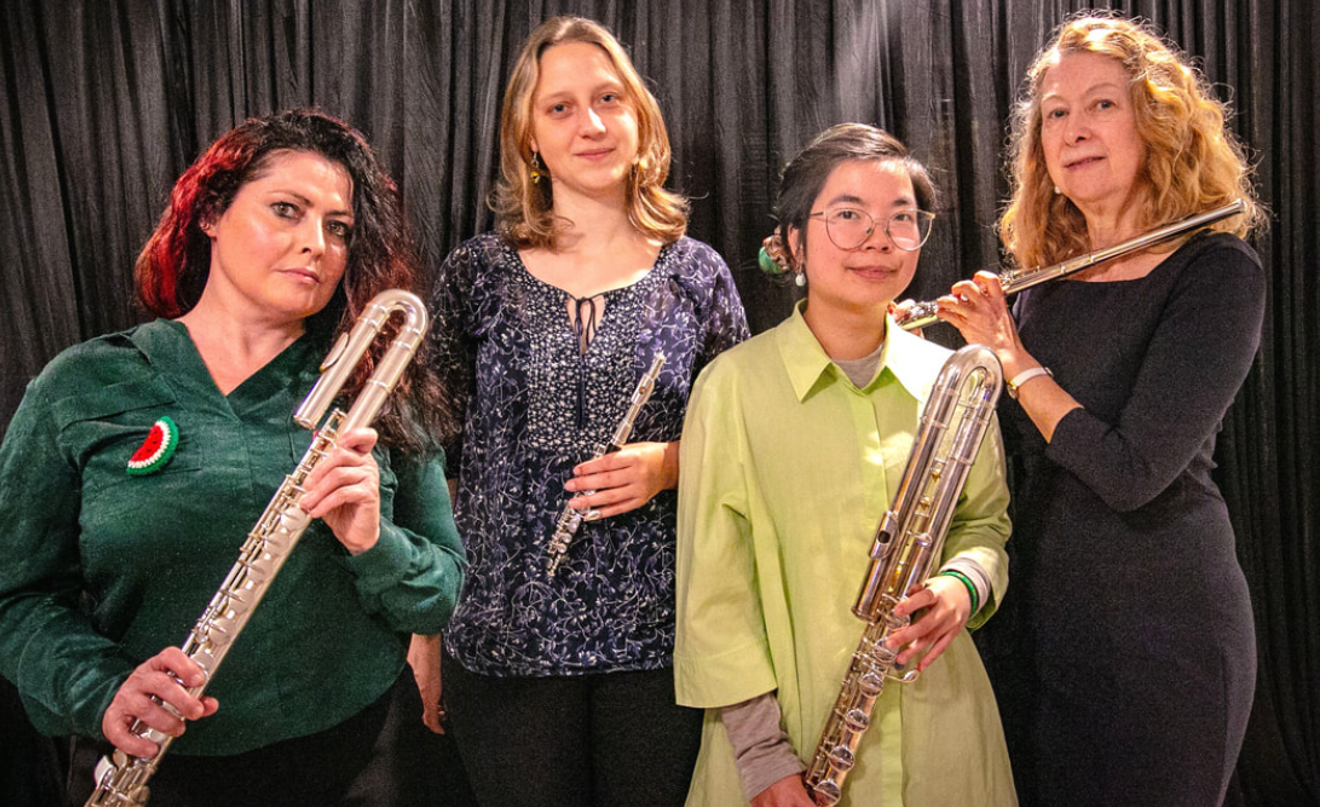
The ensemble is led by Australian-British composer and performer Keyna Wilkins. The group also includes Liz Cheung, Chloe Chung, Laura Chislett, Jessica Scott-musicians with different cultural backgrounds. The word “armistice” translates as “ceasefire.” The musicians created the most delicate sonic fabric, woven from academic rigor, cross-cultural traditions, and living, pulsating improvisation. All proceeds from the release are directed to the Palestinian Children’s Relief Fund, which makes this forty-five-minute recording both an aesthetic statement and an act of mercy.
The playlist is carefully constructed: with an overall minor coloring, the compositions flow organically into one another and hold the listener’s attention. The album includes seven tracks in which the flute sounds at times low and tragic, at times high and anguished, while remaining an instrument of virtuosic and flexible articulation. The recording opens with “Eternity 1” by Chloe Chung – a composition with elements of controlled improvisation, inspired by the image of a “pond of eternity.” Its music develops in circles: quietly, unhurriedly, like water after a thrown stone. The melody forms a space in which time loses its linearity, and the flutes circle above the water’s surface. The chamber sound gently leads the phrases and reveals the expressive possibilities of the instrument. The timbre of the dizi (a Chinese bamboo flute) is, by its very intonational nature, closely akin to the human voice, which is precisely why it sounds so especially compelling.
This is followed by “Murmuration” by Laura Chislett – already a collective movement, even visual in its effect. A murmuration is a phenomenon of flocks of birds drawing living patterns in the sky. Chislett translates visual logic into acoustics: the parts enter into dialogue, interrupt one another, intertwine – and suddenly form a precise, geometric pattern. The music moves in syncopated, fleeting phrases: a fragile line between ordered geometry and the freedom of bird flight. Listening, you catch yourself looking upward. Keyna Wilkins’s composition “Onyx” develops the idea of textural density. Like the stone itself, onyx is built on the alternation of layers – black and white. In the piece, these contrasts are embodied in sound registers: from the rumbling low of the bass flute to the shimmering high. The layers overlap one another, and the form becomes tangible.
The central place in the album is occupied by “If I Must Die” – a deep and emotionally heavy piece. It is based on a poem by Refaat Alareer, a poet from Gaza whose life was tragically cut short in December 2023. Wilkins wrote this music with the permission of the poet’s family, taking his farewell lines as the foundation. At this moment, the music on the album becomes tangible, fragile, and the pauses between the notes strike the nerves. The sounds of the flutes pick up the meaning of the poem, intertwining in a single melody light sadness, grief, and human dignity. The title track “Hope” returns the light-but not as a naïve promise, but as a steady state. Wilkins avoids loud gestures: hope becomes quieter, but stronger, gaining the ability to sound further despite everything. Melodic lines gently wind and support one another, not allowing any one of them to disappear completely.
In “Elasticity Of Thought,” Liz Cheung offers a more mobile and experimental form. This opus, written by Cheung, lives by its own laws. It expresses the idea of flexibility of thought, capable of finding a way out even from the most distant mental dead ends. Eastern breathing techniques naturally combine with the Western avant-garde. The album closes with “Eternity 2” – the second version of the opening composition. The return to the initial theme creates the effect of a closed circle, but perception has already changed: after the path traveled, the “pond of eternity” seems even more bottomless and calmer.
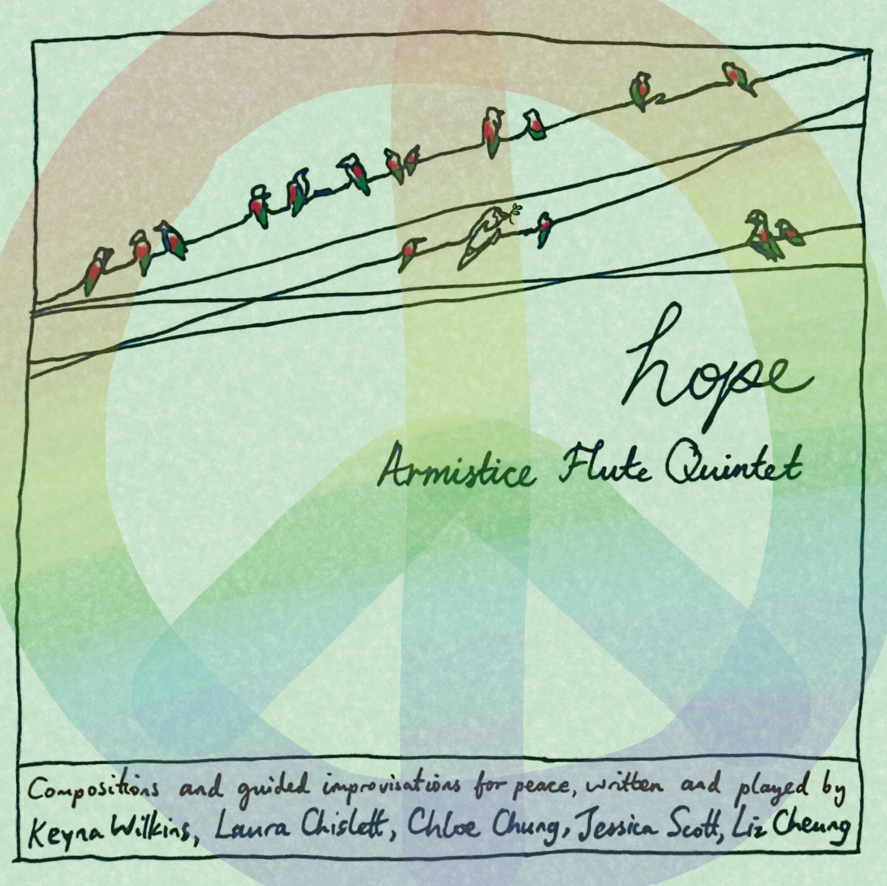
Armistice Flute Choir today is an extraordinary ensemble – it is a union, a movement, and a way of thinking. The project goes beyond the quintet, turning into a cultural platform where music becomes a language of dialogue. In the album “Hope”, the ensemble subtly combines Western academic tradition with experimental acoustics and folk intonations. Here, breath and pause become equal elements of expression. This is how many contemporary musicians search and perhaps think-but Armistice Flute Choir embodies this idea in practice. Peace begins not with agreements, but with a willingness to hear.