I feel a particular warmth toward music that doesn’t try to fill up all the airtime, but instead gently frees it from noise. Against the aggressive stream of tracks fighting for seconds of attention, home recordings become true revelations – the ones where sound ripens slowly and naturally. So when I listened to the new nowhere wood single, my first feeling was relief. Nobody is in a hurry here. The single ‘weeping willow : summer’s rose : daylight after dark’ came out ambiguous for the artist, and all the more alluring for it. In its chamber-like sound there is a mesmerizing poetry: the feeling of watching, from a distance, the play of light in the tree canopies, and how fleeting warmth gives way to the first autumn coolness.

Recorded in a home studio, nowhere wood offers a recording stripped of studio polish, yet full of a particular air that’s hard to replicate in an expensive setup. In the music one senses neofolk fused with ambient – the genre label here is more a formality than the essence. The essence, it seems to me, lies elsewhere: in the ability to translate the shift of a time of day or season into musical dramaturgy. A single of four tracks: three states of nature and, standing slightly apart, a ritual finale of its own. Into the textural weave of acoustic strings and delicate melodic passages, field recordings are woven – the rustle of leaves, the muffled sound of wind, the crunch of gravel – and the artist creates a sound that is ephemeral and tangible. The analog warmth of soft synthesizer pads underscores a sensitive, intimate tone, transforming a home microcosm into a space of global meditation. I put it on in the evening, eyes closed – and that, it seems, is exactly the way it’s meant to be listened to.
The record opens with “Weeping Willow,” the first track setting a course toward quiet nostalgia. The composition builds around a slow, meditative classical guitar figure: the musical pattern here is pliant, echoing the sway of willow branches over a still river surface. Combined with barely audible field recordings and hazy ambient pads, the track settles into a state of solitude – being alone with nature on an overcast, mist-veiled day. A natural continuation of this watercolor sadness is the warmer, brighter “Summer’s Rose.” The neofolk dimness gives way to transparent acoustic passages, colored with light flute and keyboard accents. The track conveys a lyrical image of a late summer evening, when the heat subsides, revealing calm and the thick scent of flowers. An elegiac meditation on a beauty that inevitably fades but leaves behind a bright memory. I played this track several times in a row before I realized I didn’t want to let it go.
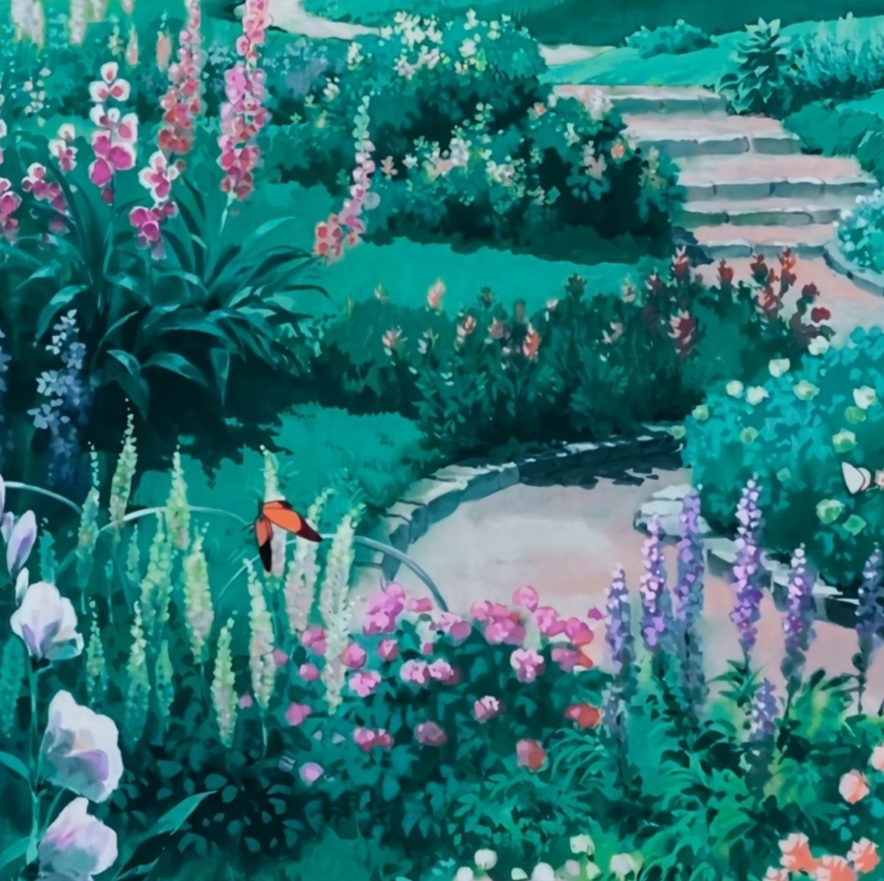
“Daylight After Dark” introduces movement – the most dynamic composition of the single, within the genre’s limits, built like a cinematic unfolding of a frame. It opens with dense, dark ambient textures, then gradually opens toward the light: new instrumental parts stack on top of one another, mimicking the effect of sunrise. The track symbolizes not so much the dawn itself as the path toward it: the slight anxiety of waking, giving way to gradual relief and warmth. After the melancholy of the willow and the bright sorrow of the rose, this track sounds like the moment you can finally let your shoulders drop. From the elegiac landscapes, the release moves into its conceptual conclusion – the finale, “Myrtus Communis,” carries the listener from private experience toward eternal cycles. The name refers to the botanical name of myrtle – a plant considered sacred in antiquity – and that gesture immediately sets a different, more archaic tone. Here, drawn-out drone tonalities, deep acoustic resonance, and near-primordial forest sounds come to the fore. Listening to it, I found myself thinking not of any specific ritual, but of the very idea of ritual – of a forest magic that existed long before us and will remain after.
If one had to sum up nowhere wood’s method in a single thought, it would be an aesthetic of slowness: the music sounds as if it is being born right now – because it truly is being born right now. You can hear the composer feeling their way forward, making mistakes, trying again, until they find the right tone and follow it. There is no reproduction of something already found in this performance; there is only the re-living of the search itself. The single “weeping willow : summer’s rose : daylight after dark” is structured like a small yearly cycle in miniature: from sorrow to light, from light to hope, and from hope to the silence that was always there, before and after all these shifts. Four short tracks come together into a single, unified statement – something like an impressionist painting in pastel tones, full of tenderness and barely perceptible warmth. Having listened all the way through, I caught myself wanting to sit in that silence a little longer.
I won’t venture to predict whether this will be a discovery for everyone. But for those rare minutes when you want not to be distracted from your day, but finally to listen into it – this record fits perfectly. Sometimes the boldest thing music can do is simply to be there.
Published in partnership with SubmitHub