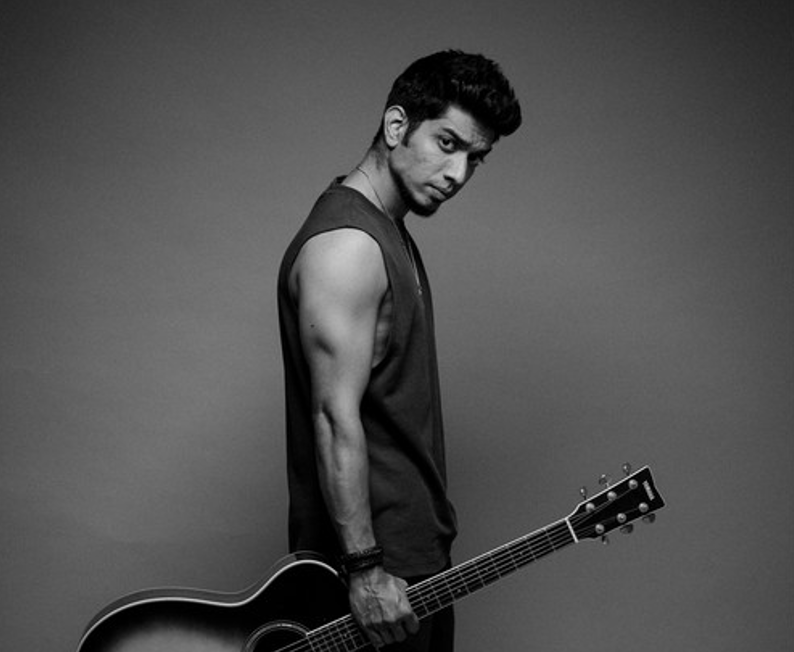
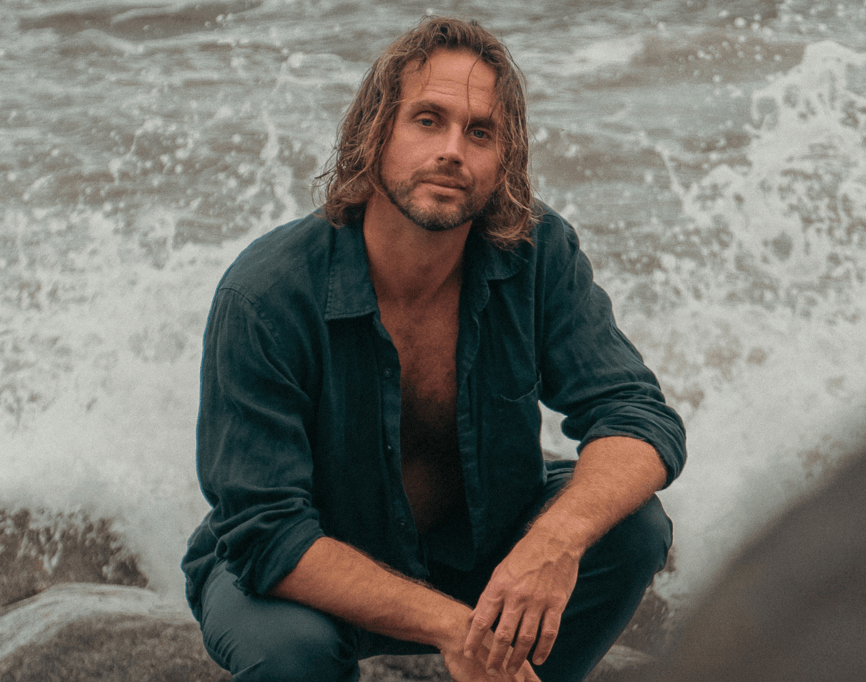
Once, he used to step onto the basketball court. Now he steps up to the microphone – and with the same stubborn drive with which he once fought for the ball, he now fights for a line, for a beat, for the right to say: “This is mine.” Jon Kabongo traded his familiar city for Los Angeles, his familiar career for uncertainty, and an air mattress in a friend’s apartment became, strangely enough, the starting point for one of the most personal songs he’s ever written. “The Follow Through” – his new single is a conversation with himself, brought to record. We talked with Jon about how to transform life’s hardships into inspiration, why the great mathematician John Nash and basketball legend Steve Nash became his muses, and what it’s like to create “innovative thought rap.” Tune in – this conversation is charged for success!
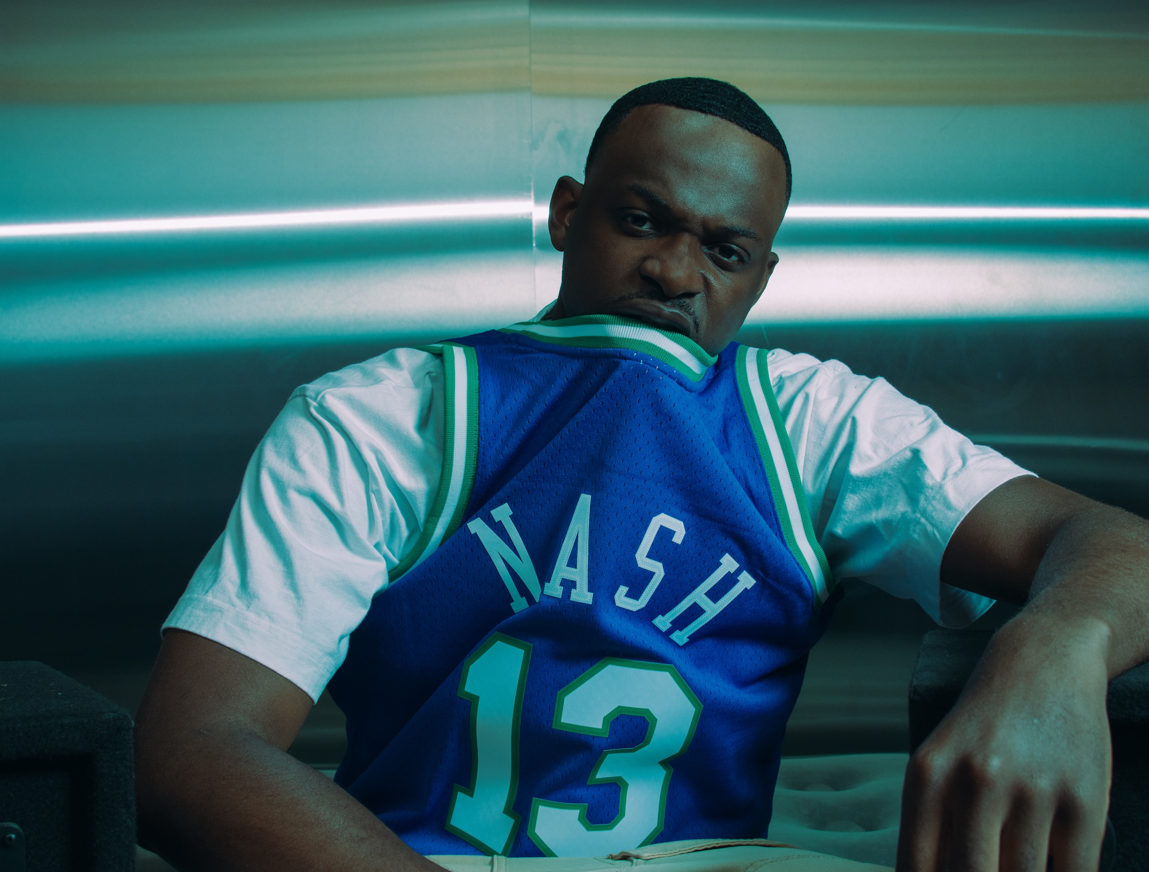
They say the best stories begin with an unexpected twist. Yours is no exception. Nice to meet you, Jon, and thank you for agreeing to answer our questions. For those who don’t know you yet, could you please tell us who Jon Kabongo is?
Sometimes I feel like my story hasn’t even started yet, but there’s definitely a lot to discuss about my journey this far. For those that don’t know, I am a 27 year old rapper born in the lower east side of downtown Toronto and raised by Congolese first generation immigrants. My upbringing was filled with a mixture of hip hop culture through my community, spirituality through my parents, and basketball through my older siblings. I’m the youngest of 6 and got to witness many journeys before my coming of age moment I’m having now. My present identity and outlook is still very similar to the one I had as a child because I do believe I had a strong foundation and a lot of exposure to culture very young, but we grow every day and I’m sure 27 years from now I’ll evolve even more.
Your story sounds like the script of a sports drama with an unexpected turn. When basketball left your life, what was harder – losing the dream or reinventing yourself?
This is making me think I should start writing the movie now. Hahaha. But on a serious note, losing basketball felt like a death. I always knew that I could do other things and I was always exploring my other interests even at the height of my success with basketball, but the sport was always plan A. There was no point in time where I thought I wouldn’t be playing basketball anymore in my 20s, but it was right after my 20th birthday that I had a surgery that changed my life forever. I couldn’t eat on certain days. I couldn’t even watch basketball sometimes. I fell into a deep depression that took a lot of mental rebuilding for years. As much as I knew that I had other skills and talents, it didn’t change the fact that my first love was gone forever and I wouldn’t get it back the same way.
Virginia Tech, NCAA Division I. That’s a high level. For those who don’t follow American college sports, what does it mean to get there, and what does that level demand from you day to day?
Where do I start? I mean from elementary school I knew I wanted to be a pro basketball player, and Division I basketball is an important milestone before that goal. Every single day I imagined myself reaching that point and playing in the biggest schools. I ran hills alone at 12 years old. I dribbled a basketball everywhere. I slept with a basketball. I watched a game and highlights every morning and night. My friends knew. My teachers knew. My family knew. There is not a single person that knows me that can disassociate me from basketball because my passion was so strong. I dealt with a major back injury at 16 years old, but that didn’t stop me or other schools from believing in my ability to play at the next level. So to finally make it there after all that work and sacrifice felt like the biggest accomplishment of my life at the time. Being on ESPN or playing in march madness felt so surreal and I was extremely grateful that I got an experience that millions of kids would die for. No matter how much pain the injuries brought me, it doesn’t compare to the joy I received from it.
An injury. A moment when everything suddenly stops. Everyone who faces something like this chooses their own way to overcome it. You found words. When did you first feel the urge to express all of this through writing – and how did your very first track come to life?
I started writing way before the injury at VT. As a kid I was already into rap heavily and I always felt like I needed to express my emotions and document my experiences through the genre to give those moments meaning. My journey with writing was personal at first, but as I got older I began sharing it with friends at school then eventually started putting songs out on soundcloud in high school. Some people were impressed and supportive while others couldn’t take me seriously because of my reputation as a top basketball player. Having this longstanding relationship with writing for years made it very easy to dive deeper into it when I was no longer on the court. Something that started off as passion became my therapy and purpose instantly. Basketball was important to me because it felt like a calling, and once I realized that I had done irreversible damage to my hip and back, music began to fill that void. I think everything happens for a reason, and seeing how much I’ve grown since diving into music fully, I realized that what happened with basketball was the catalyst to my journey as a successful artist. Basketball was the training ground, music was the mission.
Moving from Toronto to Los Angeles – expectations and big plans, but as you’ve said, the reality turned out to be far less glossy: an air mattress, uncertainty, and a cold shoulder from the industry. When did you first catch yourself thinking, “Did I come to the right place?” – and what was harder to deal with: that kind of rejection or the pressure you faced on the court back at Virginia Tech?
I never fully moved to LA but I was going there a lot over the past year to grow my career. I think that my experience was very balanced because there were many exciting moments like working on music with Ray Vaughn at TDE, meeting different producers who I’ve made great music with, and building relationships with industry professionals who expressed their appreciation for my craft. However, I lost my full time job that was funding my life and the reality was that I still never reached a point where music was paying all my bills. There were moments last year where I had to sleep on an air mattress at my friend’s place because I simply didn’t have any income to change my situation. I met people that progressed my career, which gave me hope to continue pursuing music, yet it wasn’t enough to provide all the basic needs of life. This was demoralizing, but I think that my knowledge of what other talented musicians went through is what kept me patient through this time. I understood that I was not the first and I won’t be the last artist with recognizable talent to experience hardship in this pursuit of a music career. I think the self belief and patience paid off because things picked up for me and I am in a way better situation than ever. I didn’t know exactly how I would get here, but I did and now that I have more stability and resources to bring my ideas to life, I’m excited for the world to experience this new and improved version of Jon.
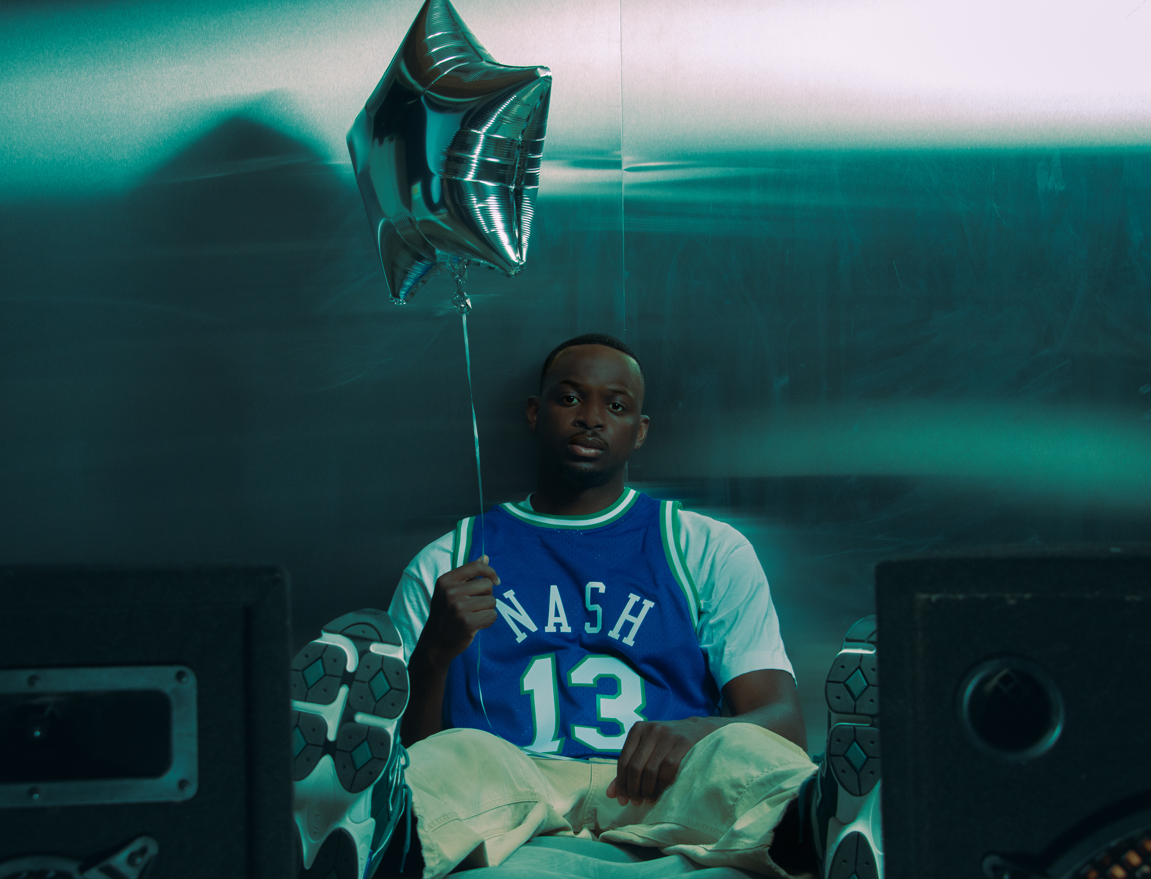
Let’s talk about your new single “The Follow Through” – the first one from your upcoming EP Jon Nash. Listening to it, I caught a subtle wave of vulnerability and confidence. Is that balance a kind of precise, John Nash–style calculation, or a natural byproduct of everything you’ve been through?
In “A Beautiful Mind,” Russell Crowe does an excellent job showing how even the most intelligent and successful people struggle in their own ways. Nash is a highly confident man that is simultaneously filled with self doubt. He believed he could be innovative, but couldn’t shake the fear of failure. This is a contrast that I want to focus on for this project because I truly believe that I can accomplish things in rap that will impact it forever, but at the same time I’m aware of everything that may be a sign that I won’t. Leaning into that vulnerability and reality is important because I want to motivate the next person who has a high ceiling but can’t shake the doubt getting in their way. I want to be very successful and open about my struggles to normalize the obstacles that are inevitable for everyone pursuing greatness. Getting this far in life after the injuries and delayed gratification with music helped me be more confident about my vulnerabilities because I genuinely didn’t even know how I would arrive here but that uncertainty didn’t stop it from happening. This single is a perfect entry point into the Jon Nash concept because you feel all those emotions at once, and I‘m excited to see how the world responds to it all.
The track features a soft saxophone line that contrasts nicely with the dynamic beat. Who on your team is responsible for that romantic noir touch – and who decided to add a bit of that “legal flex”?
I told one of my collaborators ItheDon that I needed something upbeat to rap on. I was looking for a southern bounce with hard hitting drums and melodies that aren’t too complex. He is one of the most talented producers I’ve ever met and I can always rely on him to deliver something that will satisfy my ear. Only a week after asking him what I was looking for, he sent me the instrumental to this song and I fell in love immediately. The sax was all his call, and as time passes it is more tasteful than I even realized at the time. I think it’s also an ironic choice because those saxophones are having a moment in hip hop culture right now, with content creators using it for comedic skits about tragic events. These are references to classic black movies like “Boyz in the Hood” where that same type of sax gets played during tragic events in the films. This song is about triumphing in the face of tragedy, and that juxtaposition of those “sad” saxophones with my aspirational lyrics/tone and electrifying drums create the exact tension I want the audience to feel. I may have gone through it, but I fought back.
I’ve heard that the single is getting an unusual music video – almost a full-on “A Beautiful Mind”–style drama. The University of Toronto campus suddenly becomes Princeton, and former basketball player Jon Kabongo turns into the great mathematician John Nash. It’s visually striking and unexpected. Rap against the backdrop of Princeton’s gothic architecture is a powerful contrast. How do the hard-edged athlete in you and the aesthetic of a precise, academic mind coexist?
Princeton is where the Nash story begins in the film, therefore I felt like it was only fitting for the first video to be shot on a college campus with a similar architecture. University of Toronto was the right choice because if you were to see images of Princeton and UofT, you might think it’s the same place. I have the luxury of living in Toronto which made this very doable, and it also allows it to still be more aligned with my story instead of actually shooting at Princeton. I wear the Steve Nash jersey as a way to create a double entendre conceptually. Steve Nash is a Canadian basketball legend that exceeded everyone’s expectations similarly to the West Virginian John Nash in the world of mathematics. I lived in both Canada and West Virginia growing up, so there’s a lot of coincidence that makes those two references fitting when telling my own story. Rap is rooted in overcoming the odds when being overlooked and I believe that even though Jon and Steve Nash weren’t born in environments where hiphop culture was dominant, they represent what it means to have self belief in moments where you’re the underdog. I am a Division I athlete that loves gritty rap music but also loves academia and has a bachelor’s in creative writing. Very different worlds but I make them meet in the middle. That’s Jon Kabongo. That’s what Jon Nash means.
In “The Follow Through,” you openly say that the toughest phases of life are the source of your best art. But what I find especially compelling is your loyalty to your circle: you’ve been working with your engineer JustUnlimited for eight years, and with your producer and co-writer ItheDon for the past three. Can they read your state from the very first take at the mic? And has there ever been a moment when they told you, “John, this verse is too heavy – let’s add a bit more bounce here”?
Justin is probably the most important person I met in my musical journey. We met when I was in high school and he has been there every step of the way mixing, producing, and coaching me through this whole thing. He is a very hands off teacher and doesn’t try to control my artistic decisions, but he also makes sure he speaks his mind when he needs to. I’m only so loyal to him because he’s proved time and time again how much he believes in me, and that’s something you don’t find every day. I think having ItheDon work with us spices things up for us because he offers a fresh new sound that’s different than what we already have. These are names that will be involved in my music until the end of my time and I’m excited to see how the story unfolds these next few years. Shoutout to them. I’m eternally grateful for them.
And to wrap up, John: you’ve gone from an NCAA athlete to an artist with a clear creative voice. Do you feel more free now – or, on the contrary, more responsible?
Real freedom is knowing your true responsibility. That’s where my clarity comes from. I’m locked into a path that I was made for. Therefore the cage doesn’t feel like prison, it feels like heaven. I believe that God gave me a purpose like He did for everyone else, and I believe I wouldn’t be alive if that weren’t true. Every day is a new day to live in that purpose and I should have that level of gratitude regardless of what I’m getting the opportunity to do for work.