
Almost 20 years after the emergence of Fulton Lights, Andrew Spencer Goldman returns with a new album, “Best World” – a record about time, memory, aging, parenthood, and the attempt not to miss life while it is happening. There was also a more immediate reason for the conversation: the new single “A Little Bit Low,” in which a pomegranate and its 613 seeds unexpectedly become a symbol of both destruction and hope. We spoke with Goldman about the return of Fulton Lights, childhood memories, strange signs from the universe, and why a physical album can still mean more than a stream.
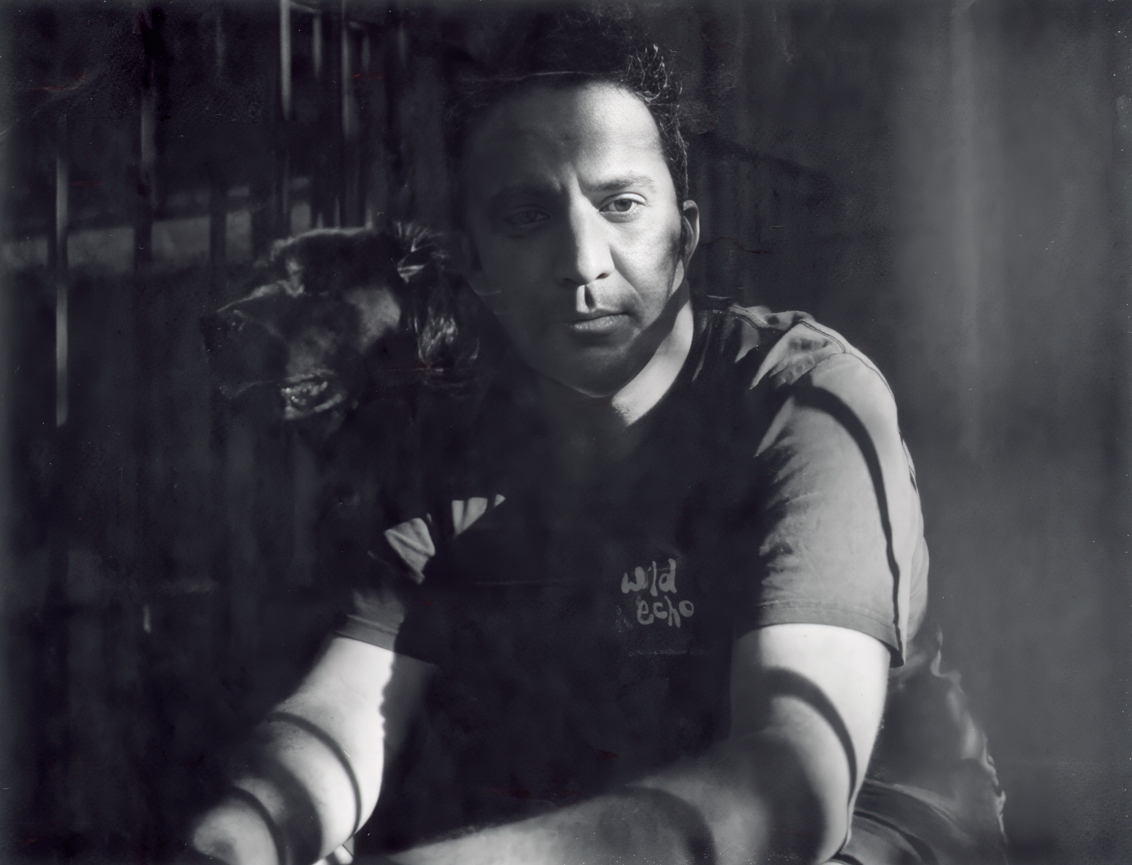
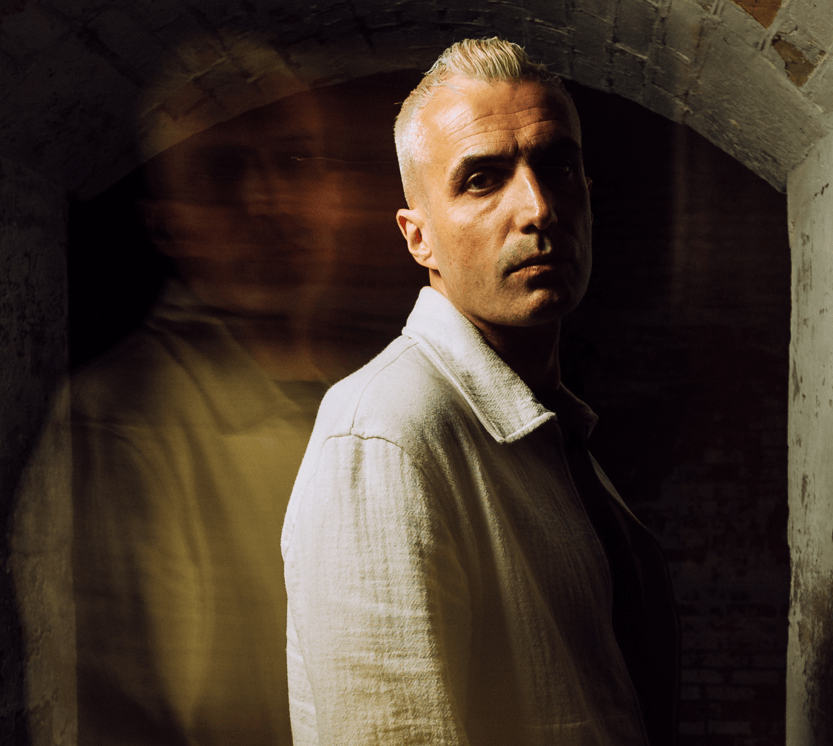
Photo by Pete Duvall
Hi, Andrew! Thank you for taking the time to talk – I know that between mixing the album, preparing for the release, and, apparently, eating pomegranates, you must have a pretty busy schedule right now. Let’s start from the very beginning. Tell us a little about your first serious encounter with music – not in terms of “influences,” but rather: was there a moment when you realized that this was something you would be doing for a long time?
When I first started making my own home demos on a crappy digital recorder, I had no idea where it would go, I had barely just started playing guitar in my late teens. I just could tell as I started spending more time with it that making music and recording it did something important for my ability to process things as a therapeutic creative outlet. The first “real” release of mine where I actually made an effort to share with people (beyond the handful of home-dubbed cassettes that I gave to some friends) was the Maestro Echoplex EP way back in 2001 or so, and I was really lucky to see it connect with people, and very fortunate to have some supporters in DC and elsewhere at that time that helped spread the word. I was invited pretty quickly to play some festivals in Europe, which seemed insane at the time and still does. All of that made me feel like maybe there was something there with it that deserved my attention and focus. That kind of continued on into the first John Guilt album a few years later, which gave me the opportunity to do more touring in Europe and around parts of the US. By the time I started on Fulton Lights in the mid 00’s I can recall having had quiet conversations with myself about the importance of making music as a kind of long haul spiritual and creative question completely unrelated to the commercial viability of it, which is a totally separate discussion. I still hope to be making music until the end.
Fulton Lights has existed for almost two decades. If you go back to the very beginning: how do you see the person today who once came up with Fulton Lights, and what remains in the current project of its original vision?
The first Fulton Lights album was a process of working very closely over several years with people like Rob Christiansen and Steve Silverstein, and Hsi-Chang Lin aka Still (RIP), and was very informed by my time living in Brooklyn in the early and mid 00’s. The music was a fusion of different elements and styles that were just the sounds of my city at that time – noise and experimental music, hip hop, rock, folk, and so on – and I think was characterized by a willingness to play with sounds even though the underlying songs usually had a familiar structure. I think in the beginning I was newer to all of this – songwriting, producing, etc. – and so some of the music reflected that. My voice was different, I don’t think the lower register had really opened up yet in the way that time will do. But generally, merging familiar aspects with the unfamiliar still feels characteristic to me in terms of the approach. I’m just older now, accumulated life experiences and music releases and whatnot. More seasoning, hopefully not too salty.
Fulton Lights has had periods of activity as well as fairly long breaks. After “Moonwalking into the Future” in 2018, there was exactly such a break. What was happening with you and your music during that period, while Fulton Lights were formally silent?
A lot, and a little. My wife and I moved from Baltimore to Geneva with our then one-year old daughter in 2018. We moved just in time for the pandemic. Our second daughter arrived in early 2020. Even just those few things are all enormous changes. I made one two-song EP release in late 2020 under the name A. Spencer, and I had started working on things that would later materialize into some of the songs that are on Best World but I just wasn’t at a point where I was ready or able to get back into a studio. I found myself working the same sketches of songs over and over again on a guitar, but blocked lyrically. Then there was a second transatlantic move back to the US, not a small thing. While I’ve marinated on the degree to which I was blocked and blocking myself, I think more charitably it may just have been that things were percolating, ideas kind of working themselves out internally without me even being fully cognizant of that process during what was objectively a very dynamic period of my life.
They say it was TJ Lipple who convinced you to stop talking about the songs and go back into the studio. How many conversations about songs does a musician need to have before their friends start getting slightly annoyed with them?
Touché. TJ deserves an enormous amount of credit for getting me back to work, and for not holding his tongue about it. Same goes for my wife, who was also encouraging me to get back to work before I made her nuts. But I suspect other people that I talked to may have had varying degrees of a quiet “oh, I see…you’ve gone mad” kind of reaction.
Let’s talk about the new single, “A Little Bit Low”. The title, it seems to me, sounds rather ordinary – “a little bit low,” “slightly in decline” – but the song itself gradually takes on a much larger and even apocalyptic scale. How did this song begin?
The song began in the way many of mine do, with acoustic guitar and humming a melody, a rhythm. The first line – “I get a little bit low” – appeared, and then “I get a little bit high.” And then the rest of the verses unfolded from there. The choruses waited a bit longer to form, but when they eventually came, they came as a sudden burst and I didn’t spend any time really worrying about how it fit with the rest of the verses. It just felt right, like that’s what was meant to go there. Apocalyptic is maybe part of it, but I think the half you didn’t mention is the regenerative part, the seeds and what comes next. It’s not so far off from the “decline” that you mentioned, I think. What happens after the decline? The end, and the beginning.
The central image of “A Little Bit Low” is the pomegranate and the Jewish tradition of its 613 seeds corresponding to 613 good deeds (mitzvot). You yourself say that you are a fairly secular person, and you are surprised yourself at how this childhood memory surfaced. What other strange or unexpected facts from childhood sometimes come knocking on your door when you are trying to write verses?
Occasionally something will float into my immediate consciousness in such a way that I can recognize the direct link between the words and the memory. On the previous Fulton Lights album (Moonwalking Into the Future), the title song has a lot of literal memories from childhood and is kind of a reflection on aging and memory, and that was intentional. But I suspect that more often than not it is a more subconscious process. Right now I’m in my late 40’s with two small kids of my own, so even when I’m not writing there is this overlapping of experiences – the experience of being a parent, the experience of my own childhood. That stuff has to find its way out somewhere.
On November 6, your long-awaited album “Best World” is coming out – the title is both optimistic and slightly suspicious. Especially considering the story of the vanished supermarket behind it. So, an ordinary supermarket unexpectedly became something like a spiritual guide for you. Do you generally tend to find philosophical ideas in the most mundane places?
On November 6, your long-awaited album “Best World” is coming out – the title is both optimistic and slightly suspicious. Especially considering the story of the vanished supermarket behind it. So, an ordinary supermarket unexpectedly became something like a spiritual guide for you. Do you generally tend to find philosophical ideas in the most mundane places?
Some people believe that the universe sends them signs. I’m not sure if I believe that. But sometimes there is a literal sign in your face that says “BEST WORLD” and you ignore it at your own peril.
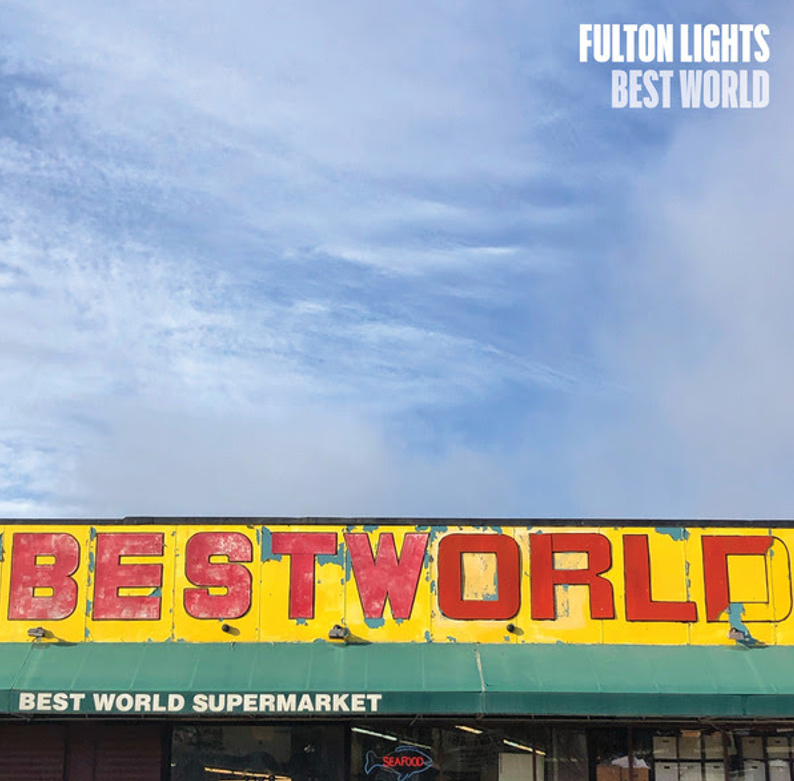
The eight-track album contains a lot of reflections on time, aging, death, and the need to appreciate what exists right now. You have also described “Best World” as a very personal album. What does “personal” mean to you in music: telling as much as possible about yourself, or, on the contrary, leaving enough space for the listener to recognize their own story in a song?
I suppose for me “personal” is shorthand for music containing some themes and ideas in it that are sharing aspects of an inner experience, sometimes obliquely, sometimes somewhat directly. But it isn’t “confessional” songwriting, which is generally a style that I can’t get with at all precisely because it can squeeze the listener’s experience out of it. I’m definitely not trying to cram my own experience or perspective down any listener’s ear canals. I hope what people experience is maybe more like an invitation to connect in their own way.
Today, music can exist as a stream, a digital file, a physical object and, in your case, 180-gram vinyl with a gatefold sleeve. What changes for you personally when an album becomes a physical object that you can actually hold in your hands?
My most meaningful experiences with listening to music have always been with some physical version of it. Almost every single musical influence that I can think of came from me having a record or a cd to hold while listening, liner notes to read, artwork to stare at. The physical sensation of dirty old cardstock from a used album from the 70’s or 80’s that I bought at a record store is something I can feel even when I’m not holding that record. Apart from the convenience factor, which I recognize is not insignificant, everything about the streaming era is a straight up abomination. Artists aren’t compensated. That part is a well known sick joke that somehow as a society we just tolerate as if there aren’t enormous consequences to be had both for artists and for society as a whole. But putting that huge piece of this to the side for a moment, I don’t think that people form deep attachments to music through streaming alone. It is too ephemeral, and it is competing constantly for attention with everything else that is out there, even beyond music. You listen to one song, then the algorithm puts on something else, and then something else, and something else. Maybe you like something and save it your library, but then maybe more often than not you forget about it. It’s too easy even for well-intentioned listeners to be distracted, because that’s how these platforms were built. Our distraction is money in the bank for public corporations that don’t really care what it is that we consume, as long as we consume. There are workarounds, but the media is the message. Vinyl, CDs, tapes – none are perfect, each format has its own flaws. But having something physical supports more intentional listening, and I think that kind of intention fosters greater connection to the music and can help be a counter to everything in our lives pushing us towards less connection to ourselves and to each other.
And finally – a question that perhaps naturally comes from the title of the album, “Best World”. What makes the world “better” for you today – not perfect, of course, but at least good enough to make you want to stay in it, notice what is happening, and keep writing songs?
My wife, daughters, and dog bring me immense joy beyond what I could put into words, and have helped me just in their existence to be a little more present. But outside of them, there is inspiration everywhere – the good, the bad, the ugly, the not so ugly – both externally and internally, and that makes for an infinite set of ideas to explore. The question is how to engage with these things and how to process them. Writing is on some level an affirmation that the internal and external world is worth exploring, even when painful, and that creating is an expression of hope even where it may seem challenging, or dark.

 Voxwave Magazine: Music, Culture, Interview, Fashion