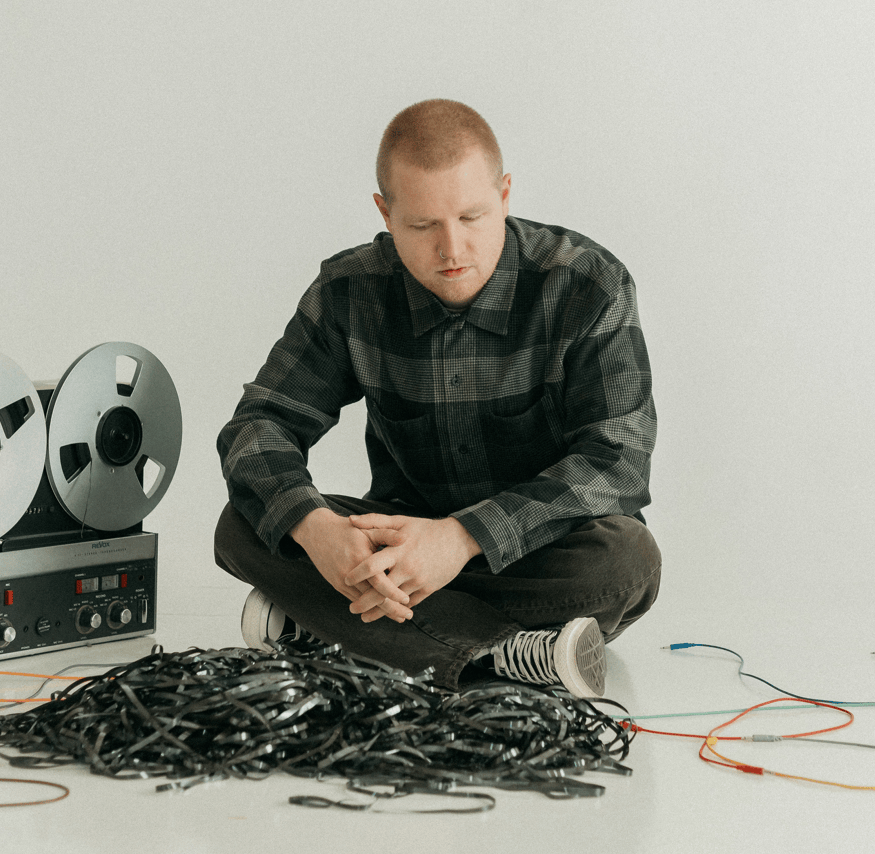
Forty-five minutes of dark ambient is a serious ask. M O S E D O makes it more inviting by adding a man, a garden shed and a picnic table. The artist, who builds whole worlds for records like Safari Tale and Atlantis, now turns to space with Black Hole Tapes (Remaster). It tells the story of Jake Frost, a suburban tinkerer who aims a homemade receiver at Cygnus and records what comes through while his neighbours sleep.Four tracks, each over ten minutes long, with titles written in an invented script. It sounds grand, yet the details are mundane: old headphones, a chair, an extension cord. We asked M O S E D O how a signal from a black hole ends up in someone’s backyard, and what Frost really heard.
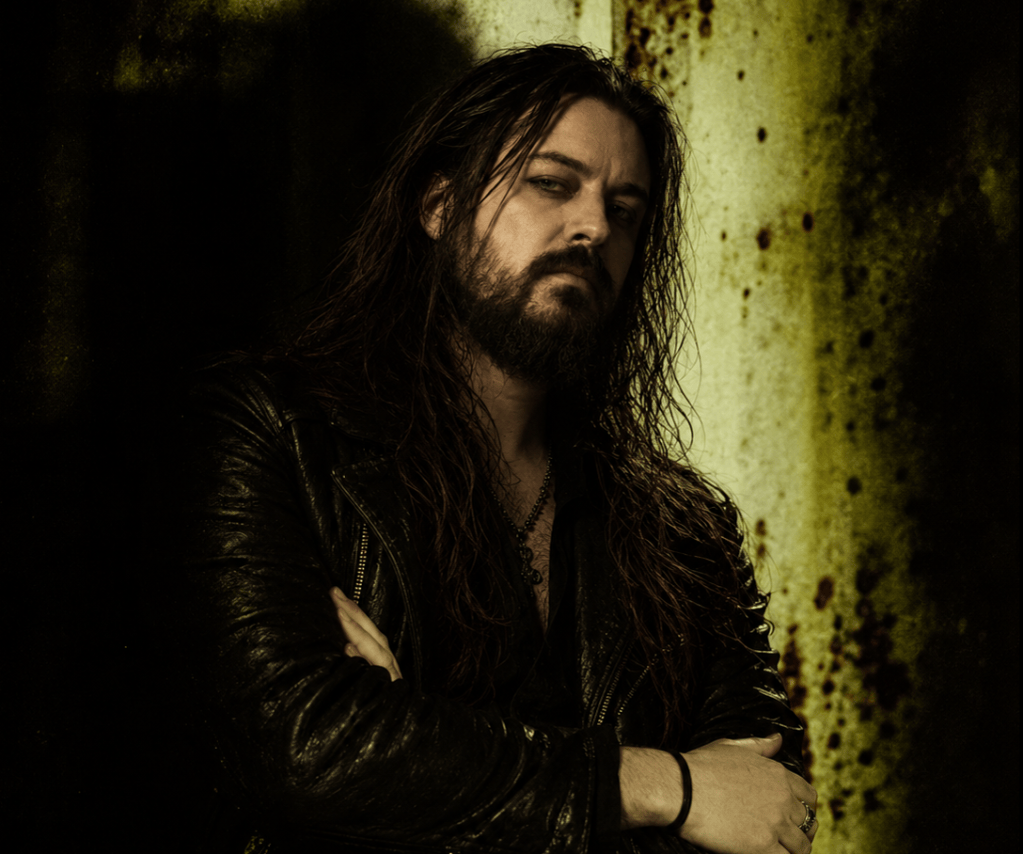
Where did Jake Frost come from? Did the character exist before the music, or did he grow out of it? Why make the hero an ordinary person with a homemade receiver in a suburban garden rather than an astronomer?
Frost came after the first sketches. I had a few long drones that felt like listening through a wall, and I needed someone to be on the other side of it. An astronomer would have made it too clinical. A guy with a soldering iron and a picnic table felt more honest.
How do you work with a setting? Safari Tale, Atlantis, and now space: do you invent the world first and then look for its sound, or does it sometimes go the other way?
Setting first, always. I write the place down like a film location, then ask what it would sound like with the lights off. For Atlantis that meant pressure and slow water. For space it meant distance.
How do you make a black hole’s signal audible? Which instruments, synths, or field recordings did you use to make it sound like a radio transmission from deep space?
Mostly by degrading things. Detuned oscillators, tape hiss, a cheap receiver running through contact mics, then a lot of slow filtering. If it sounds slightly broken, it sounds like it travelled far.
Why Cygnus? Was it a scientific choice or an artistic one?
Honestly, because it sounds right and it’s a real place in the sky. I liked that Frost could point at something you can find with a star chart, even if what he’s hearing isn’t on any chart.
What does “remaster” mean for you here? What did you change or improve compared to the original, and did you have to rethink anything?
Cleaner low end, more room for the quiet parts, and fixing a few things that bothered me for years. I didn’t want to change the mood, only to let it breathe.
What are the track titles written in, and why? What do they mean, who “reads” them within the world of the album, and is the listener supposed to decode them?
It’s Frost’s notation, his own labels for what he thinks he’s receiving. You’re not meant to decode them. They should feel like something you found in his notebook.
Why such long tracks (10-12 minutes)? How do you decide when a piece is finished? How important is it that the listener isn’t in a hurry?
Because nobody understands a strange signal in three minutes. You replay it, you doubt it, you make tea. A track is finished when I stop wanting to touch it, usually after it has outlasted my patience once.
How should this album be listened to? At night with headphones, in the background, or with full attention? What do you want people to feel about the room around them?
At night, with headphones, and ideally with nothing else to do. It’s fine in the background too, but then it becomes the room, and that’s a different record.
How do you balance dread with everyday humor? The story has a picnic table, sleeping neighbours, and old headphones. Is that humor intentional?
It’s deliberate. Real fear always happens in boring places, with someone looking for an extension cord. The picnic table makes the dark feel darker.
How does Frost’s story end? What did the receiver actually pick up, and will there be a sequel or another album set in this world?
I’d rather leave the receiver’s last reading open. He heard something. Whether it was a black hole, interference, or a neighbour’s baby monitor is up to you. A sequel is possible, though. He still owns the headphones.