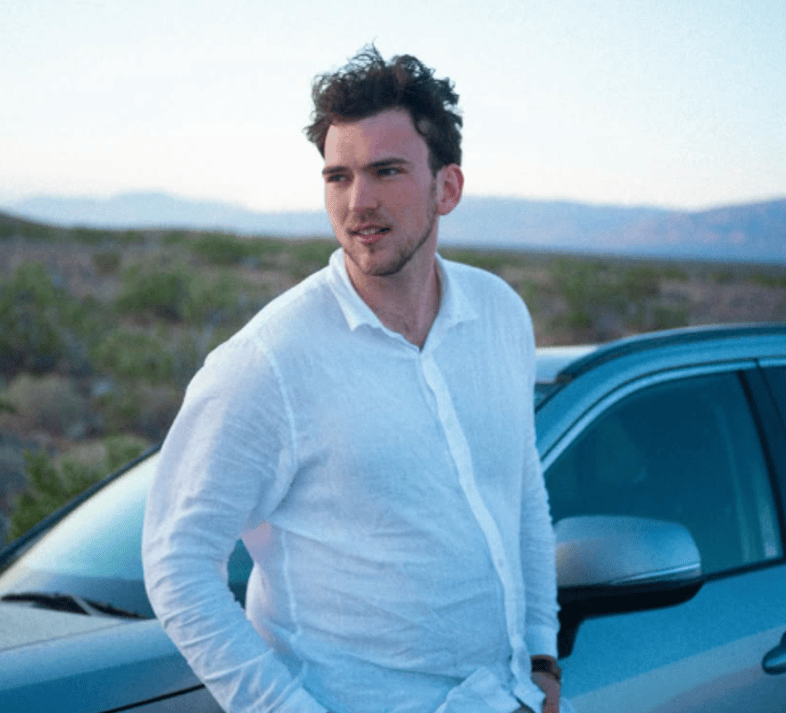
His music is the aesthetic of Brooklyn clubs wrapped in black vinyl and neon light. New York dark-pop artist Sean Leach transforms intimate confessions into vivid songs that make you want to cry and dance at the same time. In his tracks, vulnerability meets theatrical chic, while moody ’80s synths sit alongside rock guitars. Today Sean dropped his most anticipated and personal single, “RESTART” – a track charged with the energy of The Weeknd and Miley Cyrus that took three years to create. Inside: a powerful beat and dates of past relationships encoded in a countdown. We spoke with Sean about how to turn a broken heart into a dance-floor hit, why Manhattan’s underground glamour still inspires him, and what it feels like to reboot your life through music.
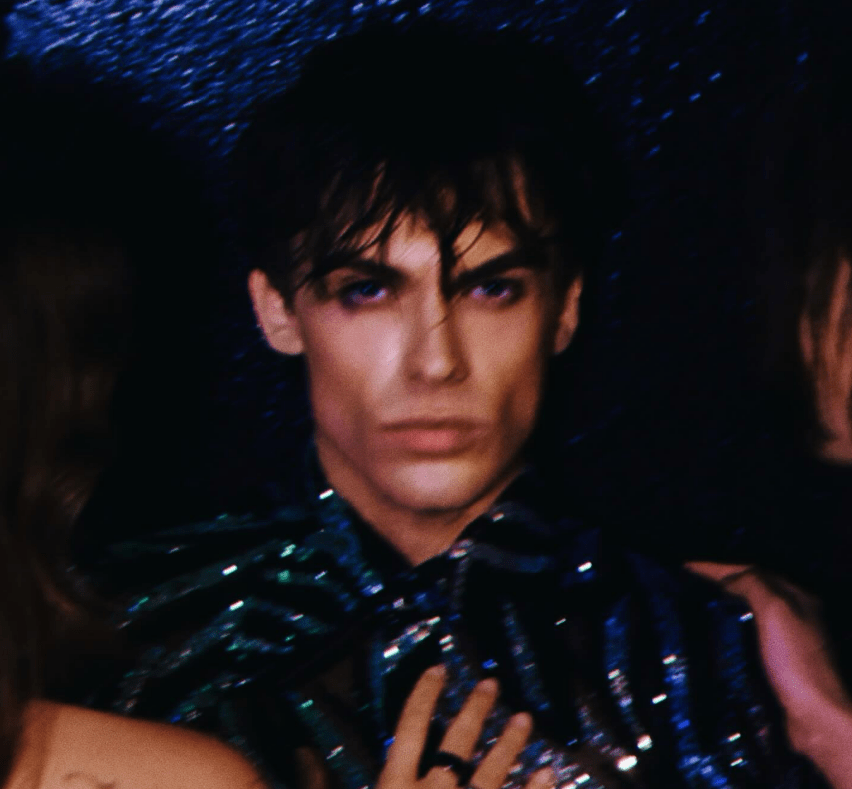
Hi Sean. We’ve already been introduced to you from afar – we covered “WONDERLAND,” and it was a great piece. But today we finally get to talk for real. Tell me, what mood are you in right now – closer to neon, drama, or the calm after the storm?
Closer to the calm after the storm, but still standing in the neon glow of it. I think there was a period of my life where chaos felt glamorous to me, like if the lights were bright enough and the music was loud enough, you could outrun whatever was breaking underneath you. New York really feeds that illusion. It makes heartbreak feel cinematic.
For a long time I lived inside that world enthusiastically, the late nights, the emotional extremes, the beautiful self-destruction of it all. But eventually you realize even beautiful things can destroy you. I think I’m in a place now where I can finally look at those experiences without romanticizing every part of them.
That’s a huge piece of RESTART actually. The song feels like dancing in the middle of a collapse while trying to convince yourself it’s a rebirth. There’s still drama in me, there’s probably always going to be drama in me, but now there’s also reflection.
Let’s rewind a bit – New York in your story sounds almost like a co-author. The nightlife, that fractured glamour, the sense that everything is happening too fast. When you were just starting out, were you trying to fit into that scene, or did you keep your distance and build your own style?
I think heartbreak is what really led me into that world in the first place. New York nightlife felt like this glowing escape route to hope, somewhere you could disappear into loud music, beautiful people, and endless motion, and become anyone you wanted to be instead of sitting alone with yourself. For a while, I honestly felt like the new shiny thing, and I loved it.
But eventually the excitement fades into routine, and once it does, you start seeing things more clearly. You see what that lifestyle can do to people emotionally, how easy it is to confuse distraction for healing. I started noticing it in the people around me, and definitely in myself too. It wasn’t so much healing me as it was reinventing me into a version that slowly felt further away from who I actually was.
At the same time, I still genuinely love nightlife. It’s a part of me, it always has been and always will be. It is pure freedom. I love the energy of it, the glamour, the people, the feeling that anything could happen at any moment. Some of the most beautiful, inspiring, and important relationships in my life came from that world. I think I just had to create a healthier distance from it for a while so I could actually hear myself think again and figure out who I was outside of the noise.
I don’t even know if I ever truly fit into the scene. Honestly, I’m not sure anyone really does. I think a lot of people are searching for belonging inside places that were never designed to hold anyone permanently. But I did find people there who genuinely understood me, and those relationships carried me through one of the darkest chapters of my life.
I’ve always experienced life through a slightly different lens, and I think that’s ultimately why I started creating the world of SIALIA. It became my way of translating everything I was seeing and feeling, the glamour, the loneliness, the hope, the self-destruction, all of it. It’s less of a fictional world and more my interpretation of life.
There’s an interesting tension in your music: on one side, vulnerability – almost confessional – and on the other, a precise, theatrical delivery. Is that something you consciously control, or are these two parts of you that can’t exist separately?
Honestly, I don’t think those two parts of me can exist separately. The vulnerability is the reason the theatricality exists in the first place. I think when you feel things very deeply, especially heartbreak, loss, loneliness, obsession, all of those huge emotions, you either let them destroy you quietly or you turn them into art and give them a stage to live on.
I’ve never been interested in making emotion feel small. I want it to feel cinematic, overwhelming, glamorous, devastating. That’s how it exists in my head. Even when I’m writing something deeply personal, there’s still this instinct in me to create a world around it, to dress the wound in neon lights and make people dance inside it.
I also don’t think my music will ever fully belong to one genre because emotion doesn’t belong to one genre. The feeling always leads the music for me. Whatever the emotional truth of the situation is, that determines the production, the melodies, the lyrics, everything. I use every influence and every piece of musical language I know to communicate exactly how something felt to me.
With RESTART specifically, every sonic choice was tied to emotion. The synths, the atmosphere, the movement of the song, even the tension inside the production, all of it reflected the relationship I was in at the time. I wanted the song to feel like emotional whiplash, euphoric one second and devastating the next, because that’s what living through it felt like.
At the core of everything though, I always want there to be vulnerability because the most important thing to me is that someone hears the music and feels understood. I want people to feel less alone inside whatever they’re carrying. If I can take something painful and turn it into something theatrical, beautiful, and alive enough for another person to see themselves in it, then that means everything to me.
I think SIALIA was born from that tension actually, this collision between raw human emotion and spectacle. Between wanting to disappear and wanting to be seen.
Sean, people say you “create a cinematic sound where vulnerability meets spectacle, and heartbreak turns into music you want to dance to.” Do you recognize yourself in that description?
I actually really love that description because that’s exactly what music has always felt like to me. Some of the saddest moments of my life didn’t happen quietly, they happened under flashing lights, in the backseat of a cab at 3 a.m., on dance floors, walking home through New York with music in my headphones trying to outrun what I was feeling.
I think there’s something strangely beautiful about heartbreak becoming spectacle. People don’t always fall apart in silence. Sometimes they fall apart dressed beautifully under neon lights pretending they’re okay. That contrast has always fascinated me creatively.
So when people say my music feels cinematic or that it turns heartbreak into something you want to dance to, I do recognize myself in that. A huge part of my artistry is taking emotions that feel almost too overwhelming to hold and transforming them into something alive, something glamorous, something people can move to instead of drown in.
At the same time, I never want the spectacle to overshadow the humanity of it. Underneath all the synths, the drama, and the world-building, the songs are still diary entries. They’re still me trying to understand love, loneliness, hope, obsession, grief, all of it in real time.
I think that’s why people connect to it. Because beneath the glamour there’s still a real person bleeding through it.
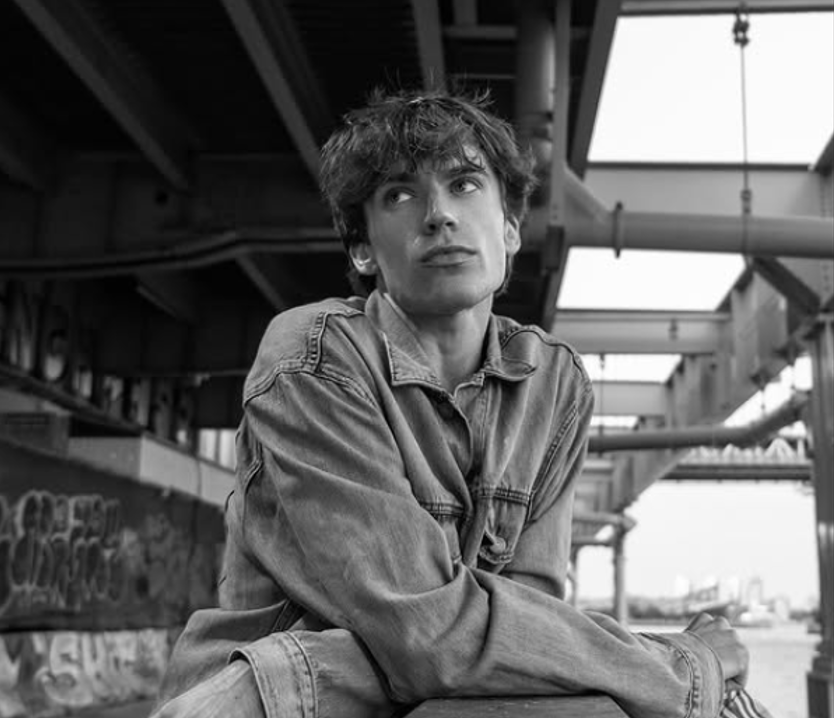
Now about “RESTART,” your new single. I know the track took three years to write – which is always intriguing in the best way. Songs like that tend to linger. Did it evolve along with you over that time, or did you know from the beginning what it should be and just took a long road to get there?
RESTART definitely evolved with me. When I first started writing it three years ago, I only had the first verse. At the time, I thought I understood what the song was about, but the truth is I hadn’t actually lived the full story yet.
The song stayed with me for years because my relationship with that person kept changing, and every time it changed, the meaning of the song changed too. There were periods where I completely stepped away from it, periods where I rewrote parts of it, and periods where I honestly didn’t know if I’d ever finish it at all. It almost became this living document of the relationship itself.
What’s funny is the second verse didn’t come from imagination, it came from finally experiencing the heartbreak I was trying to write about in the first place. I remember performing an early version of the song before it was finished and realizing in real time that I hadn’t reached the emotional ending yet. Life had to catch up to the music.
So by the time RESTART was completed, it wasn’t just a song anymore. It carried years of memories, different versions of myself, different endings, different attempts at starting over. I think that’s why there’s this emotional tension inside it. You can hear someone trying to romanticize love while simultaneously realizing it’s destroying them.
That’s also why the title ended up meaning more than I originally intended. A restart sounds hopeful, but there’s also something tragic about constantly returning to the same cycle hoping it ends differently.
“RESTART” opens with a countdown. And only later do you realize these are real dates – the beginnings and endings of different relationships over several years. Choices like that usually don’t appear at the mixing stage, but much earlier, when you’re not even sure the track will be released. When did you realize those dates would become part of the song? And was there ever a moment when you considered removing them?
The countdowns actually came much later in the process, around seven months ago when we were building the recorded version of the song. RESTART had already existed for years at that point, but something still felt emotionally unfinished about it.
I’ve always been very attached to details, dates, times, moments that probably seem insignificant to everyone else but feel emotionally permanent to me. During recording, I started thinking about how relationships can almost be measured by these invisible timestamps, beginnings, endings, reconciliations, fractures. The countdowns became a way of embedding that history directly into the DNA of the song.
The dates in the intro represent beginnings, while the ones later in the song represent endings or shifts in the relationship over the years. Once we added them, everything suddenly clicked emotionally. It stopped feeling like just a song about heartbreak and started feeling like a time capsule of the relationship itself.
There were definitely moments where I questioned keeping them in because they’re incredibly personal. Once people realize what they actually are, I want them to feel closer to understanding me and the relationship, almost like they’re being let behind the curtain a little bit. Beyond the production, the vocoders, the visuals, the photoshoots, all of the spectacle, it’s probably the rawest part of the song.
I think that’s what I love about details in music. Sometimes the smallest thing carries the biggest emotional truth.
I’ll be honest – “RESTART” hooked me right away. There’s a rare sense of style in it. Sonically, it feels like a nod to an ’80s aesthetic: synths, a cold sheen, a kind of neon detachment. Did that mood come intuitively, or did you know from the start that this was the exact sonic palette the story needed?
I think that sonic palette came very instinctively, but at the same time it was incredibly intentional emotionally. I felt like rock, and the intensity that rock music can hold, really encompassed the feeling of the relationship. There’s something about distorted guitars and explosive production that can communicate emotional chaos in a way words sometimes can’t.
I was honestly afraid to fully go in that direction at first because it was very different from what we had originally been performing live. The live version always had rock elements to it, but it leaned more pop. Then as Tyler and I kept producing the song, we just kept pushing further and further toward whatever felt the most emotionally honest.
We kept asking ourselves how to make it feel raw but also jaded, like someone running away while simultaneously being pulled back in. That contradiction became the entire emotional identity of the song. We didn’t want it to sound polished in a way that erased the messiness of the emotions. We wanted you to feel the tension inside it.
One of my favorite things about working with Tyler Okun is that he’s not just my producer, he’s one of my best friends and has been since high school. He’s witnessed a lot of these moments in real time while I was actually living through them. So when we’re translating those emotions into music, there’s already this unspoken understanding there. I don’t have to over-explain the feeling because he already saw it happen.
I think that’s why RESTART feels so emotionally specific. It wasn’t created from a distance. It was made while we were actively inside the chaos of it.
You worked with Tyler Okun, and from the making-of it feels like the studio had a lively, friendly dynamic rather than a cold calculation. But three years is a long time for a single. What was happening in between? Did the track sit in a drawer, or did you keep returning to it, rewriting, abandoning versions?
Honestly, it was never one of those songs that just sat untouched in a folder somewhere. RESTART kept evolving because I kept evolving, and so did the relationship attached to it. Every time I thought I understood what the song was, life would happen again and completely change the emotional context of it.
There were definitely moments where I stepped away from it because it felt too personal, and other moments where Tyler and I would suddenly become obsessed with it again and spend nights rebuilding entire sections of the production. The song went through so many emotional versions of itself. Some were softer, some leaned more pop, some were darker and more aggressive. We kept chasing the version that felt the most truthful.
I think what made the process different was that Tyler wasn’t approaching it like a detached producer coming into a session cold. He was watching all of this unfold in real time because he’s one of my closest friends. He saw the relationship happen, the highs, the destruction, the aftermath, all of it. So when we were working on the song, there was this emotional shorthand between us where we both knew exactly what feeling we were trying to capture without even having to say it out loud.
The making-of footage probably reflects that pretty accurately. It really was chaotic at times, but in a beautiful way. A lot of late nights, experimenting, laughing, completely changing ideas, then suddenly stumbling into something that felt emotionally undeniable.
I think the reason the song took three years is because we weren’t trying to finish it quickly, we were trying to finish it honestly.
Sean, you’ve described your lyrics as diary entries. But a diary is usually written for yourself, while you release this into the world. Where do you draw the line between what can be shared and what remains private? And with “RESTART” – did you cross that line?
Honestly, I’m still figuring out where that line is. I think every artist is. My lyrics really do start as diary entries most of the time. They’re usually written in moments where I’m trying to process something emotionally before I even think about whether anyone else will hear it.
But I think once you decide to release music, those private emotions stop belonging only to you. People begin attaching their own memories, relationships, heartbreaks, and experiences to the songs, and suddenly something deeply personal becomes communal. That transformation is one of the most beautiful parts of making music to me.
At the same time, I do think there are still pieces of myself I protect. Not everything needs to be explained directly for it to be felt emotionally. I actually like leaving certain spaces inside the music where people can project themselves into it instead of me spelling out every detail.
With RESTART though, I probably came closer to crossing that line than I ever have before. Especially with the countdowns and some of the emotional details embedded into the production itself. There are parts of that song that almost feel uncomfortably honest to me because they weren’t written from hindsight or emotional distance. They were written while I was still actively inside the cycle of it all.
What’s interesting though is that RESTART still isn’t even the most personal song on the upcoming album. If anything, it was the doorway into me allowing myself to write without hiding behind metaphor as much. The deeper the album goes, the more direct and emotionally exposed it becomes. There are songs on this project that honestly scare me to release because of how personal they are.
But I think that vulnerability is necessary. The entire reason I make music is because I want people to feel understood. Some of the songs that saved my life growing up were songs where you could hear the humanity bleeding through the performance. They made me feel less isolated in my own emotions.
So if someone listens to RESTART and feels seen inside their own heartbreak, confusion, obsession, or loneliness, then exposing those parts of myself becomes worth it.
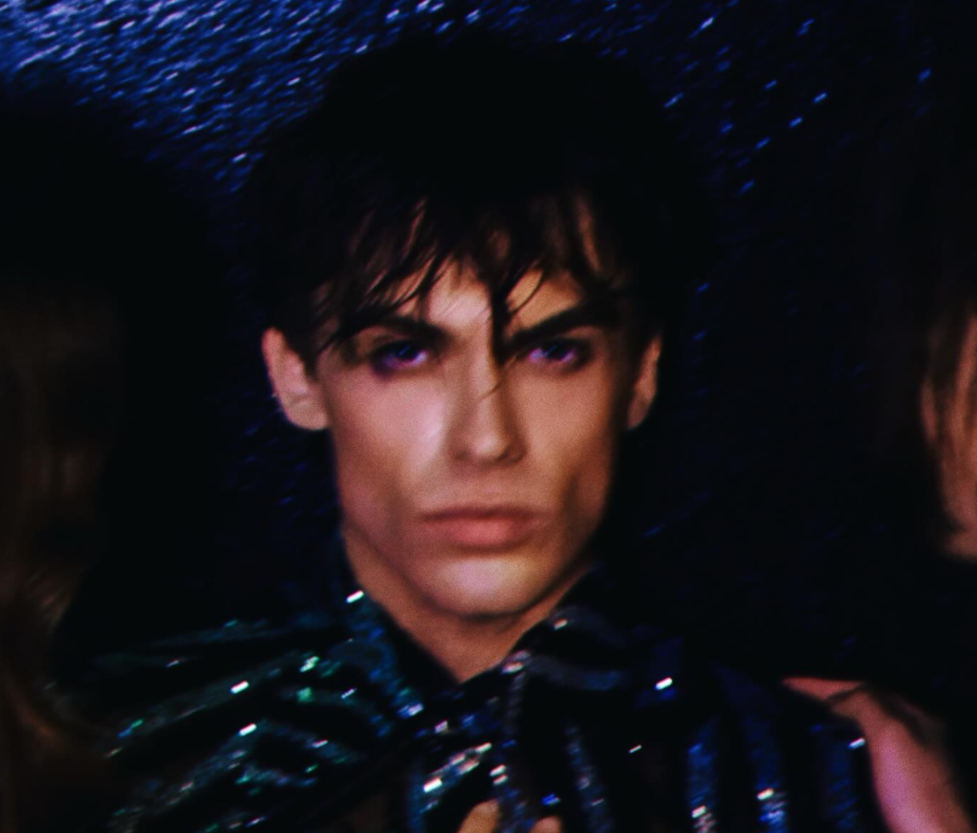
And finally: if “RESTART” is a reset, what exactly did you reboot in yourself – your sound, your perspective on relationships, or something deeper that’s harder to put into words?
I think RESTART rebooted something much deeper than just my sound. Sonically, it definitely pushed me into a new space creatively. It gave me permission to stop being afraid of intensity, to lean further into the theatricality, the rock influences, the emotional chaos, all of it. But underneath that, the real reset was personal.
For a long time, I think I romanticized emotional destruction because I confused intensity with love. RESTART was the first time I really looked at that pattern honestly instead of glamorizing it completely. The song lives in this space between wanting to let go of something and desperately wanting it to come back, which I think is a very human contradiction.
In a strange way, the song forced me to confront how many versions of myself I had created over the years just to survive certain situations, nightlife, relationships, heartbreak, New York, all of it. And eventually you reach a point where you have to ask yourself who you actually are underneath all the reinventions.
I don’t think the reset was about becoming a completely new person. I think it was about stripping away versions of myself that no longer felt real and getting closer to whatever the truth is underneath all of it.
That’s also why SIALIA means so much to me as a world and a project. At its core, it’s really about hope. Even when the album gets dark, even when it’s exploring self-destruction, obsession, heartbreak, or relapse into old patterns, there’s still this underlying belief that people can survive themselves and find meaning in the wreckage.
I think RESTART was the moment where I stopped running from that truth and finally started writing directly from inside it.