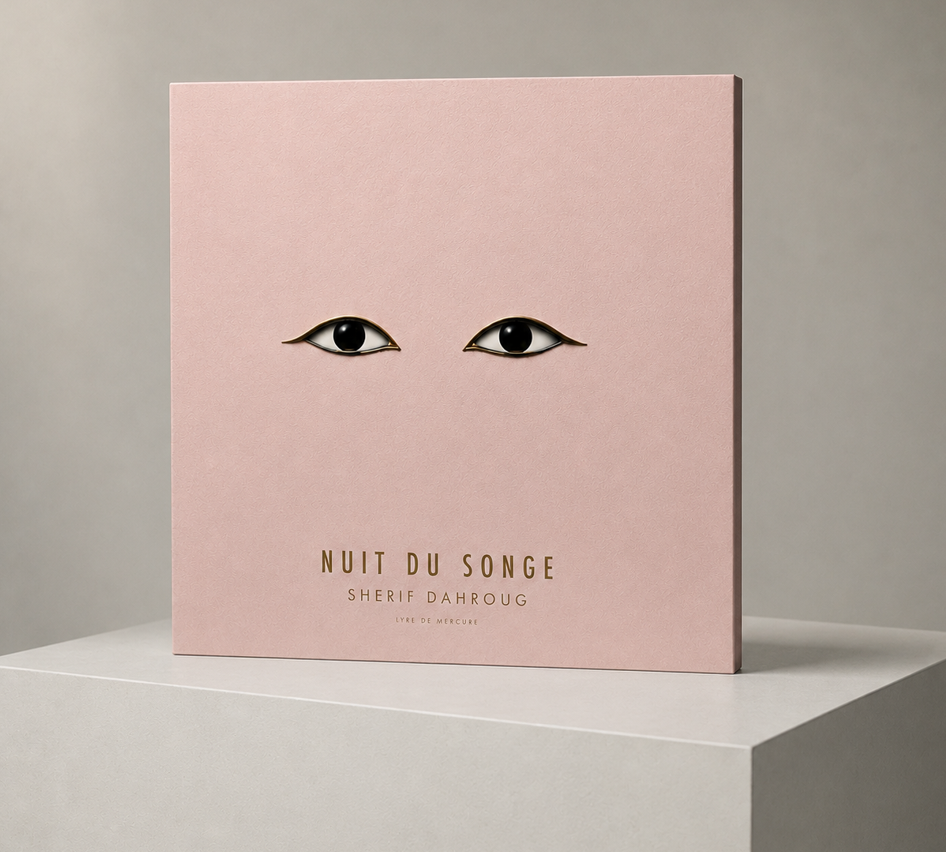
Synesthesia – the gift of seeing sound and hearing color – has long taken root in Parisian attics. The ultramarine of the night smells of damp iris, the crimson sunset responds with the melancholy of strings. The French cultural tradition of Debussy with his “Clouds” and the perfumery symphonies of the 20th century has accustomed listeners to the fact that aroma and chromatic shade are not decorations, but independent entities. The new album by the Parisian composer and pianist Sherif Dahroug “Night of the Dream” (released under the French title “Nuit du Songe”) is precisely such a refined, tactile exploration of the nocturnal flora of the human subconscious, translated into the language of contemporary academic music.
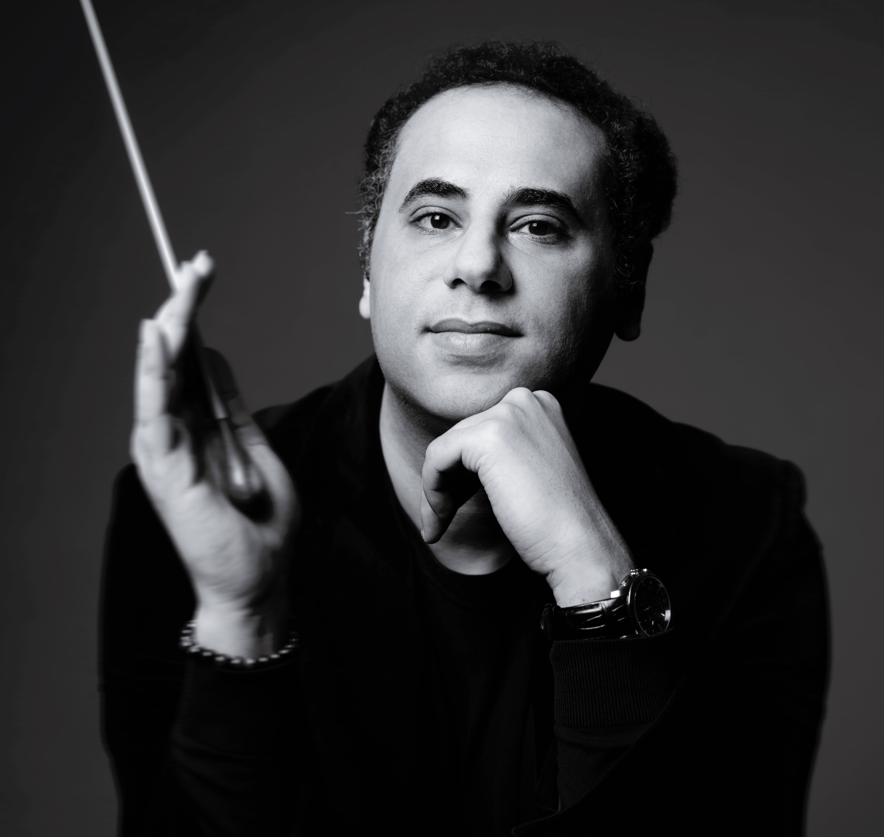
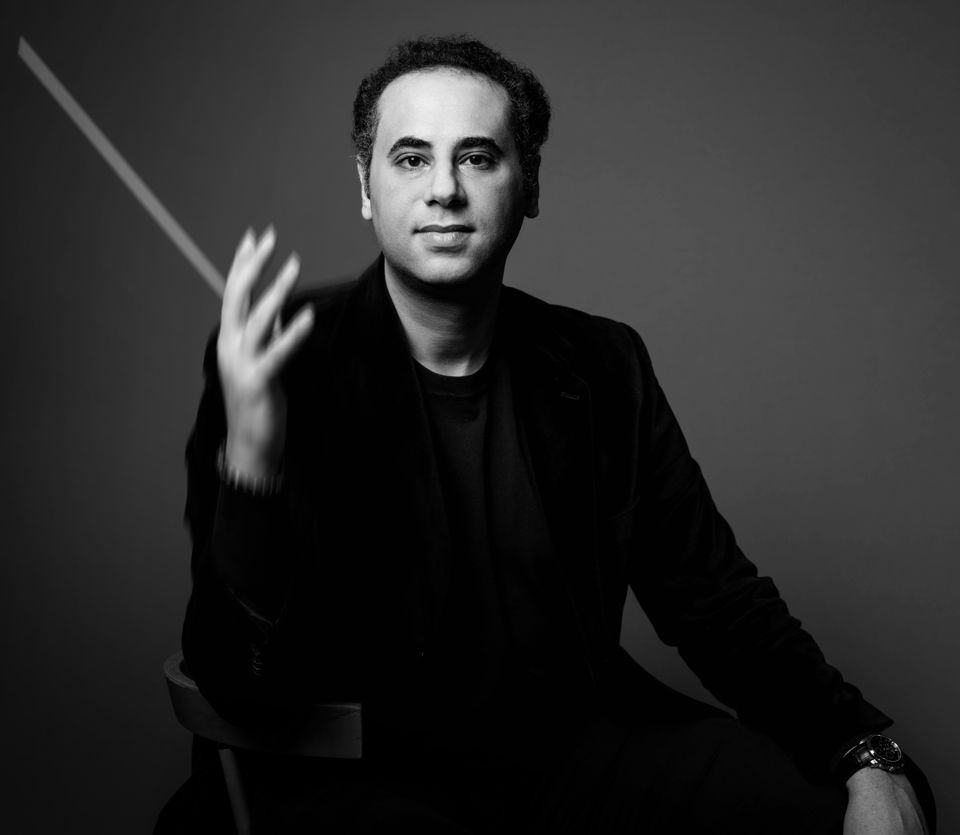
Dahroug is a composer, pianist, and guitarist with international recognition. Behind him is a master’s degree in shipbuilding and hydrodynamics: engineering precision is audible in his music, where strict form coexists with timbral subtlety. He studies the acoustics of cathedrals, where resonance becomes part of the composition, engages in philosophy, and runs the independent publishing house Lyre de Mercure, working with a focus on works of high artistic and intellectual value. A figure about whom one can speak at length, but in this case we will focus on the new release “Night of the Dream.”
The album is perceived as a single harmonic organism in which time loses linearity and transforms into space – filled with dim light, the smells of night flowers, and fragile memory. Together with L’Ensemble de Montmartre and Lyre de Mercure, the composer creates a hermetic and surprisingly open world. And one wants to enter it slowly – strolling along nocturnal alleys where sound leads the way. External colorfulness and melancholy captivate from the very first piece “Songe couleur d’aube”, there are nine compositions in the recording. A dawn dream, as written in the title. The first measures float in an unstable state. The musical fabric is semi-transparent: modal overflows create strokes of watercolor that has barely touched wet paper. Color textures sound like a wordless sigh of space awakening from sleep.
The transition to the second “Reflets d’un nymphéa” occurs imperceptibly: the morning mist dissipates, and the listener finds himself by a pond. Piano passages draw trembling reflections of a water lily – but behind the pastoral picture anxiety grows: beneath the beautiful flower the abyss darkens. The sound doubles, flickers, goes deeper. Dahroug explores reflection as a principle. From a macro view of the pond the composer moves to micro-poetics in “Étoile en goutte de rosée”. A magnificent piece – a miniature of jeweler’s precision: the prepared piano drops crystalline clicks, in each of which the universe is reflected. The space between the fading resonance and the birth of a new phrase is felt physically. A drop falls – and its minimalist splash unexpectedly resonates with the powerful entrance of church bells in the next piece.
“Collier aux cloches” is the sacred peak of the first half of the album. The bell hum forms a majestic dome for the piano, liturgical strictness transforms melancholy into catharsis. Then the echo of the bells subsides – and Dahroug leads north into his imaginary garden. The piece “Souffle septentrional” brings cold polymorphic structures: the melody either rises or descends from the heavens, creating the effect of an accelerating vortex of dance (in fact the pianist practically does not deviate from the metronome).
From the coolness of the northern wind the face of the night luminary “Visage de lune” smoothly emerges – the culmination of the nocturnal state of perception. Sherif’s pianism becomes traditional, singing. Moonlight in the author’s interpretation is a complex play of shadows, a slight effect of optical displacement, forcing one to doubt the reality of what is happening. Polytonality thickens, colors overlap one another, as in the late canvases of Turner. “Paupières du crépuscule” rhymes with the dawn of the first track: the same fabric, but more viscous, heavier. Calm turns out to be deceptive – “Nuit fauve” introduces tension. Fauve – both a wild beast and fauvism with its furious colors: sharp attacks of the prepared piano, dense polytonality, wandering through a dangerous labyrinth where the very air changes at every turn. Thus “Fleur du soir” gathers all the scattered chromatic meanings. The music returns to the transparency of the first tracks – but enriched by the experienced night. The resonance of the final chord slowly dissolves into silence, leaving a barely perceptible trail of imaginary perfume.
The piano music of Sherif Dahroug reveals itself only with attentive listening, like a silhouette gradually emerging in the darkness. In the music of “Night of the Dream” there is an extraordinary melodic gift, charm and enchantment. A contemporary classical universe driven by the aspiration for architectural transcendence, uniting philosophy, astronomy, poetry, and the inner geometry of sound into a single radiant horizon. Sherif, however, is clearly still far from exhausting his reserve of creative “fuel”, and ahead lies the continuation of the walk into unexplored piano flower alleys, and the guarantee of this is the appearance of such event-releases.