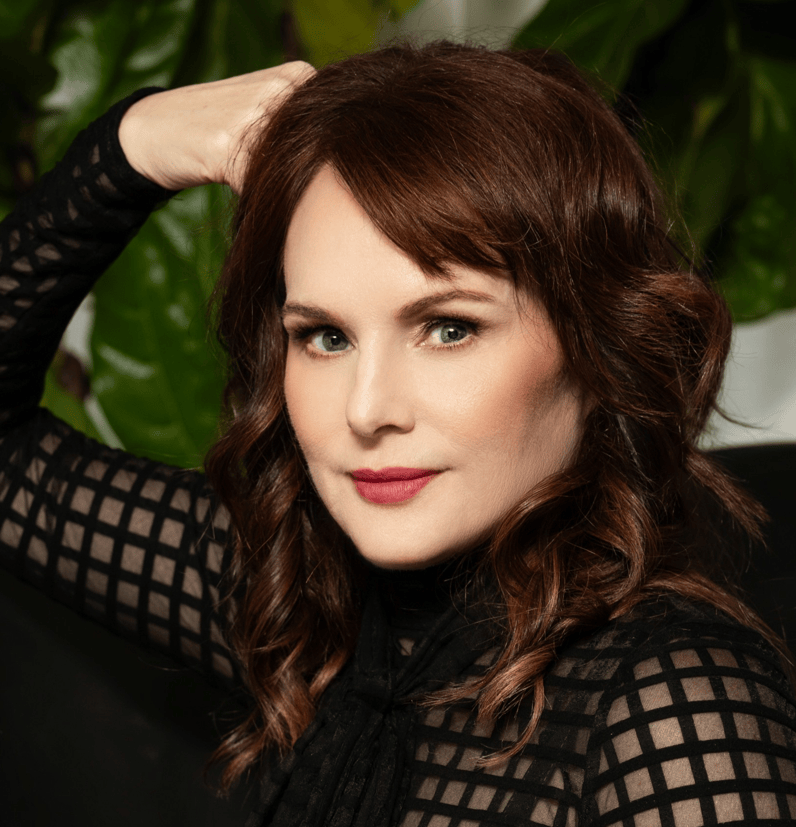
A classical guitar can tell stories just as well as a good book. And the easiest way to see that is to listen to “Rojo,” the new album by Cuban guitarist Laura Mazon Franqui. It’s red like passion, like memory, like everything you can never forget. We sat down with Laura to talk about her Cuban roots, her favorite composers, the power of music – and why she calls “Rojo” her musical autobiography.
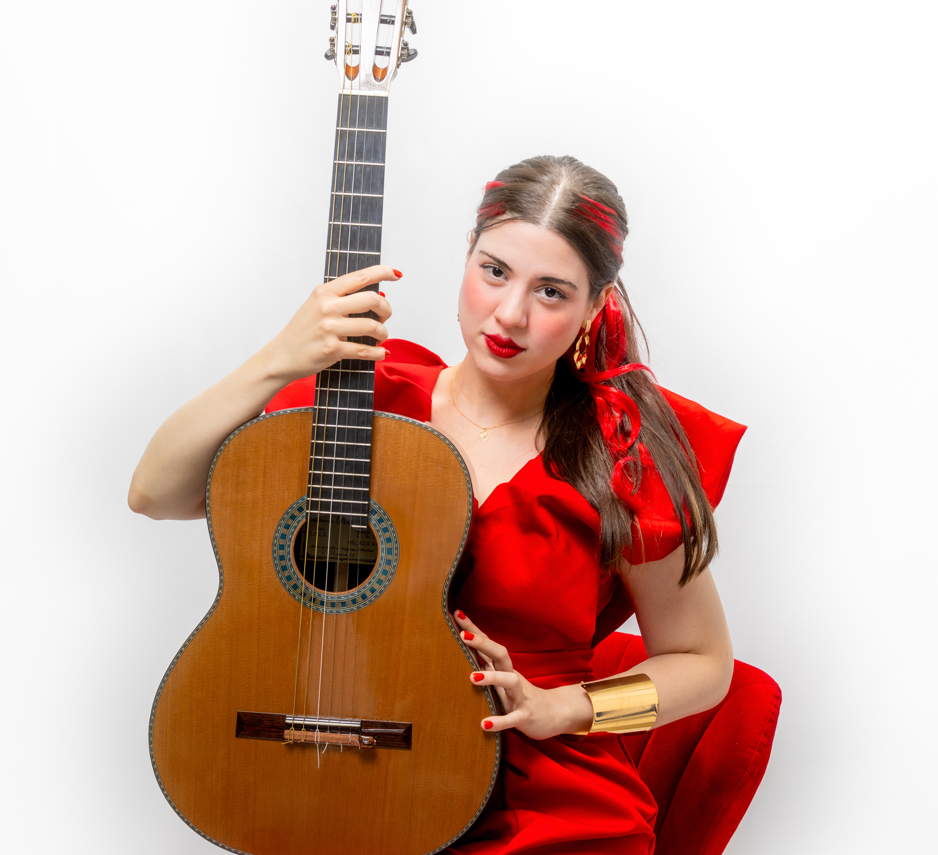
Nice to meet you, Laura! Thank you for taking the time for this interview. You know, when I looked at your profile, I got the feeling that you have at least 48 hours in your day: you’re a touring guitarist, a teacher, a brand ambassador, and an influencer with a huge audience. Let’s start with a light but important question: how do you manage to juggle so many roles?
First of all, thank you! And if anyone figures out how to create extra hours in the day, please let me know. (Laughs.) Honestly, I don’t really think of these things as separate roles. For me, they’re all connected. Performing, teaching, creating content, working with brands; at the center of all of it is music and communication, and wanting to inspire people to be their best selves, to create and to go live life with passion and purpose. I genuinely love sharing what I do. Some days that means performing on stage, some days it means helping a student solve a technical problem, and other days it means making a video that inspires someone to pick up a guitar for the first time.
Of course, there are moments when life gets busy, but I feel very grateful that all these different paths come from the same passion. That makes it easier to balance because they all feel like part of the same story.
Cuba is known for its sunshine, rum, salsa and… an incredible guitar school. How did classical guitar hold its own against the fiery street rhythms of Havana in your heart?
The funny thing is that I never felt I had to choose between them. I grew up surrounded by music. In Cuba, music is everywhere. It’s part of daily life, part of conversations, part of celebrations. Even at the Conservatory, I remember that it was as notmal to play a son, or to improvise a rumba with pencils and whatever utensils you had, as it was to sit down and practicve Sor or Giuliani on your guitar. It was all intertwined.That energy is still a huge part of who I am. When I discovered classical guitar, though, I found something that felt very personal. It became a space where I could reflect, imagine, and tell stories. I loved that one instrument could sound like an entire orchestra and express so many different emotions. So the rhythms of Cuba and classical guitar have always lived side by side in my heart. One gave me roots, and the other gave me wings.
At ten years old, you were already playing in an orchestra under the baton of the legendary Leo Brouwer at the Festival de La Habana. Honestly, most of us at ten were thinking exclusively about ice cream. How did you handle that kind of responsibility at such a young age?
To be fair, I was definitely thinking about ice cream too. And playing with my friends (whom were also part of the youth guitar orchestra) and running around the concert hall. At ten years old, I don’t think I fully understood how special that experience was. I just knew I loved being there. I loved playing, I loved rehearsing, and I loved feeling part of something bigger than myself. Looking back, I realize how fortunate I was to have those opportunities and to be inspired by Maestro Leo Brouwer so early in life. But as a child, I wasn’t thinking about pressure or career goals. I was just excited to make music. Sometimes I think that’s a lesson worth remembering even as adults.
Critics describe your style as “emotional and passionate” and your technique as “exceptional.” But do you ever get into a mood where you just want to be a “bad guitarist” – strum three chords by a campfire and sing something hopelessly off-key?
Absolutely. And honestly, I think every classical musician should do that once in a while. We spend so much time focusing on details, precision, and getting things right that it’s easy to forget that music is also supposed to be fun. Some of my favorite musical moments have nothing to do with perfection. They’re the moments honest performance, of feeling and being present in the moment, and not worrying about whether every note is flawless.
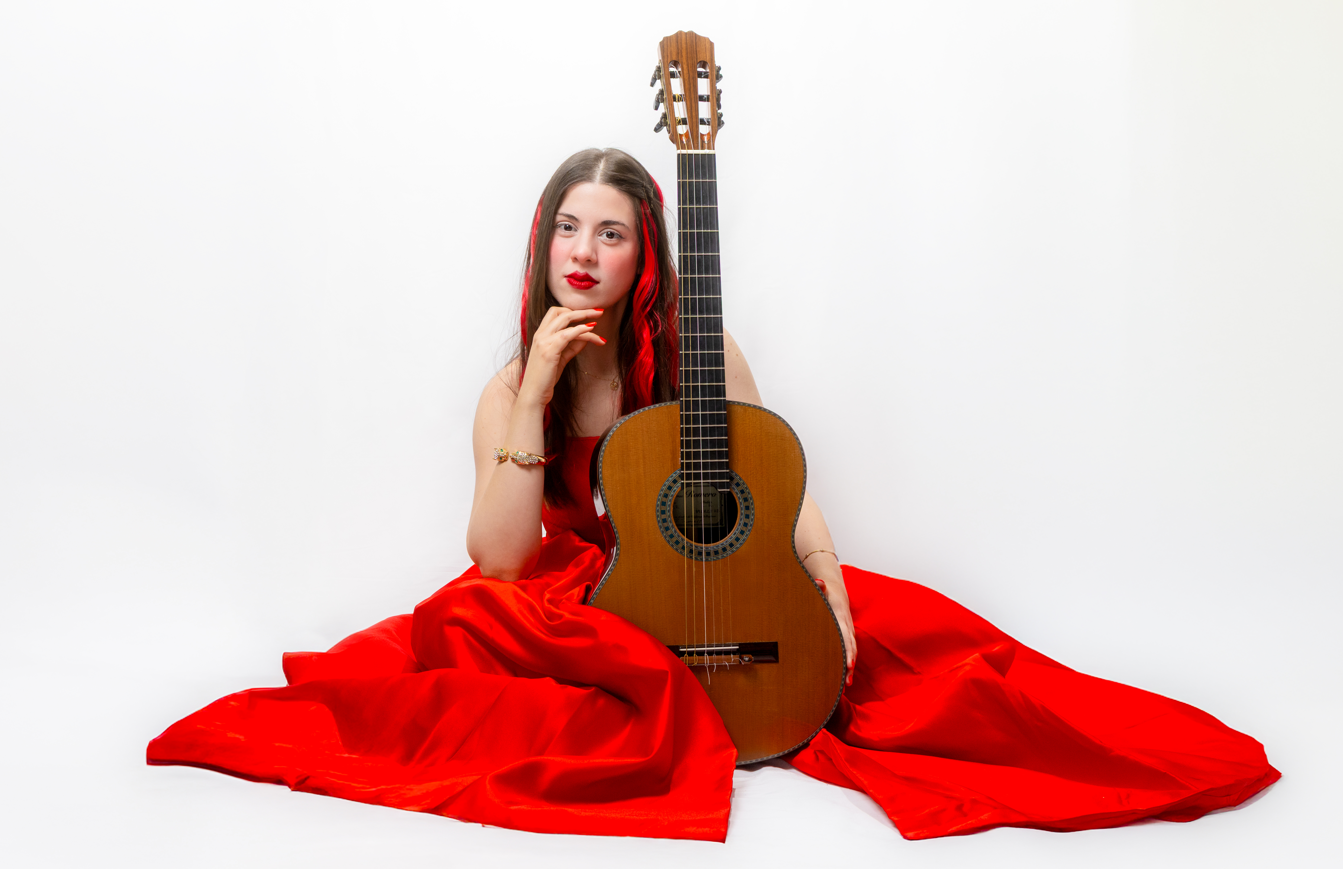
Let’s move on to the main event of this spring – the release of the album Rojo. You describe Rojo as a “musical autobiography” and dedicated it to your grandfather, grandmother and aunt. What memories and personal experiences became the foundation of this album?
Rojo is probably the closest thing I’ve ever created to a self-portrait. The pieces on this album have been with me through different moments of my life. Some accompanied periods of growth and excitement, others stayed with me during times of loss, uncertainty, and change. The album is also deeply connected to family. My grandfather, grandmother, and aunt played an enormous role in shaping who I am—not only as a musician, but as a person. They believed in me long before I knew what was possible for myself.So, mostly moments of my childhood and early adult life come back with this album, moments that were so simple, yet so special…the words, the smells, the cuddles, the hands, the voices singing…all of that is part of the essence of this recording…my granda’s tales, my grandma’s strenght, my aut’s poetry and muse, and her voice and musical insights…the warm afternoons in the patio of my childhood home, imagining stories while looking at the sky… In many ways, Rojo is a thank-you letter. It’s a celebration of the people, memories, lessons, and experiences that helped shape my journey.
The album brings together Tárrega, Villa-Lobos, Brouwer and contemporary composers – Montero, Rivera. How did this dialogue between eras take shape?
I chose every piece because it meant something personal to me. Of course, these composers come from different generations, different countries, and different musical worlds. But what connects them is their ability to tell human stories. Some of these works connect me to my Cuban roots. Others remind me of important mentors and friendships. Others simply stayed with me for years because they spoke to something I was feeling. When I started putting the program together, I realized the album wasn’t really about different eras; it was about different emotions and chapters of my life.
You drew inspiration from the myth of Hephaestus forging Achilles’ shield. If you were to transpose that image into the recording studio: what was your greatest “hammer” and what played the role of the “anvil” during the recording?
I think the hammer was courage, and love. There were moments during the recording process when it would have been easier to hide behind perfection or stay emotionally distant. Instead, I tried to be honest. The anvil was the music itself. These pieces are incredibly strong. They can hold joy, grief, hope, nostalgia—all of it. My job was simply to bring my full self into the room and trust the music enough to carry those experiences, and to make it an homage.
Rojo was created during a very vulnerable period in your life — a time of personal transformation and loss. And when you listen to it, you notice that the music on the album is full of contrasts: from grief to resilience. How did you manage to shift between emotional registers within a single recording session?
I don’t know that I always shifted between them. Sometimes they were all there at once. Life isn’t neatly organized into emotions. You can miss someone deeply and still laugh at a beautiful memory of that same person. You can be grieving and grateful at the same time. That was very much my reality while recording Rojo. Rather than trying to control every emotion, I tried to stay present and let the music speak for itself. I was sort of “becoming” every piece(as on acting method), and entering the world of each, one by one.
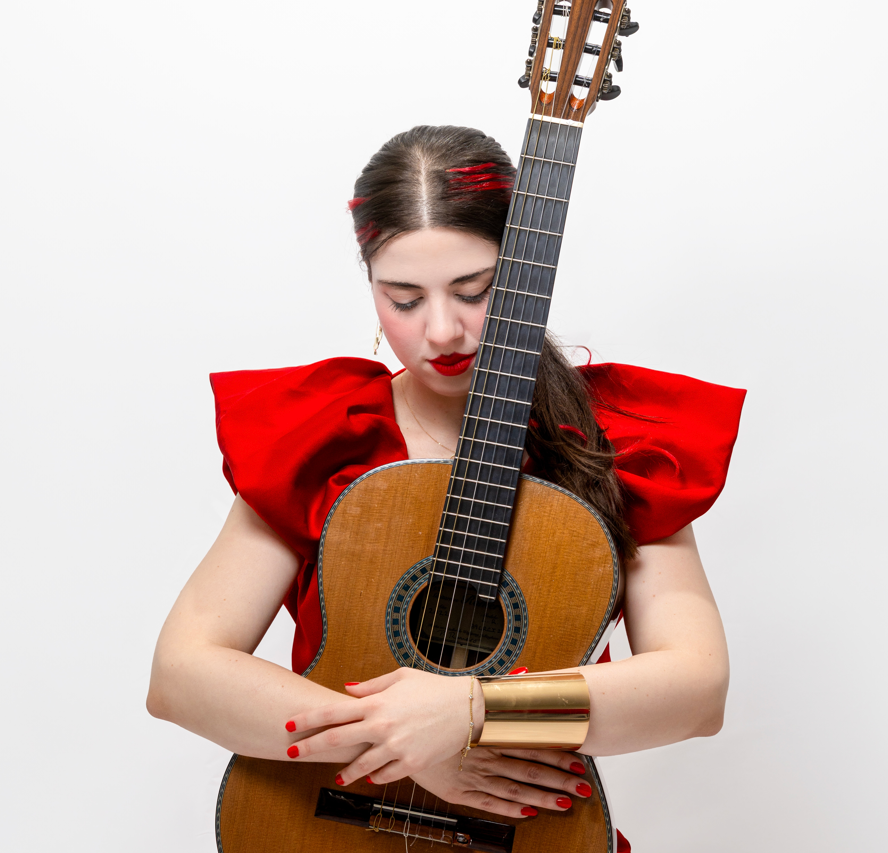
Your interpretations are often perceived as deeply visual. Carlos Rafael Rivera noted your ability to “breathe new life” into music. What does it mean to you to bring a piece to life?
For me, bringing a piece to life means making it feel real, honest, and to “own it” in the sense that you have created your very own inter[ertation, your very own story around it. It cannot be distant. The notes are important, of course, but they’re only the beginning. What really interests me is the story behind them, the emotions behind them, and the connection they create with listeners. Whenever I learn a piece, I spend a lot of time asking questions. What is this music trying to say? Why does it matter? What can I discover about it that feels personal and honest? How does it sounds to me? What stories does it awakens in my mind when I play it? If someone leaves a performance feeling moved, seen, inspired, or simply a little less alone, then I feel the music has truly come alive.
After such a personal album as Rojo, what comes next? Do you feel drawn to continue in the same direction – or, on the contrary, to venture somewhere entirely new? And is there a piece you feel you are meant to record?
A little bit of both. Rojo reminded me how important it is to create from an honest place, and I definitely want to continue doing that. At the same time, I’m always curious. I love discovering new repertoire, collaborating with living composers, getting “out of the box” and working with musicians from other instruments and even genres, and finding new ways to tell stories through music. I think every project teaches you something and then points you toward the next adventure.
As for the piece I’m meant to record, I have a feeling it hasn’t revealed itself completely yet…Right now I feel like there are many candidates for that role!!!!So I might have to record them all!hahah. But that’s one of the things I love most about being an artist—there’s always another story waiting around the corner.