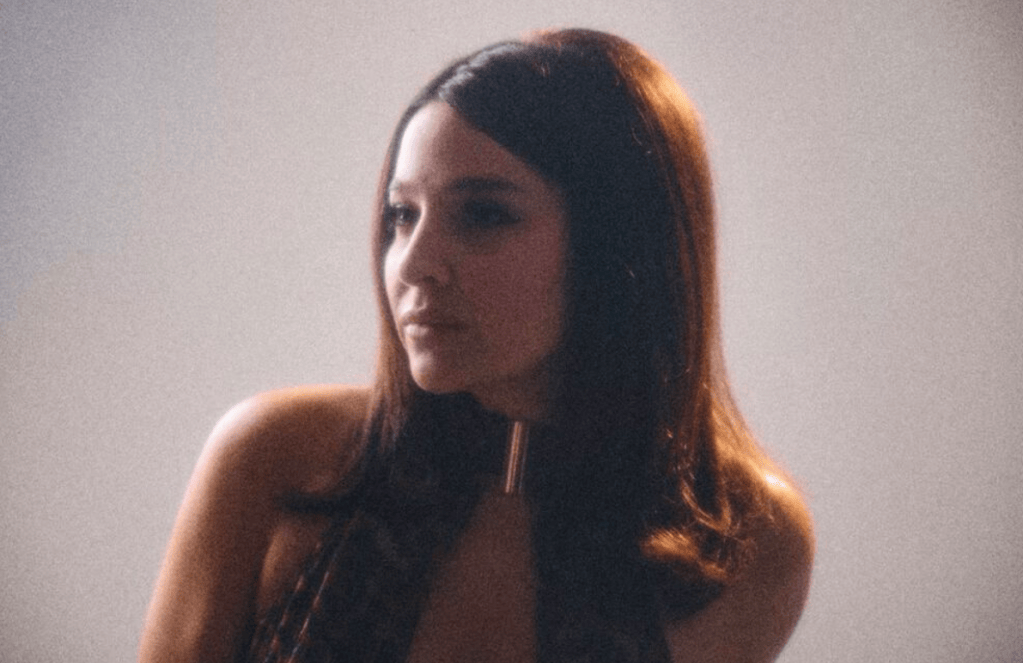
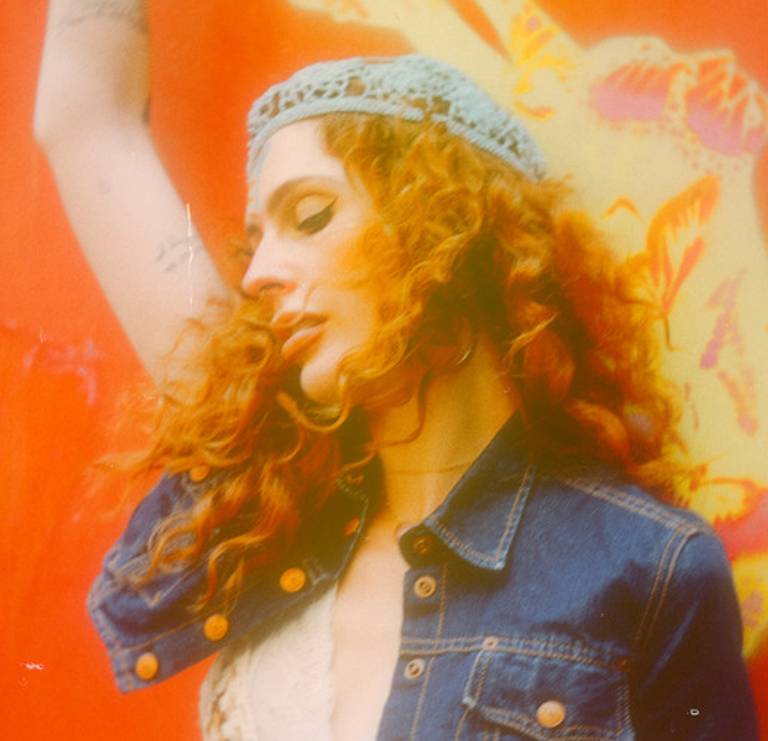
“The Capital Club” is the title of Lacey Lune’s new album. Behind its strictly businesslike facade hides a surprisingly luminous, sensual, and tender record. Lacey Lune transforms the thorny experience of growing up and colliding with a pragmatic world into a poetic conversation. “The Capital Club” is a cohesive song cycle of 17 tracks that demands a forgotten ritual: listening to the album in full. The pleasure lies in the elegant logic with which the compositions pick up and build on one another.
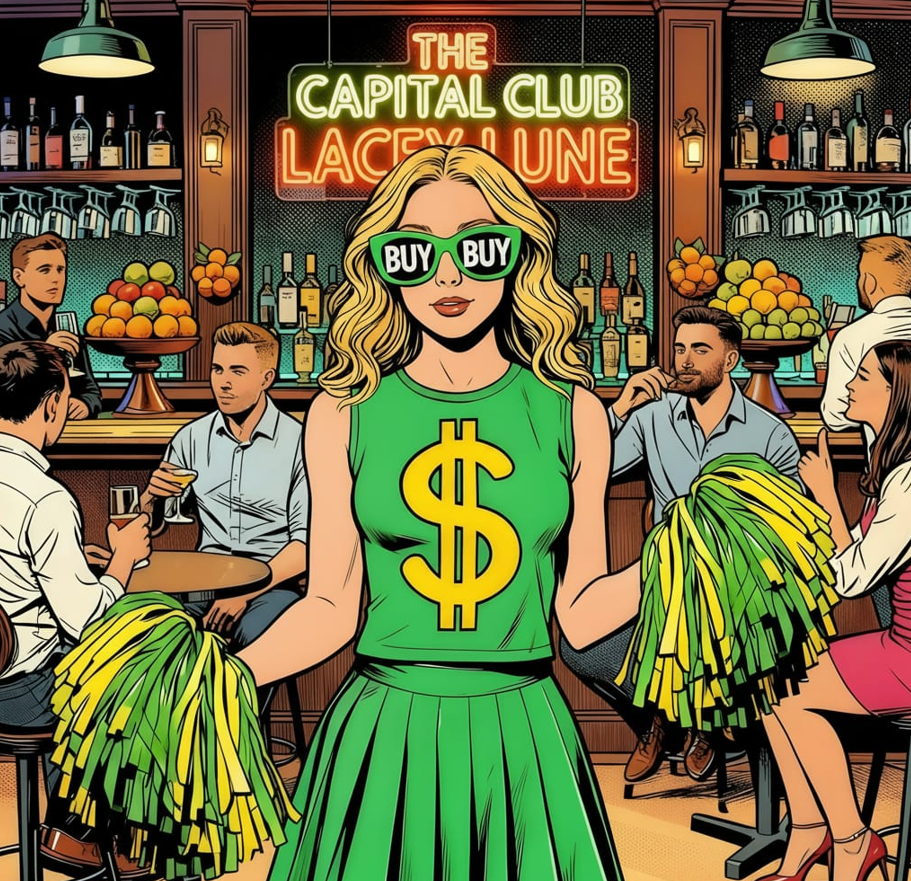
This is music about how to preserve fragility and sincerity in a world of cold efficiency. When everyday life has become an endless landing page, personal experience has become marketing, and the line between sincerity and content has disappeared, everything strives to become a brand. In this reality, an artist has two options: submit to the laws of the market, or crack them open from within.
Lacey Lune chooses the bolder path. Her concept-driven, three-part musical novel dissects the contemporary language of aspiration: branding, therapy, sobriety, sex, empowerment. Lune easily slips between masks – from cabaret chanteuse and union organizer to motivational speaker and saboteur of her own life. The album’s sonic fabric is woven from warped electro-pop, glam toughness, spoken-word satire, and hooks that keep slipping out of reach. It’s a statement about everything capitalism forces a woman to put up for sale, and about the parts of the soul that never make it onto the final receipt. After the constructed debut “Never Mind the Trollops, It’s Lacey Lune” (2025) and the pivotal “Apocalypse” (2026), the singer finds her true voice and creates freely, without regard for expectations.
Structurally, everything is held together by the three-part “Nothing Feels Normal Anymore,” scattered across the length of the album like load-bearing columns in a building. The listener repeatedly returns to the same point of emotional rupture, but each time from a new angle. The first part, “Nothing Feels Normal Anymore” (Pt. 1), sets the tone for the whole release, drawing the listener into a state of anxious disorientation. The heroine feels that the familiar coordinates have shifted: death resembles weather, love hides behind humor, and fear is easily mistaken for arousal. But within this bleakness there’s excitement and hope: if “normalcy” was only ever a rumor, then to live means learning to exist within chaos, noticing its wonders.
In turn, on “The Winners of Capitalism” featuring Nada UV, sarcasm becomes the chief instrument of dissection: the very phrase “winners of capitalism” sounds like a mocking award handed to those who merely survived, not those who thrived. A special place in the tracklist belongs to “Be My Producer” – a love letter to legendary engineer Steve Albini, known for his principled commitment to analog recording and raw, uncompromising sound. Having worked with Nirvana, Pixies, and PJ Harvey, Albini spent his whole career refusing to “polish” sound for the sake of sales – and in the context of an album literally obsessed with the theme of selling everything, this song plays like an act of resistance within a loud concept.
The album makes its emotional pivot on “The Nurse with Wound List”: the song breathes a different air entirely – it’s about absolute freedom, fannish rapture, and the sense of self-discovery that independent art provides. Here Lune sounds at her most unguarded, allowing herself to experiment with both form and content. Right after it, “Nothing Feels Normal Anymore” (Pt. 2) returns to the theme of breaking with the established order, only now everything becomes more surreal – the mundane and the mystical collide here without warning. The song is about a person who unexpectedly gets married and realizes that love has demolished his former view of life. The ceremony turns into a mystical passage: the signature becomes an incantation, the document a portal, and “normalcy” turns out to be a made-up rule. Love frightens the protagonist and at the same time carries him beyond his former self.
“What Do I Already Know?” featuring Anton Donovan is one of the album’s most psychologically precise moments. It’s a portrait of someone worn down by inner noise, who tried to soothe it with surface-level pleasures and found, at the bottom of that attempt, the necessity of honesty and sober self-reflection. The irony is that this conclusion sounds like the only possible form of freedom. “Every Cynic’s a Wounded Romantic” is perhaps the most personal song on the album. Behind every cynic stands a wounded romantic who once believed in ideals but was burned by reality. Lune sings about this with a rawness that’s only possible after real experience. And then – “Nothing Feels Normal Anymore” (Pt. 3) closes the triptych as a final acceptance of the new reality. By this point, the listener has traveled the whole road alongside Lune – from the first realization of rupture to a transformed state of being.
“The Capital Club” is an album about the price capitalism assigns to women’s experience: sell your pain, your body, your vulnerability, your story – but try to keep something for yourself. A cohesive song cycle that unfolds fully only on a long listen.
Lacey Lune speaks plainly, with humor, anger, and raw vulnerability. Her pop can be sharp, theatrical, and deliberately jagged, and her collaborations with other artists only widen the picture. “The Capital Club” is a precise portrait of an era where almost everything has a price, but not everything should become a product.
Published in partnership with SubmitHub