Gabriel García Márquez has a thought that still sounds sharp today: “Life is not only what one lived, but also what one remembers, and how one remembers it in order to tell it.” When the world around begins to resemble a fragile glass castle, ready to crumble from any sharp sound, art takes on the role of kintsugi glue – gathering the shards, carefully emphasizing the cracks with gold. “Murmuration” – the second full-length album by the trio TRIPPY HEARTS from Boise, Idaho, which will be released on June 5, 2026, on the My My Records label – promises to become such a “golden glue” for tired souls.
The musicians of TRIPPY HEARTS – Jenn Sutkowski, Brent Heiner, and Stephen Samuelson – know: the best way out always lies through overcoming. The past years tested them for strength with Old Testament cruelty – illnesses, losses, personal catastrophes. In such turbulence, it is easy to become silent. However, three loyal friends chose a different path – to sound.
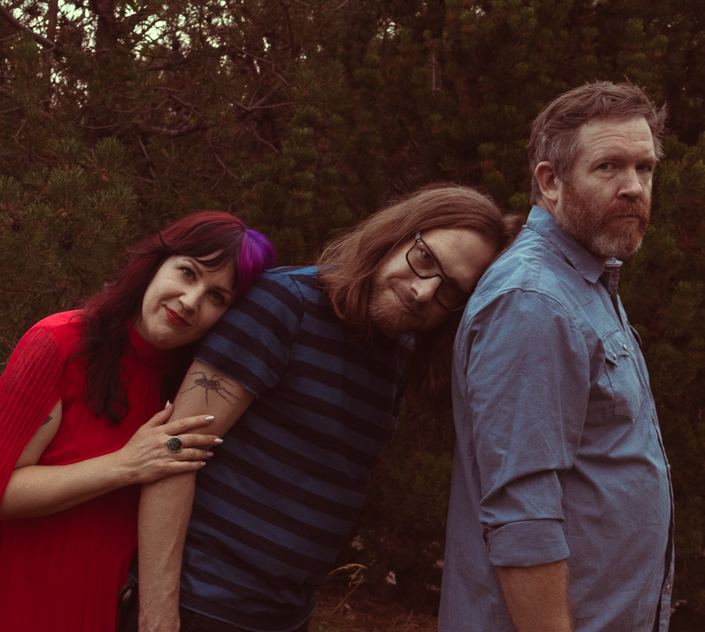
Photo by December Gonzaga
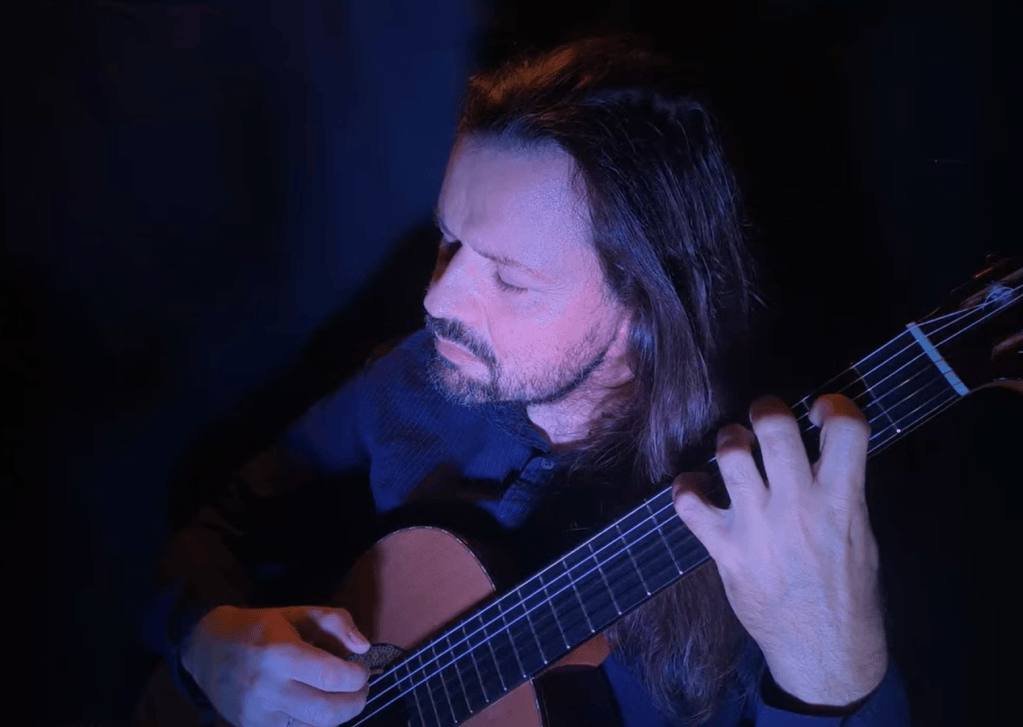
The album’s title, “Murmuration,” is not just a beautiful word, but a scientific term denoting the synchronous flight of hundreds of starlings, folding into giant, constantly shape-shifting “living clouds.” A breathtaking sight that arises either for protection against predators or for reasons that science has not fully explained. For TRIPPY HEARTS, this became their own murmuration – an intuitive, saving wing-to-wing movement, when surviving alone would have been impossible. Their sound is difficult to fit into a single definition. Call it bedroom pop – and the definition will immediately crack at Heiner’s very first guitar passage, where jazz meets avant-rock. Say “psychedelia” – and you will miss the tenderness with which the Rhodes holds the space around the vocals. Noir? Closest of all. Warm, sophisticated noir.
The main achievement of the album is space, along with a lively and at times swift rhythmics. Eight tracks build a cohesive dramaturgy, where the intimacy of chamber bedroom pop imperceptibly flows into cinematic psychedelia. The band managed to preserve the fragile sincerity of the “home” sound and shape it into a dense, tangible avant-rock sound. The musical foundation rests on three pillars: the Rhodes electric piano with a warm, shimmering timbre sets the noir tone; the jazz rhythm section and guitar passages breathe freedom; with all the density of rhythms, a lot of air remains in the music. The vocals of Rhodes soar above the melodies – pure and vulnerably strong.
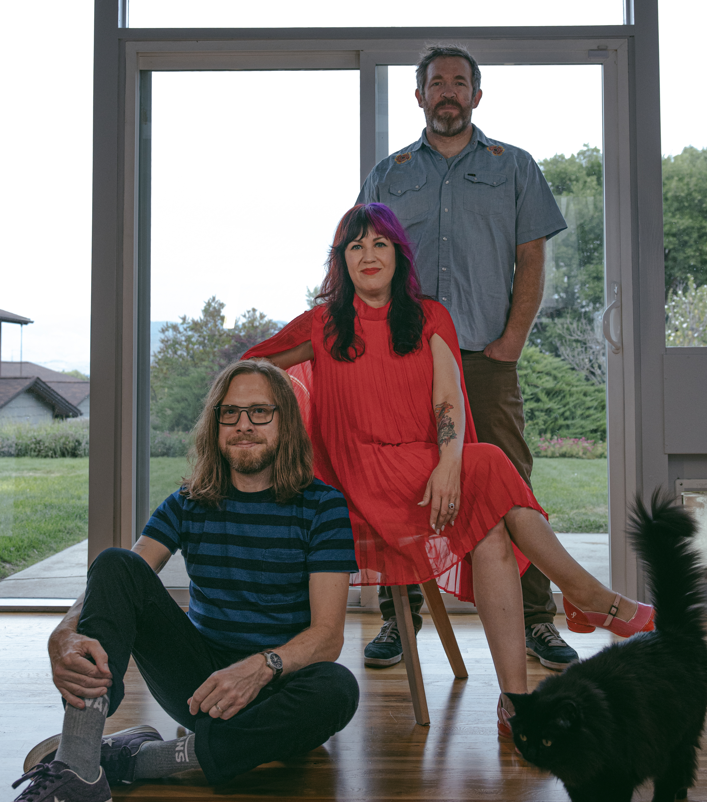
Photo by December Gonzaga
The album opens with the track “Orchid”, softly introducing the listener into a state of trance. The restrained yet alluring vocals sound sincere, while the guitar and keyboards gently intensify the tension. An orchid – a flower that blooms despite the conditions – is an accurate metaphor for survival.
Then enters the single “Sweet Crash”, already familiar to fans of the band. The rhythm becomes elastic, the drums come to the forefront, and the guitar acquires a jazz angularity. “Sweet Crash” is a precise oxymoron: meetings and falls that destroy and liberate.
The cinematic “High Place” is a track about finding the resolve to ascend to where it is scary, and to stay. The keyboards build a dome, the guitar outlines the horizon, and the vocals rise softly and freely. In turn, in “Gravity Needs Me”, stability gives way to internal searching: there is a reflection on mutual dependence – of the earth and man. The vocals come to the center stage, looping around a single thought, not letting it go – like a person who walks around the room and cannot go to sleep. The instruments work like a shadow, repeating and reinforcing the thought.
The main guitar magic happens in “Impossible Current” – the central track in spirit. The drums launch a powerful current, with which everything else contrasts: crystal, cool vocals and an impressive range. In general, intimate lyrics and a daring character are coolly mixed on the album. An excellent example is “Leaf”: a pure splash of emotions through the accelerated rhythm of the drums, biting guitars, and a strong voice. After a fleeting surge, peace comes in the track “Space & Silence”, where smooth melodies and warm vocals only occasionally change dynamics, and from this, the tension only intensifies. Throughout the album, a scene with a beginning and a resolution plays out before the listener, where a single line is capable of conveying a bunch of emotions. However, most of all I was hooked by the final track of the album, “Fata Morgana” – an optical illusion that occurs at the horizon: you see something, reach out your hand, and it disappears. It gathers all the threads of the album: Rhodes returns to the thoughtful intonation in the voice with which everything began, the guitar fades into the fog. The finale is open – the mirage has disappeared, but the horizon remained.
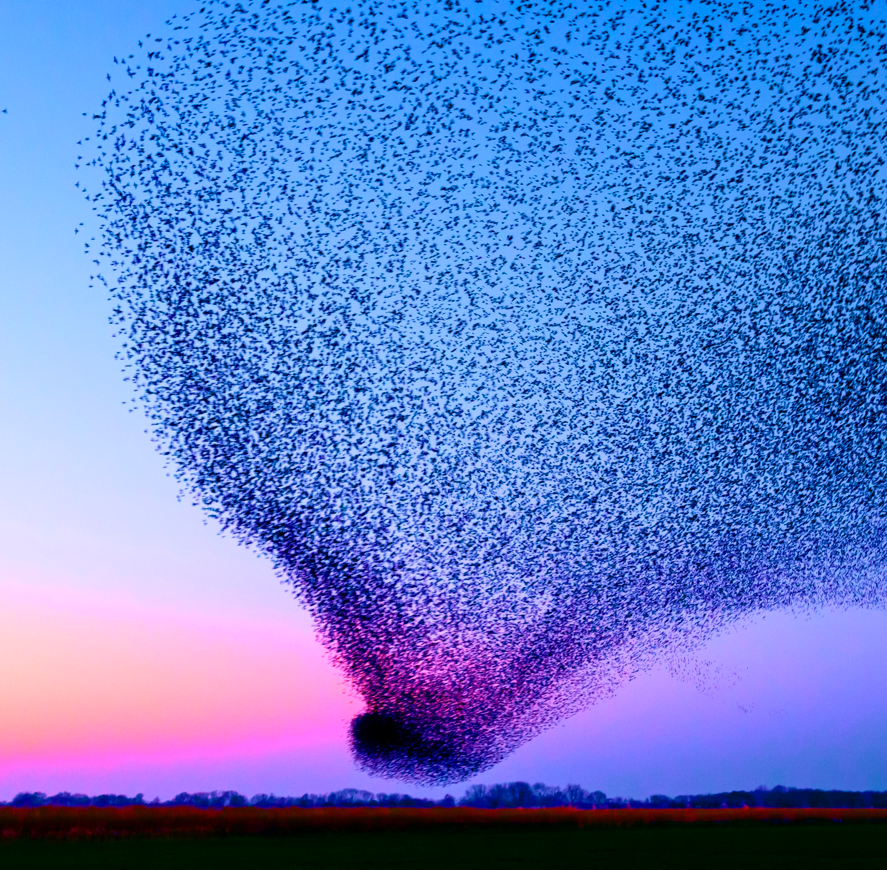
Murmuration as a phenomenon is not fully explained by science. However, in my opinion, the three musicians from Boise seem to have found something important for themselves in this. And passed it on to us.
“Murmuration” is a step-by-step manual on how to create something monumentally beautiful out of debris, grief, and uncertainty.
The recording will be available on vinyl (the perfect format to hear every breath of the Rhodes) and CD. The music of TRIPPY HEARTS is for dim rooms, long roads, and moments when you need to remind yourself: birds gather in flocks because together they are an insurmountable force.