“Creativity is a way to find yourself before others finally define you.” In this thought, in my view, there is both romance and anxiety at the same time: the path to one’s own authenticity is rarely straightforward. More often, it passes through shame, loneliness, exhaustion, the desire to conform – through those states that are uncomfortable to talk about out loud, but that define us much more precisely than what we are willing to show the world. It is precisely this inner space that SPURV’s debut album, “The Invisible Body,” explores.

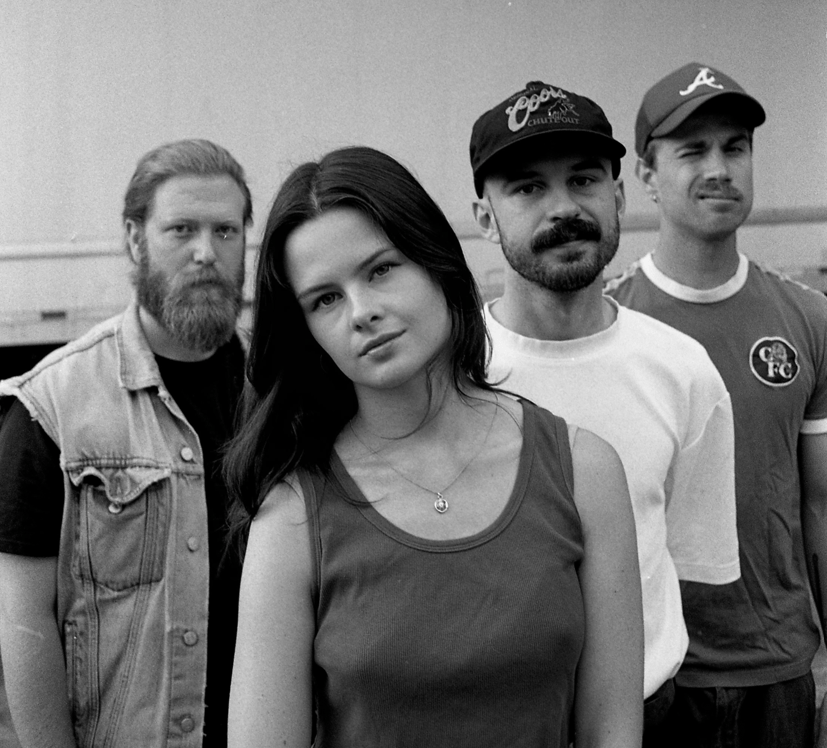
SPURV is the solo project of Danish singer and songwriter Gabriella van Zanten. Behind it lies a long musical journey: performing in childhood together with her family, her first rock bands, the acoustic trio Gaia, the alternative band Van Platypus, festival stages, and the semi-final of the Emergenza Festival at Lille Vega in Copenhagen. After working on the acoustic project Lynggaard van Zant, van Zanten wanted to return to electric guitars – and that is how SPURV appeared in 2020. This biography is important for understanding the album. “The Invisible Body” does not give the impression of a debut written in search of its own musical form. On the contrary, it sounds like an artist who already knows what she needs from a song: melodic clarity, emotional directness, and space for inner dialogue. I am convinced that what we have before us is not simply a collection of alternative rock songs united by a common aesthetic, but seven episodes of one personal experience – from a feeling of one’s own invisibility to self-acceptance, from isolation to connection with others, from other people’s rules to the freedom to live on one’s own terms.
The album opens with the single “Shame,” which acts as a soft but confident step across the threshold of other people’s perception. The song builds a kind of protective cocoon around the listener, free from judgment and sticky doubts. Resilience begins with accepting one’s own imperfections. Here, the album’s main themes are already outlined: resilience, self-acceptance, and the courage not to give up on oneself for the sake of making others comfortable. Then the album naturally moves toward its central image – the invisible body.

The title track “Invisible Body” leads into an incorporeal sonic space. Minimalist ambient, pulsating bass, atmospheric layers – and reality gradually loses its coordinates. The vocal, enveloped in multilayered reverb, sounds like a ghostly echo – a challenge to existential isolation, an embodiment in sound of the perception of one’s own invisibility to the hectic outside world. If the world is constantly trying to define who we should be, then dissolving these outlines can become the first step toward drawing ourselves anew. After the ghostly stillness of “Invisible Body,” the song “Time to Be Alive” abruptly brings us back into the body. Dense guitar riffs, a rhythmic beat, and noticeable inner tension appear. Its dramaturgy is built on contrast: restrained verses gradually accumulate energy, while the chorus opens up expressively. The song is about the moment when a person realizes: there is no longer any point in waiting for the right time. Life is already happening – and it demands participation.
The accumulated energy of this personal breakthrough naturally finds its continuation in “Together.” The tension subsides, giving way to collective strength. The song articulates the humanistic core of the album particularly clearly: no one should change themselves beyond recognition in order to become part of something larger. True community does not erase differences, but leaves room for them. Following this bright unity, the album descends into the dark, hypnotic abyss of “Forsaken.” Drawn-out guitar parts and deep, heavy pulses of bass pull the listener into a state of slow falling. The anguished, melancholic vocal lays bare experiences of betrayal, the loss of connections with loved ones, and that ringing emptiness that remains when illusions collapse.
The album reaches its emotional peak in “Die in the Desert.” The sonic palette becomes dry and ascetic: sharp drums, dense bass, and harsh guitars form a picture of a scorched desert. The cold, narrative vocal gradually stretches taut like a string, exploding into tense high notes – an extremely precise musical metaphor for emotional burnout and the struggle for survival in a foreign, hostile environment. The album’s finale turns out to be unexpectedly ironic. “(Things I Do) to Impress You” switches the register to sharp electro-pop: a rhythmic synthesizer pattern, a swaying bass, spacious echo effects around the cutting vocal. But behind the danceable exterior hides, perhaps, the album’s bitterest theme – an exploration of the masks we put on for the sake of other people’s approval, and of the self-sacrifice that becomes invisible even to ourselves.

“The Invisible Body” is built according to a clear inner logic: from shame and invisibility to the desire to feel life again, from loss and burnout to the realization that authenticity is strength. The genre shifts in the sound emphasize different states of one and the same personality. There is no distance between the author and the listener in the album. The title acquires a double meaning: it is both a body that the world refuses to notice and a body that gradually takes back its voice, gestures, and right to its own name. “The Invisible Body” passes through loneliness, alienation, and the thirst to belong – to remind us that a voice can be found even when, for a long time, it seemed that there was none.